Pilates Certification Program: What Actually Makes It Worth It

Most people who invest in a Pilates certification program and never build a teaching career did not fail for lack of passion. They failed because they chose the wrong program. A certification is not just a course you complete and frame on the wall. It is the foundation your entire teaching career stands on. 

In places like Nosara, Santa Teresa, and across Costa Rica, the demand for qualified Pilates instructors is growing faster than ever. Retreat centers, boutique studios, and wellness resorts are actively looking for instructors who can teach with confidence, work with diverse bodies, and deliver real results. 

The gap between programs that produce those instructors and programs that simply hand out certificates is enormous. This guide helps you tell the difference before you spend your money.

What a Pilates Certification Program Really Means Beyond the Certificate

A piece of paper doesn’t make you a great instructor; the grit behind your training does. While online programs offer convenience, they cannot teach you how to adjust a real, unpredictable body the way hands-on, in-person training does. 

The gap widens even more between cheap weekend crash courses that hand out superficial certificates and comprehensive programs that demand months of study in anatomy and biomechanics, along with grueling practice hours. 

Ultimately, the clock is a myth: a 200-hour program packed with fierce, real-world mentorship will always produce a sharper instructor than a 400-hour program spent passively watching videos.

The 7 Core Elements That Make a Pilates Certification Program Worth Enrolling In

Pilates instructor earnings in established markets range from $40 to over $100 per hour for private sessions and group classes.

Alt text: core elements of the Pilates certification program 

The programs that position graduates at the higher end of that range share seven specific qualities. Here is what to look for.

1. Depth of Movement Education Not Just Repetition

Strong programs build instructors who understand anatomy, not just sequences. Knowing why a movement exists, how it loads joints, and where common compensations live gives instructors the ability to keep clients injury-free and progressing over months and years.

2. Hands-On Teaching Practice This Is Where Most Programs Fail

Teaching classmates in a controlled environment is useful. Teaching real students with real movement histories and real limitations is transformative. Programs that include supervised practice hours with feedback cycles from experienced mentors accelerate instructor development faster than any amount of theory alone. 

3. Mentorship Not Just Instruction

Being taught exercises and being coached as an instructor are two completely different experiences. Mentorship shapes teaching confidence in a way that recorded lessons simply cannot replicate. 

Programs built primarily around passive video content or self-paced modules without live feedback are a red flag for anyone serious about becoming a working instructor. A mentor watches you teach, tells you what is working, and shows you how to fix what is not.

4. Real Anatomy and Biomechanics Integration

Instructors who understand how different body types, injury histories, and physical limitations affect movement build long-term credibility with clients. When a client walks in after knee surgery and needs a modified reformer session, anatomy knowledge is not optional. Programs that treat anatomy as a box to check rather than a skill to develop leave graduates underprepared for the real diversity of bodies they will teach.

5. Business and Career Preparation

Most pilates certification programs skip this entirely, and graduates feel that gap sharply when they try to fill a schedule. Knowing how to price sessions, build a personal brand, communicate with prospective clients, and position yourself for studio hiring or independent work is not separate from teaching skills. 

It is the infrastructure your teaching career runs on. Programs that include even a basic business and marketing module give graduates a measurable advantage in a competitive market.

6. Certification Recognition and Mobility

A certification that holds weight in Costa Rica should also open doors in the US, Europe, and across international wellness markets. Instructors trained at programs recognized by PMA, BASI, or other globally respected bodies can teach in destination resort towns, high-end retreats, and international studios without having to recertify from scratch. This matters especially for instructors whose career goals include retreat-based work or teaching abroad.

7. Community and Network Effect

The alumni network of a training program is a job pipeline. Studios consistently hire instructors they already know through training networks, referrals, and community connections. Isolation after graduation weakens career outcomes because the wellness industry runs on relationships. 

This is exactly why Pilates Compass exists. It is a dedicated platform offering Pilates resources and a growing pool of instructors, students, and studio owners building a global community together. The network you build during and after training is one of the most underrated assets in a long teaching career.

Join the Pilates Compass Community

Red Flags: When a Pilates Certification Program Is Not Worth It

The wrong program is one of the most common mistakes in Pilates, and the signs of a low-quality program are consistent enough to spot before you enroll:

  • Too short: Weekend certifications compress months of necessary learning into 16 hours. The result is a certificate with very little substance behind it.
  • No supervised teaching hours: If a program cannot tell you exactly how many hours you spend teaching real people under supervision, that is a serious problem.
  • No real anatomy training: Anatomy should run through the entire curriculum, not appear in one standalone module that gets rushed through.
  • No post-certification support: Graduation should be a beginning, not an ending. Programs that offer zero ongoing support leave instructors isolated exactly when they need guidance most.
  • Certificate-only mindset: Programs that market the credential more heavily than the education behind it are telling you something important about their priorities.
  • No mention of career outcomes: Quality programs talk openly about where their graduates teach, how they built their careers, and what support is available during the job search phase.

Cost vs Value: What Are You Actually Paying For

Two programs can cost the same amount and deliver completely different levels of preparation. The price tag alone tells you almost nothing about the value inside.

Program Type Typical Cost Range What You Actually Get
Weekend Workshop $300 to $800 Basic exercise introduction, certificate, minimal supervised practice
Mat-Only Certification $1,000 to $2,500 Foundational mat repertoire, some anatomy, limited teaching hours
Reformer Certification $2,000 to $4,500 Equipment proficiency, moderate teaching practice, varies widely by provider
Comprehensive Program $4,000 to $12,000 Full curriculum, anatomy depth, mentorship, teaching hours, career support
Immersive Retreat-Based Training $5,000 to $15,000 All of the above, plus community, location-based experience, and network building

The hidden value in higher-investment programs sits in mentorship access, alumni networks, job referrals, and the kind of teaching confidence that only comes from genuine supervised practice. Treating certification as an income skill rather than an expense completely reframes the investment. 

A well-trained instructor charging $80 per private session recovers the cost of a comprehensive program within a few months of consistent work.

What Graduates Typically Do After a Pilates Certification Program

The career paths that open after a strong certification are more varied than most prospective students realize going in.

  • Teaching in studios is the most common entry point. Boutique Pilates studios, fitness centers, and gyms hire certified instructors for both group reformer classes and private sessions. Demand in urban markets and wellness destinations stays consistently strong.
  • Retreat-based work in Costa Rica represents one of the most appealing career tracks for instructors who want to combine teaching with lifestyle. Nosara, Santa Teresa, and the Southern Zone all host wellness retreats and yoga centers that need qualified Pilates instructors for residential programs, week-long retreats, and ongoing class offerings.
  • Private clients offer the highest hourly income and the deepest professional relationships. Many instructors build a full-time income from 15 to 20 dedicated private clients seen multiple times per week.
  • Starting small wellness businesses is increasingly common among graduates who combine Pilates instruction with personal training, nutrition coaching, or massage therapy. The pilates results clients experience, improved posture, reduced back pain, stronger core function, and better movement quality, create loyal long-term client relationships that sustain small businesses effectively.

Final Thought: A Certification Should Change Your Capability Not Just Your Resume

The instructors who become Pilates instructors worth hiring, worth booking, and worth recommending are the ones whose training genuinely changed how they see movement, how they communicate with bodies, and how they build sessions that produce results clients can feel.

A certificate on a wall is a starting point. The real transformation happens inside programs that prioritize mentorship, real teaching practice, anatomical depth, and ongoing professional development after graduation day.

Ready to train at a program that prepares you for a real teaching career and not just a certificate? Pilates Nosara‘s immersive teacher training gives you the depth, mentorship, and hands-on practice that actually build confident instructors.

Start Your Pilates Teaching Journey With Nosara

FAQ

How long does a Pilates certification program take?

Mat-only programs typically run 60 to 200 hours and are completed in one to three months. Comprehensive programs covering all equipment run 450 to 600 hours and span six to eighteen months. Immersive formats like Pilates Nosara condense that timeline through full-day training structures.

Is Pilates certification worth it for beginners?

Yes, with the right program. Many strong programs accept students with six to twelve months of personal practice and no prior teaching experience. Foundation modules bring new students up to speed before the core curriculum begins. The key is choosing a program with supervised teaching hours and real mentorship, not just video content.

Can you teach Pilates internationally after certification?

Graduates from programs recognized by globally respected bodies like PMA or BASI can teach internationally without recertifying. Costa Rica, the US, the UK, and Australia all recognize these credentials. Instructors trained at Pilates Nosara carry a credential respected across international wellness markets.

What is the average cost of Pilates instructor training?

Mat-only certifications typically cost between $1,000 and $2,500. Comprehensive programs range from $4,000 to $12,000. Immersive retreat-based programs with mentorship, community, and career support can cost up to $15,000. The cost reflects the depth of education, access to mentors, and the strength of the program’s alumni network.

Do you need a fitness background to become a Pilates instructor?

No fitness background is required. A consistent personal Pilates practice, genuine curiosity about movement and anatomy, and the commitment to complete the required teaching hours are the real foundations of a successful certification journey.
What’s Included in a Pilates Certification Program Before You Enroll

A great Pilates certification program does much more than teach you how to cue a Hundred or perfect your Teaser. It shapes the way you understand movement, connect with clients, and grow into a confident instructor.

However, not all Pilates teacher training programs are created equal. Some focus mainly on exercises, while others include anatomy, mentorship, hands-on teaching experience, and ongoing support that can influence your career long after graduation.

If you’re thinking about enrolling in a Pilates certification program, knowing what is actually included can help you choose a training that matches your goals. In this guide, we’ll walk through the key components to look for and the questions worth asking before you commit.

What Is a Pilates Certification Program

A Pilates certification program is the structured, professionally recognized training that qualifies you to teach Pilates to real clients in real studio environments. It combines movement theory, anatomy education, hands-on equipment training, and supervised teaching practice into a single, comprehensive curriculum.

When you attend Pilates classes as a student, you experience the method from the inside. A certification program flips that entirely. You learn to observe movement, correct form, build sequences, and communicate with a room full of people who all need something slightly different from the same exercise.

Certification matters because studios hold it as the baseline standard for hiring. Most professional studios across Costa Rica, the US, and Europe will not place an uncertified instructor in front of a paying client. 

Who Should Consider Pilates Teacher Training

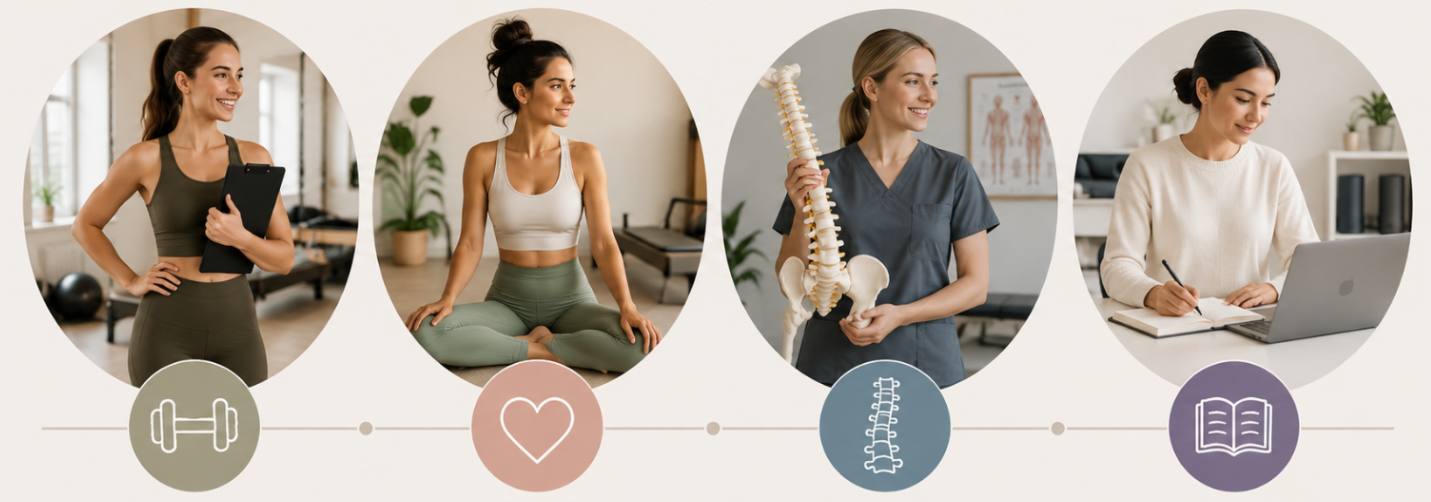
Who can enroll in pilates training

Pilates teacher training draws a wide range of people, and almost all of them are right for it. Before starting pilates classes as a teacher candidate, though, here are things to remember: your current relationship with movement matters less than your willingness to study deeply, practice consistently, and stay curious about the human body.

Fitness Professionals Looking to Expand Their Skills

Personal trainers and yoga teachers use pilates at home and in studios to fill the gaps other certifications leave behind. Adding pilates teaching training gives movement professionals a deeper toolkit for core mechanics, breath work, and spinal health that clients genuinely notice.

Pilates Enthusiasts Ready for a Career Change

Reddit threads and Pilates communities are full of people who started as obsessive students and became some of the most passionate instructors in the room. Personal transformation is a powerful teaching foundation. Your lived experience with the method is already an asset.

Wellness and Healthcare Professionals

Physiotherapists, nurses, and occupational therapists increasingly add Pilates for back pain protocols into their clinical practice. Pilates teacher training gives healthcare practitioners a movement-based approach to rehabilitation that extends their reach beyond a clinical setting.

Complete Beginners With No Teaching Experience

No prior teaching background required. Solid pilates certification programs are specifically designed to develop first-time instructors from the ground up. Observation hours, practice sessions, and structured feedback loops build real teaching skills for people who have never led a class in their lives.

What Is Typically Included in a Pilates Certification Program

The curriculum inside a certification program determines your pilates instructor’s earning potential, your confidence on the floor, and your ability to retain clients long-term. Programs that skip key components leave graduates underprepared for the real demands of teaching.

Pilates Principles and Movement Foundations

Breath, alignment, control, precision, flow, and mind-body connection form the six pillars of every serious pilates training program. These are not abstract concepts. Instructors learn to observe, cue, and correct each principle in real client bodies. 

Strong foundations here shape every teaching decision you make for the rest of your career.

Functional Anatomy and Biomechanics

Muscles, joints, movement patterns, and injury prevention are covered in this module, and this is where good instructors separate from great ones. Knowing a hamstring stretch feels different from knowing why a client’s pelvis tilts during that stretch and how to fix it without stopping the flow of class.

Mat Pilates Certification Training

Mat classes cover the full beginner to advanced mat repertoire, including exercise modifications for different bodies and class sequencing principles. Mat Pilates certification builds the movement literacy that supports everything else in a comprehensive program. It is the foundation every other modality builds on.

Reformer Training

Reformer classes introduce equipment setup, spring settings, exercise progressions, and safety protocols in detail. This is the highest-demand skill in the current Pilates job market. Boutique reformer studios are opening across every major city, and they need trained instructors who understand the machine deeply, not just the exercises on it.

Training on Additional Pilates Equipment

Cadillac, Wunda Chair, Barrels, and Towers expand what you can offer clients significantly. Not every pilates certification program includes this equipment. Many mat-only or reformer-only certifications stop well short of comprehensive training. If full equipment access matters to you, verify it is in the curriculum before enrolling.

Cueing and Communication Skills

Verbal cueing, visual cueing, hands-on corrections, and building instructor presence are the skills most programs mention, and the fewest actually develop properly. 

Learning to teach Pilates means learning to communicate with precision. The difference between “tighten your abs” and “scoop your navel toward your lower back” is the difference between a client who gets it and one who stays confused for months.

Class Planning and Sequencing

Designing beginner classes, intermediate progressions, private sessions, and group formats are all separate skills. A well-sequenced class feels effortless for the client and reflects hours of thought by the instructor. This section teaches you to build sessions with intention rather than just stringing exercises together.

Teaching Practice Hours

Observation hours, practice teaching, and self-practice form the supervised experience component of certification, and this is the section that most prospective students underestimate the most. 

Studio hours, clock them seriously. Watch every instructor you can. Teach as many practice sessions as your program allows. The reps you put in here determine your confidence on graduation day.

Ready to train with instructors who take your development seriously from day one? Pilates Nosara’s teacher training programs are built around real teaching hours, real mentorship, and real career preparation.

Pilates Instructor Requirements You Should Know Before Enrolling

Most programs list their requirements simply, but the real picture is a little more layered than a short FAQ covers. Here is a clear breakdown of what programs actually expect and what they often forget to mention.

Requirement What You Actually Need to Know
Prior Pilates Experience Most programs recommend 6 to 12 months of consistent practice before enrolling. Some require it formally. Programs that accept complete beginners will often add a foundation module at the start. Common mistakes that Pilates students make before training include enrolling without first building a solid personal practice.
Fitness Certifications Not required by most pilates certification programs. A CPR certification is the most commonly requested baseline qualification. Some programs add it to the curriculum if you arrive without it.
Physical Requirements Pilates teacher training is physically demanding. You practice every exercise you learn. Instructors need a body capable of demonstrating movements safely. Programs adapt for students working through injuries but this needs disclosure upfront.
Time Commitment Mat-only programs run from 60 to 200 hours. Comprehensive programs that cover all equipment often require 450 to 600 hours over 6 to 18 months. Budget time for observation, practice teaching, and self-study on top of in-class hours.
Continuing Education Most certification bodies require ongoing continuing education credits to maintain credentials. Plan for annual or biennial renewal courses, workshops, or advanced training modules throughout your career.

What Many Pilates Certification Programs Overlook

Most pilates instructor courses cover the exercises. The best programs also cover what happens after the exercises end. Here are the things that separate a functional certification from genuine career preparation.

  • Building Confidence: The technical knowledge is teachable. The ability to stand in front of a room and lead with authority is something programs rarely develop intentionally. Confidence comes from supervised repetition and honest feedback, not from reading a manual.
  • Finding Your Teaching Voice: Every excellent instructor develops a style that is recognizably theirs. Generic programs produce generic instructors. Training that encourages individual expression alongside technical mastery produces teachers who actually come back to see specifically.
  • Working With Real Clients: Practice teaching with fellow trainees is useful. Teaching members of the public during your training is transformative. Real clients have real compensations, real goals, real limitations, and real questions that no textbook scenario prepares you for.
  • Client Retention: Studios and independent instructors alike measure success through retention. Learning how to build relationships, track client progress, and adapt sessions over time is a business skill that most pilates teacher training programs never touch.
  • Class Creativity: After teaching the same sequence for three months, the ability to keep sessions fresh matters enormously. Creative programming keeps clients engaged and keeps instructors professionally stimulated.
  • Business Skills: Pricing, scheduling, contracts, and studio etiquette are the unsexy foundation of a sustainable teaching career. Most programs skip this entirely.
  • Marketing Yourself: Social media, community building, referrals, and professional positioning determine whether your schedule fills or sits empty. Not one standard Pilates certification program covers this in any meaningful depth.
  • Online Resource Hub: Certification is just the beginning. Pilates Compass helps instructors continue learning with educational resources, teaching support, exercise ideas, and professional development tools long after their training is complete.

Conclusion

Not all pilates certification programs are equal, and understanding that before you enroll saves you from one of the most expensive and time-consuming mistakes in the wellness industry. The curriculum, teaching hours, access to equipment, mentorship quality, and the career support built into a program determine not just whether you graduate with a credential, but whether you actually thrive as an instructor.

Pilates Nosara builds instructors who are technically grounded, creatively alive, and professionally prepared for the real demands of teaching. And Pilates Compass supports that growth every step of the way, beyond certification.

FAQs

Can you become a Pilates instructor with no experience?

Yes. Many Pilates teacher training programs accept beginners and provide the education, practice teaching, and mentorship needed to develop teaching skills from the ground up. However, having some personal Pilates experience before enrolling can make the learning process easier.

How long does it take to complete a Pilates certification program?

The timeline depends on the program. Mat Pilates certification can take a few months, while comprehensive Pilates certification programs that include equipment training often require 6 to 18 months to complete.

Is mat Pilates certification enough to start teaching?

Yes, a mat Pilates certification can qualify you to teach mat classes. However, instructors who want to work in studios that offer Reformer and other equipment-based classes may benefit from a comprehensive certification program.

What should I look for in a Pilates certification program?

Look for a program that includes anatomy education, hands-on teaching practice, equipment training, experienced educators, mentorship opportunities, and ongoing professional support after certification.

Is it worth it to become a Pilates instructor?

For many people, yes. Pilates instruction offers the opportunity to help others improve their movement and well-being while building a flexible and rewarding career. The value often depends on the quality of your training and your commitment to continued learning.

How Much Experience Do You Need Before Enrolling in a Pilates Certification Program?

You do not need years of teaching experience or even years of practicing Pilates to start a Pilates certification program.

Many aspiring instructors assume they must master advanced movements, spend years in studios, or already work in fitness before they qualify for pilates instructor training. In reality, most people who start a comprehensive pilates course begin with interest, consistency, and a willingness to learn, not professional credentials.

If you’ve been wondering whether you’re “experienced enough,” this guide will help you understand what programs actually expect, how long it takes to become a pilates instructor, and how to know if now is the right time to start.

Do You Need Any Professional Experience?

Most programs offering a pilates certification are designed to teach you how to teach. That means they do not expect you to arrive as an expert. For many people, having regular exposure to classes and a basic understanding of movement is more than enough to step into certified pilates instructor training.

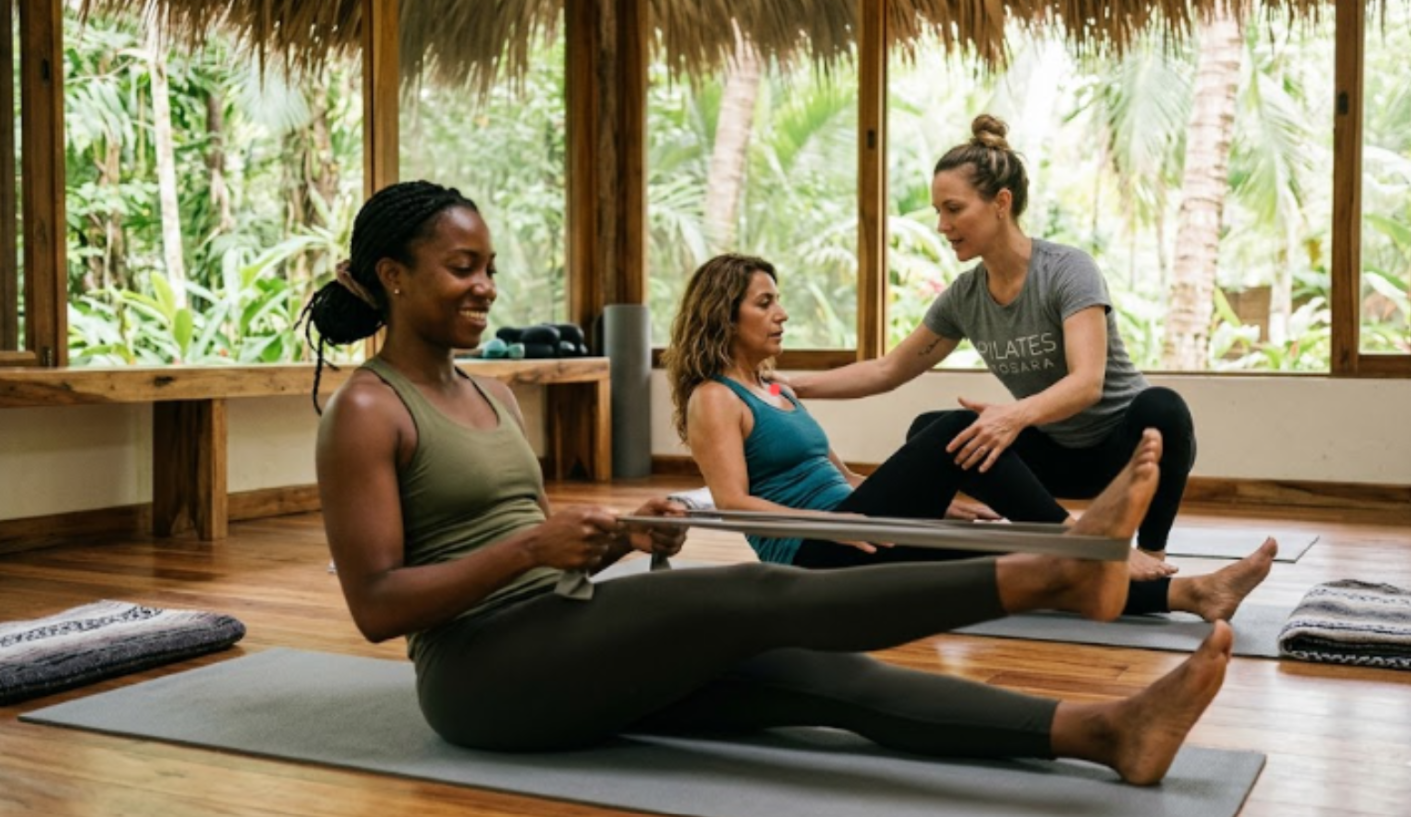
An instructor guiding a Pilates student

Instead of testing what you already know, high-quality pilates teacher training focuses on building your skills from the ground up:

  • Pilates principles and core foundations
  • Anatomy, biomechanics, and body awareness
  • Exercise sequencing and smart class design
  • Verbal cueing and effective communication
  • Hands-on adjustments and real-world teaching techniques

The goal of your initial pilates certification course isn’t to prove you already know everything. The goal is to build the actual skills required to become a trusted, competent, and certified pilates instructor.

Expert Insight: If you want the most universally respected credentials, look for a program offering Balanced Body education. As a global leader in movement science, Balanced Body certifications are recognized worldwide and set the industry benchmark for safety, modern biomechanics, and teaching excellence. To make earning this premier credential simple and stress-free, Pilates Nosara hosts fully accredited Balanced Body Teacher Training modules at our jungle sanctuary in Costa Rica.

What Experience Should You Have Before Starting?

While professional credentials aren’t required, having a baseline familiarity with the practice keeps you from feeling overwhelmed when becoming a pilates instructor. Experience helps, but it doesn’t always look the same:

1. Personal Pilates Practice (Most Helpful)

The best starting point is becoming familiar with Pilates through consistent personal practice. You do not need years of it. Ask yourself: Have I taken classes consistently? Do I understand the basic movements? If you answered yes, you have enough of a foundation to enroll in a pilates course.

2. Fitness or Wellness Background (Optional)

Some students enter certified pilates teacher training after working in personal training, yoga, dance, group fitness, or physical therapy. This experience can give you a head start on anatomy, but it is absolutely not required. Many people manage to successfully become a pilates instructor with zero prior fitness background.

3. Teaching Experience (Nice to Have, Not Required)

Teaching confidence develops during your training. You will learn how to guide clients, give corrections, and structure sessions. You do not need to arrive knowing how to coach; you just need a willingness to learn.

How Long Does It Take to Get Pilates Certified?

A common misconception is that certification equals one quick weekend course. In our experience guiding trainees through this process, quality pilates teacher training requires a dedicated blend of coursework, movement practice, observation hours, and student teaching.

If you are trying to map out your timeline, you might find yourself asking a few variations of the same question. The timeline ultimately depends on the specific path you choose:

  • How long does it take to be a pilates instructor? If you focus purely on a Mat certification, it can take several weeks to 3 months (100 – 150 hours).
  • How long to become a pilates instructor? For a full Comprehensive track (covering Mat, Reformer, Tower, and Chair), expect 6 months to over a year (450 – 600 hours).
  • How long does it take to get a pilates instructor certification? A flexible, part-time training format varies widely and is entirely self-paced, which is ideal for working professionals.
  • How long does it take to get pilates certified? It ultimately depends less on your prior background and much more on your weekly consistency in accumulating your required observation and student teaching hours.

Pilates Instructor Training Cost: What Should You Expect?

Cost is another major factor to consider before committing to a pilates certification course. Because programs vary widely in depth, the overall financial investment changes based on what you want to teach.

Certification Type Focus Area Estimated Pilates Instructor Training Cost
Mat Program Only Floor work, core foundations, group formatting $300 – $900
Apparatus Single Track Specific equipment (e.g., Reformer training only) $1,000 – $2,500
Comprehensive Program Full studio setup (Mat, Reformer, Cadillac, Chairs) $3,500 – $6,500+

Tip: Investing in an all-inclusive, premium pilates certification ultimately saves you money and prepares you to graduate with true professional confidence.

What to Look for in a Pilates Training Program

One of the biggest reasons people postpone training is believing confidence must come first. In reality, confidence is a byproduct of guided practice. Finding a supportive learning environment matters much more than arriving with advanced skills.

Before choosing a program, look beyond the upfront pilates instructor training cost or the certification title and ask:

  • Is this curriculum truly beginner-friendly?
  • Will I receive real, hands-on teaching practice?
  • Is mentorship actively available during the training?

Many new instructors discover that earning a piece of paper and actually feeling ready to lead a room are two very different things. That is why choosing a program focused on deep education rather than just checking off boxes is critical.

At Pilates Nosara, we provide fully accredited Balanced Body Teacher Training. Hosted as an immersive retreat in the peaceful jungle of Costa Rica, our curriculum allows you to completely focus on your training without the distractions of daily life. You can check out our complete line-up of intensive modules on our Teacher Training Programs page to choose the track that fits your career goals.

What Happens After Certification? (The Part Most People Don’t Talk About)

Getting certified is exciting, but then comes the moment many new instructors quietly struggle with: “Okay… now I actually have to teach real clients.”

This transition period is where many new teachers suddenly feel unsupported. Think of certification as earning your map; ongoing mentorship is how you actually learn to navigate the terrain. To bridge this gap, look for post-certification networks that offer continuing education in anatomy, cueing adjustments, and business building, or join an established industry registry like the Pilates Method Alliance to stay connected to professional advocacy, global teaching standards, and continuing education resources as you grow. 

This specific need is why platforms like Pilates Compass exist. They provide an ongoing instructor community, class planning tools, and continued mentorship designed to support teachers after graduation, ensuring you never have to navigate your new career alone.

Signs You’re Ready to Enroll

Let’s be honest: nobody ever wakes up feeling 100% ready. Instead, readiness usually looks like a mix of excitement and a little bit of nervous energy.

You are ready to enroll if:

  • You Genuinely Love the Practice: It’s a highlight of your week.
  • If You’re Curious: You want to know why a movement works, not just do it.
  • You Like Helping People: You enjoy watching others succeed and feel good.
  • If You’re Willing to Learn: You don’t need a perfect teaser or an anatomy degree; you just need to show up.

Avoid these common mistakes:

  • Waiting Until You Feel “Advanced”: Most instructors never feel 100% ready before they begin.
  • Choosing Based on Tuition Alone: The lowest cost of Pilates teacher training rarely creates the strongest teaching foundation.
  • Rushing the Process: Strong instructors build their knowledge and eye for movement over time.

You are likely ready to enroll right now if you genuinely enjoy Pilates, want a deeper understanding of movement mechanics, enjoy helping people, and are willing to practice consistently. You do not need perfect form, and you do not need to wait until you feel like an expert.

Start your Pilates teaching journey here!

Final Thoughts: Don’t Wait Until You Feel Like an Expert

The biggest misconception about entering Pilates instructor training is believing you need a lifetime of experience before you begin. You don’t. You need curiosity, consistency, and a training program that teaches you how to see and change bodies.

The strongest instructors are rarely the ones who waited the longest to start. They are the ones who jumped into a Pilates certification course, practiced intentionally, and stayed connected to a supportive instructor community and mentorship as they grew. The question is not whether you are already an expert; it is simply whether you are ready to learn.

Frequently Asked Questions

What certification do you need for Pilates?

No legal license is required, but studios require a verified certificate to hire you. You can choose a Mat Certificate (floor work, 100–150 hours) or a Comprehensive Certificate (full studio apparatus like the Reformer, 450–600 hours).

What is the best Pilates certification to get?

The best certifications are globally recognized and NPCP-approved. Balanced Body is the top contemporary choice (used by premier sites like Pilates Nosara).

How do I become certified in Pilates?

Enroll in a training program, complete the lecture modules, and log your required hours of self-practice, studio observation, and student teaching. You officially graduate after passing a written theory exam and a live practical teaching test.

Is a Pilates certification worth it?

If you are interested in expanding your wellness knowledge, changing careers, or building a long-term path in movement education, a comprehensive pilates certification creates professional studio opportunities that personal practice cannot.

Pilates Results Timeline: What to Expect After 2 Weeks, 1 Month, and 3-6 Months

If you’ve just started Pilates or you’re thinking about it, you’ve probably asked the same question almost everyone asks: how long does it take to see results from Pilates, and how fast does Pilates work?

The frustrating part is that you’re putting in effort, feeling your core burn, noticing small changes, but the mirror doesn’t reflect it yet.

That’s where most people lose patience and quit too early. The truth is, Pilates results don’t show instantly; they build quietly inside your body first. Strength, posture, and control start changing before appearance ever does.

Once you understand this timeline, you stop guessing and start recognizing real progress at every stage.

What “Results” Really Mean in Pilates

Before talking about timelines, it’s important to reset expectations.

When people ask whether Pilates tones the body? Or how fast does Pilates work? They’re usually thinking only about appearance. But Pilates results go much deeper than that.

Real Pilates progress includes:

  • Improved posture and alignment
  • Stronger core and stabilizing muscles
  • Better flexibility and joint mobility
  • Reduced stiffness in the back, neck, and hips
  • A more controlled, balanced body
  • Mental clarity and reduced stress

The Physiological Timeline of Pilates Results

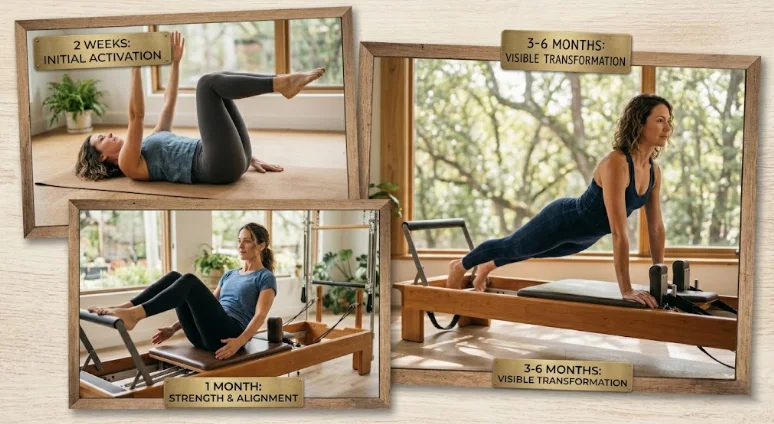
A woman practicing Pilates over three distinct timeline phases

Weeks 1-4: Building the Mind-Body Connection

In the first 2 to 4 weeks, Pilates is about activation. Your body is learning how to move in a controlled, efficient way, which is why many beginners start searching “how fast does Pilates work” or “how long does it take to see Pilates results” at this stage.

Inside your body, something important is happening: your brain and muscles are reconnecting through neuromuscular adaptation. This is the foundation of every Pilates progress timeline.

You may notice:

  • Better awareness of your core and posture
  • Reduced stiffness in your back, hips, and shoulders
  • Small improvements in balance and body control
  • Feeling “lighter” or more aligned in movement

A study published in PLOS ONE on Pilates training found that even short-term practice (around 4 weeks) can significantly improve trunk stability and balance in beginners, showing that early Pilates results are neurological before they become physical.

So, if you’re asking, does Pilates tone your body this early, the answer is: it starts internally first.

Weeks 5-12: Strength, Flexibility, and Control Development

This is the stage where Pilates starts to feel like it is actually “working.” If you’ve been asking, “How often to do Pilates to see real results?”, this is usually when changes begin to show both physically and functionally.

During this phase, your Pilates body transformation begins to take shape:

  • Core and back muscles feel noticeably stronger
  • Movements become smoother and more controlled
  • Flexibility improves, especially in the hips and hamstrings
  • Posture becomes naturally upright, not forced
  • Daily movement feels easier and more stable

This is also the point where people around you may start noticing changes, even if you don’t see a dramatic difference yet.

Months 3-6: Visible Pilates Body Transformation Phase

By 8 to 12 weeks, Pilates progress becomes much more noticeable, and by 3 to 6 months, the transformation is clear. This is the stage most people refer to when they talk about a true Pilates body transformation.

At this point, your deep stabilizing muscles are fully engaged and working efficiently, which changes both how your body looks and how it functions.

You may notice:

  • A leaner, with a more toned and defined body shape
  • Stronger core stability and improved endurance
  • Better posture without effort throughout the day
  • Reduced strain, stiffness, or minor body discomfort
  • More confidence in movement and alignment

This is also where the question ” Does Pilates change your body shape?” gets its answer. Yes, it changes your body shape, but gradually and through consistency.

By this stage, Pilates is no longer just a workout. It becomes a system that reshapes how your body moves every single day, delivering long-term, sustainable Pilates progress.

How Long Does It Take to See Pilates Progress?

Here is the simplest answer people are usually looking for:

  • 2–4 weeks: You feel changes (energy, posture, awareness)
  • 4–8 weeks: You start noticing early toning
  • 8–12 weeks: Visible body changes appear
  • 3+ months: Full transformation becomes clear

Reformer vs Mat Pilates: Which Gives Faster Results?

When people start comparing reformer vs mat Pilates, the question is usually simple: which one will show changes faster? And honestly, the answer depends on how your body responds and how consistent you are.

Mat Pilates feels more grounded and simple. You’re using your own body weight, so everything builds step by step. It focuses a lot on control, balance, and core strength. You don’t always “see” changes quickly, but you feel them over time in how you move and hold your posture.

Reformer Pilates feels different right away. The springs add resistance, but they also guide your movement. This is where Pilates Reformer Exercises really stand out. You get support and challenge at the same time. Because of that, your muscles tend to activate faster, and many people notice toning and strength changes earlier.

Final Takeaway: If you want faster Pilates results, reformer Pilates is the best way to start. At Pilates Nosara, our refor mer classes are known for proper guidance, hands-on correction, and structured progress. Join us and start working toward your dream body with training that actually shows results.

Join Our Pilates Reformer Classes Now!

How to Maximize Your Results of Pilates

Pilates works when your body has time to adapt and build strength step by step. Follow these points if you really want to maximize your Pilates progress.

  • Be consistent: Even 2-4 times a week is enough if you stay consistent. That’s when you start noticing real results of pilates over time.
  • Focus on form: Controlled movement with proper core engagement always works.
  • Progress gradually: When basic movements start to feel easy. Take that as a sign to level up.
  • Eat and hydrate well: Drinking enough water, eating properly, and sleeping well all quietly support your Pilates body transformation.
  • Notice small progress: Pay attention to your body posture, balance, and flexibility.
  • Rest properly: Your body doesn’t change during the workout; it changes after that. Rest is where the actual progress happens.

And yes, in the end, consistent practice with good form will always improve your Pilates results timeline faster than intensity alone.

Common Mistakes That Delay Pilates Progress

According to Pilates experts and professionals, these are the few common mistakes people fall into without realizing it.

  • Skipping consistency: Most pilates instructors will tell you, doing Pilates once in a while just doesn’t build change. Your body needs regular practice.
  • Rushing through exercises: It’s very common to see people trying to keep up instead of slowing down. But Pilates works best when you actually control each movement.
  • Not engaging the core properly: One of the biggest things teachers correct is core engagement. Without it, the exercise loses most of its benefit.
  • Ignoring breathing technique: Many pilates beginners hold their breath without noticing. Good breathing makes a huge difference in control and flow.
  • Expecting fast results: Pilates instructors always remind students that Pilates progress take time. You usually feel changes before you see them.

Once you fix these simple mistakes, your body results become more noticeable, more stable, and much more rewarding over time.

Start Your Pilates Training for Lasting Results

Pilates results don’t come from rushing. They actually come from showing up consistently and letting your body adapt at its own pace. Once you understand the Pilates progress timeline, everything makes more sense: early changes are internal, mid-stage improvements build strength and control, and long-term practice reshapes posture, tone, and movement.

The people who see the greatest transformation are those who stay consistent and focused on form.

If you’re serious about seeing real change instead of guessing what should be happening, guided practice makes all the difference. At Pilates Nosara, pilates private classes are designed to correct your form, speed up progress, and help you actually feel and see results with clarity.

If you’re ready to stop wondering and start transforming your body the right way. This is your next step: join a pilates private session at Pilates Nosara and experience Pilates that finally works for you.

FAQs

Does Pilates actually tone your body?

Yes! Pilates can tone your body by strengthening muscles and improving posture.

Is 30 minutes of Pilates a day enough?

Yes, 30 minutes a day can be more than enough. Consistent practice is more important than long workouts.

How many times a week should you do Pilates to see results?

Most people start noticing Pilates results when they practice 2 to 4 times per week. Consistency usually matters more than doing long sessions.

How long does it take to see Pilates results?

Many people feel small changes in 2 to 4 weeks. Visible Pilates body transformation becomes more noticeable after 8 to 12 weeks of regular practice.

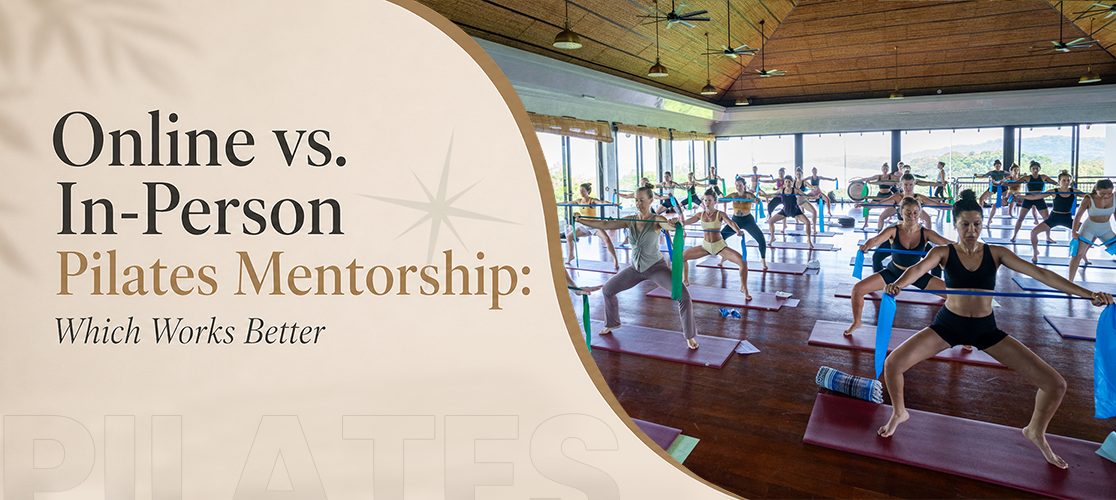
Online vs In-Person Pilates Mentorship: Which Works Better

Some Pilates instructors swear they became better teachers without ever stepping into a studio classroom, while others insist nothing replaces hands-on correction in real time. So, which experience actually shapes a stronger instructor?

The conversation around online vs in-person Pilates mentorship programs is getting louder as training options expand worldwide. From beginner-friendly Pilates mentorship online vs in-person choices to more advanced Pilates mentorship online vs studio training, aspiring instructors are now faced with a decision that can quietly shape their entire teaching journey.

Before choosing a path, it’s worth understanding what each format really changes about how you learn, move, and eventually teach Pilates.

Online Pilates Teacher Training: A Flexible Modern Path

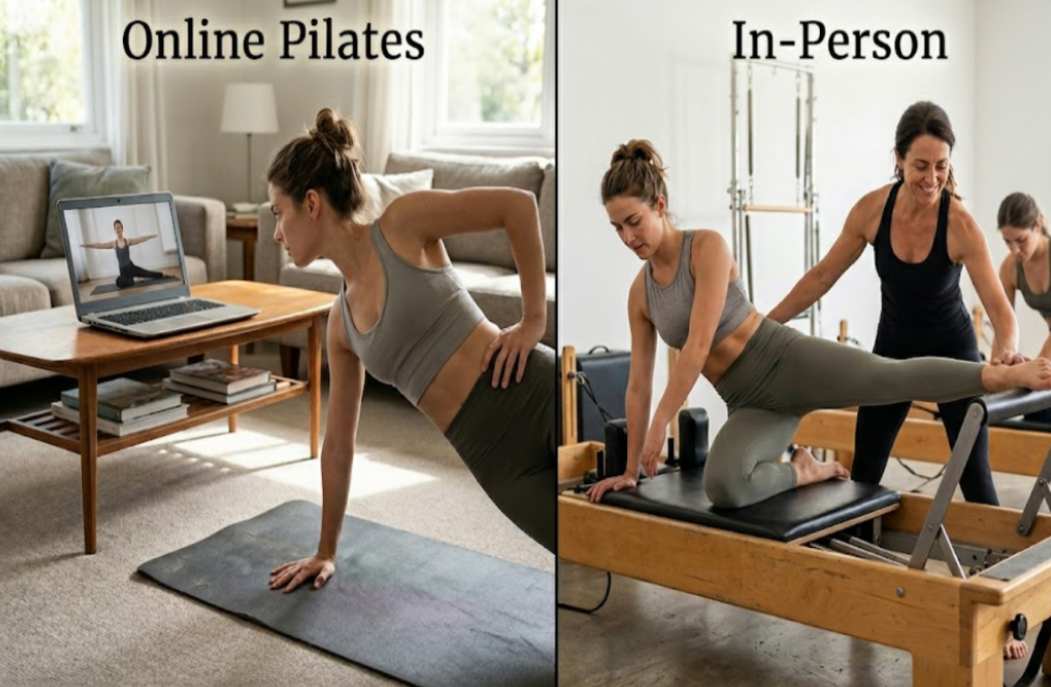
Online Pilates mentorship has become a flexible option for many aspiring instructors, especially those balancing work, family, or tight schedules all at once. It actually removes location limits and gives you access to learning from your own comfort zone. But below are the pros and cons, everything you need to know about online pilates teacher training

Pros

  1. In an online pilates mentorship, you can learn at your own pace and on your own flexible schedule.
  2. You’re not limited to local instructors and can learn from experienced teachers around the world
  3. It’s more affordable than in-person pilates studio training.
  4. You can go back and re-watch recorded lessons, which can be revisited anytime for revision.
  5. Online pilates training is easier to combine with a full-time job or other commitments.

Cons

  1. You don’t have a mentor physically there to correct your movement in real time.
  2. Small alignment issues can easily go unnoticed without an experienced eye in the room.
  3. It takes more time and practice to build strong hands-on cueing skills.
  4. You may not always have proper access to Pilates equipment like reformers or chairs.
  5. It requires a lot of self-discipline to stay consistent and keep progressing on your own.

Online vs. In-person Pilates Mentorship

In-Person Pilates Mentorship: The Studio-Based Learning Experience

In-person Pilates mentorship is the most traditional way to train as a Pilates instructor. You learn directly inside a Pilates studio, working side by side with experienced teachers, watching practical classes, and practicing on full Pilates equipment. It’s a very hands-on approach, and a lot of people choose it because it helps you actually feel what good teaching is supposed to look like practically.

Pros

  1. You actually get corrected while you’re moving, not after watching a recording.
  2. It’s easier to understand your body because a pilates instructor is guiding you physically in the moment.
  3. You spend a lot of time on real Pilates equipment, so it doesn’t feel theoretical.
  4. Small things like posture, timing, and cueing start to make sense naturally.
  5. Over time, you start feeling more confident working with your clients.

Cons

  1. It takes more time and money compared to learning online.
  2. You need to stick to a fixed schedule, even on busy days.
  3. You have to be physically present, which isn’t always easy if you live far away.
  4. It can be hard to balance work, family, and other responsibilities.
  5. Good training centers aren’t available everywhere, so location matters a lot.

Online vs In-Person Pilates Training: Quick Comparison 

Factor Online Training In-Person Training
Flexibility Learn anytime Fixed schedule
Cost More affordable Higher investment
Hands-on correction Limited Real-time feedback
Equipment access Self-arranged Fully available
Mentor access Global Local/in-person
Learning experience Independent Immersive
Peer interaction Virtual In-studio
Movement feedback Camera-based Full-body observation

Choosing between online and in-person Pilates mentorship is less about what’s “popular” and more about how Pilates is actually learned. It’s a physical discipline, so the way you’re trained directly shapes the kind of instructor you become.

Both formats can help you become a certified Pilates instructor, but the actual confidence and teaching ability depend on how much hands-on experience you actually get.

Is Online Pilates Mentorship Training Right for You?

When you really look at an online vs in-person Pilates mentorship program, it’s less about which one sounds better and more about how you actually learn. Online can feel like a good starting point, especially if you’re looking for something flexible or more affordable. But when you compare online pilates mentorship to in-person, being in a pilates studio, working face-to-face with a mentor, you start to notice the difference. 

That’s usually when the question “which is better: online or in-person Pilates mentorship?” becomes clearer, that yes, in-person is better than online Pilates mentorship.

Actually, the real gap shows up in the kind of instructor you’re becoming. A good Pilates mentor isn’t just knowledgeable; they notice small misalignments, give cues that actually make sense, and adjust based on the person in front of them. That’s why most serious instructors don’t just stop at online training; they move through both. 

The Bottom Line: If you’re serious about turning Pilates into more than just a personal practice, the smartest path isn’t choosing one over the other; actually becoming a Pilates instructor is all about knowing when to move from online learning into hands-on experience.

Join our teacher’s training program now!

Why Choose Pilates Nosara for Your Mentorship Training?

If you’re already thinking beyond basic pilates certifications and want something that actually changes how you teach, Pilates Nosara stands out for a reason. It’s not just another Pilates teacher training online vs in-person mentorship option. It’s built for people who want practical, hands-on growth. 

What really makes the difference is the environment and depth of pilates training. Instead of choosing between online Pilates mentorship vs studio training benefits, Pilates Nosara brings both together in a way that feels intentional. It’s designed for those who are serious about turning Pilates into a career. 

So, if you’ve been stuck deciding “should I choose online or in-person Pilates mentorship?”, this is where that decision gets easier, you’re stepping into the best place that knows how to prepare you for real clients, real teaching, and long-term growth as a Pilates instructor.

Ready to Take the Next Step?

If you’ve made it this far, you already know this decision matters. Choosing between online and in-person mentorship shapes the kind of instructor you want to become for your students. You can learn the theory anywhere, but actual confidence, hands-on skill, and the ability to guide others come from the right environment and the right pilates mentorship program.

If you’re ready to move beyond just learning and actually step into pilates teaching with clarity and confidence, this is your moment. Explore teacher training programs at Pilates Nosara, experience the difference for yourself, and start your journey of becoming the kind of instructor people trust and come back to.

FAQs

Which is better for beginners, online Pilates mentorship or in-person Pilates training?

In-person Pilates training is usually better for beginners because it offers hands-on guidance and correction.

Can you become a certified Pilates instructor through online Pilates mentorship programs?

Yes. Many online Pilates mentorship programs offer certification, but practical experience is still important.

What is the main difference between online and in-person Pilates mentorship training?

Online Pilates training focuses on theory and flexibility, while in-person training focuses on hands-on correction and teaching practice.

Should you choose online or in-person Pilates mentorship for my instructor career?

Choose online Pilates mentorship for flexibility, or in-person Pilates training for stronger teaching confidence and practical skills.


How Much Can a Pilates Instructor Make Amid Recent Industry Regulation Calls?

The global Pilates industry is experiencing a massive, quiet reckoning. On one hand, influencers are leading the fitness boom, drawing in thousands of followers eager to turn their passion into a full-time career. On the other hand, a much more serious conversation is exploding behind studio doors: urgent, sweeping calls for strict regulation over Reformer Pilates instruction.

The message echoing across the pilates horizon is loud and clear. The era of the unregulated, low-barrier fitness hustle is ending. As major regulatory bodies and health advocates push for strict operational oversight, a definitive line is being drawn between superficial, fast-track “weekend certifications” and truly legitimate movement educators.

If you are looking ahead and wondering, “How much can a Pilates instructor make?”, you must understand the new market reality. Your paycheck is now tied directly to the depth of your research and training choices. A generic, unaccredited certificate will no longer protect your career. To thrive in today’s competitive industry, you need to know exactly what separates a dead-end shortcut from a secure, high-yield professional future.

The Great Divide: “Weekend Scams” vs. Formal Pilates Instructor Trainings

The massive call for industry regulation isn’t random. It is a direct response to a dangerous trend: the fast-track, 16-to-40-hour online certificate. These low-cost programs mint “instructors” who are taught how to copy choreography on a screen but are left completely blind to human biomechanics, skeletal joint load, and safety.

If you hold a generic, unaccredited certification, your long-term career outlook is rapidly approaching zero. High-yield boutique studios can no longer afford the insurance premiums or liability risks associated with under-trained staff.

Understanding the Liability of a Quick Shortcut

In a standard gym setting, poor coaching might mean a sloppy workout. On a heavy studio apparatus, poor coaching results in severe structural injuries. True movement education requires a deep understanding of structural alignment, which cannot be learned in a single weekend seminar or from pre-recorded video loops. To command top-tier compensation, your education must align with verified global standards.

The True Architecture of a Balanced Body Education

A legitimate, internationally recognized training path, like the Balanced Body curriculum offered through Pilates Nosara, demands a dedicated commitment to fundamental mastery before you ever teach a paying client. This complete educational track is built around clear, non-negotiable phases:

The Mandatory Foundation

Aspiring educators cannot bypass the human body. Legitimate tracks require an intensive Applied Anatomy & Biomechanics course as an absolute prerequisite before starting physical training. True movement educators do not teach choreography; they analyze muscle insertions, joint mechanics, and common postural deviations.

The Core Curriculum Breakdown

Comprehensive preparation requires progressive mastery across separate, intensive modules. A standard-setting curriculum focuses on deep immersion into Movement Principles alongside Mat modules.

The Full Apparatus Track

Beyond the floor, true professional stability requires comprehensive repertoire mastery across the entire studio ecosystem, including the Reformer, Cadillac (Trapeze Table), Chair, and Barrels. This physical trade requires a massive investment of structural hours, including direct lecture, observation, self-practice, and supervised instructor teaching.

Get Balanced Body Training

The Value of Real-World Practice Over Theory

A certificate earned on paper means nothing without real-world application. Elite training centers separate themselves from fast-track scams by enforcing on-site, immersive learning environments. This includes intensive, multi-week technical lectures, hours of dedicated self-practice, guided observation, and hands-on teaching practice with real feedback.

When you learn to adjust language for different learning styles, deliver precise tactile corrections, and program for diverse body types, you shift from a basic trainer to a high-earning movement specialist.

Financial Realities: The Income Gap Between “Certified” and “Qualified”

When evaluating your educational investment, it is vital to recognize that training costs are not an expense; they represent your financial floor. The income gap between a short-term certificate holder and a comprehensively trained teacher is massive.

The reality of how compensation scales across the industry highlights the value of proper training:

Qualification Tier Total Educational Investment Typical Hourly Pay Range Expected Annual Career Yield
Fast-Track / Weekend Certificate 16 – 40 Hours
(Zero Anatomy Pre-reqs)
$15 – $22 /hour
(Basic big-box gym floors)
$0 – $25,000
(High studio rejection & turnover)
Comprehensive Mat & Reformer 200 – 300 Hours
(Basic Biomechanics)
$35 – $55 /hour
(Boutique group classes)
$45,000 – $75,000
(Stable studio placement)
Full Comprehensive / Balanced Body 500+ Hours
(Advanced Anatomy & Apparatus)
$65 – $120 /hour
(Privates & Clinical Rehab)
$85,000 – $130,000
(Elite Tier & Studio Directors)

Why a Speedy Certification Will Fail in the Near Future?

The tightening circle around unaccredited courses isn’t a temporary trend; it is a permanent shift driven by commercial insurance realities. As boutique fitness scales, insurance providers are facing a sharp increase in liability claims stemming from fast-track studio formats. To protect their margins, insurers are quietly rewriting their underwriting policies.

Within the next few years, commercial studio insurance will mandate that all teaching staff hold a verifiable credential from a globally recognized organization. If your resume lists a speedy weekend course, a studio owner will not be able to legally clear you to teach on their floor.

Investing in a shortcut program today means spending capital on an asset that is actively expiring. Conversely, committing to a comprehensive, multi-hundred-hour track builds immediate career immunity. 

When you are fully qualified to manage specialized private clients, program complex equipment safely, and satisfy commercial insurance audits, you become a highly protected asset. You aren’t just looking for a job; you are positioning yourself at the very top of the industry’s earning brackets.

Tips to Maximize Your Pilates Instructor Training

Completing a rigorous, comprehensive teacher training program requires immense discipline and a proactive approach to your education. Here’s how to gain the maximum advantage of your Pilates teacher training program, along with your Instructor’s assistance and guidance.

1. Master Your Movement Progressions Visually

Because you cannot interrupt a live session to ask questions, studying exercises independently is vital to understanding the repertoire. Subscribing to the Pilates Compass web app grants you on-demand access to an extensive video library and detailed exercise breakdowns created specifically for emerging teachers.

2. Deconstruct the Science of Structural Cueing

A great instructor doesn’t just read from a script; they use precise verbal and tactile language to modify movements for diverse body types. By utilizing the app’s comprehensive cueing details, you can study the underlying biomechanics of each sequence and learn exactly how to adapt your language for real-world clients.

3. Plan Engaging Audition Classes Fluidly

Entering the job market requires you to deliver confident, seamless audition classes for studio directors. Pilates Compass features intuitive, drag-and-drop class planning tools alongside curated playback music tracks designed to help you organize your creative flow and match the energy of any studio floor.

4. Build a Lifelong Professional Support Network

The transition from a student trainee to a paid professional can feel incredibly isolating without a dedicated community. The platform instantly connects you to a global mentorship forum of instructors from all training lineages, ensuring you have career-building business guidance long after your formal modules conclude.

Bottom line: Investing in a premium education is the right first step, enabling you to deliver quality sessions. By integrating your training with authentic Pilates teaching resources, you can elevate your skills and hourly pay with professional confidence.

Train with Pilates Nosara

Final Thoughts

The financial outlook for a Pilates instructor is exceptionally bright, provided you bypass the shortcuts. Entering the field with a weekend certificate puts your career on a fast track to zero stability. Sustainable results require a balanced approach, a deeper understanding of human anatomy, and a commitment to a legitimate educational framework.

If you want to build an enduring career, protect your capital by choosing an accredited path that respects the deep physical trade of the method. Invest in a comprehensive education that protects your clients, satisfies impending regulatory standards, and locks in your long-term earning potential. How much can a pilates instructor make is directly related to how much they invest, both time and money.

Frequently Asked Questions

How much can a Pilates instructor make in 2026?

Wages depend heavily on education and setting. Fast-track instructors earn near minimum wage ($15–$22/hour), while comprehensively trained specialists operating under recognized frameworks command $65 to $120+ per hour for private clients and mind-body-spirit sessions.

Why are there regulatory calls for Reformer Pilates right now?

The explosive growth of boutique fitness has flooded the market with short-term, unaccredited weekend courses. The resulting lack of anatomical knowledge has caused a visible rise in client injuries on complex apparatus, prompting studio owners and insurance providers to demand stricter education requirements.

Is the Balanced Body certification widely recognized?

Yes. The Balanced Body framework is globally revered across both commercial studios and clinical physical therapy environments. It is considered an elite asset for instructors seeking employment in highly competitive, high-paying markets.

Can you complete a comprehensive teacher training program online?

No. While theoretical components like anatomy lectures and history can be studied through digital modules, mastering physical spotting, apparatus mechanics, and hands-on adjustments requires intensive in-person labs and supervised apprentice teaching hours.

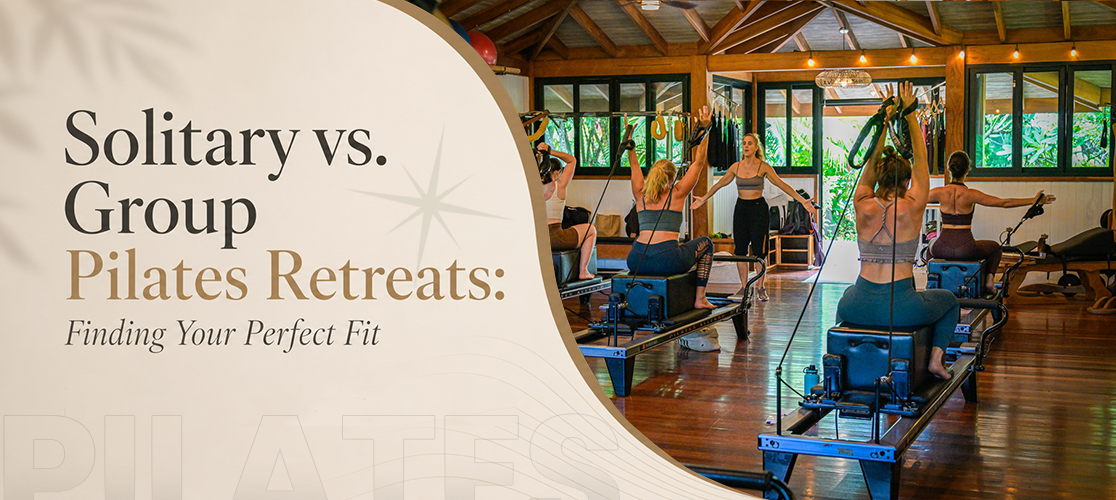
Solitary vs Group Pilates Retreats: Finding Your Perfect Fit

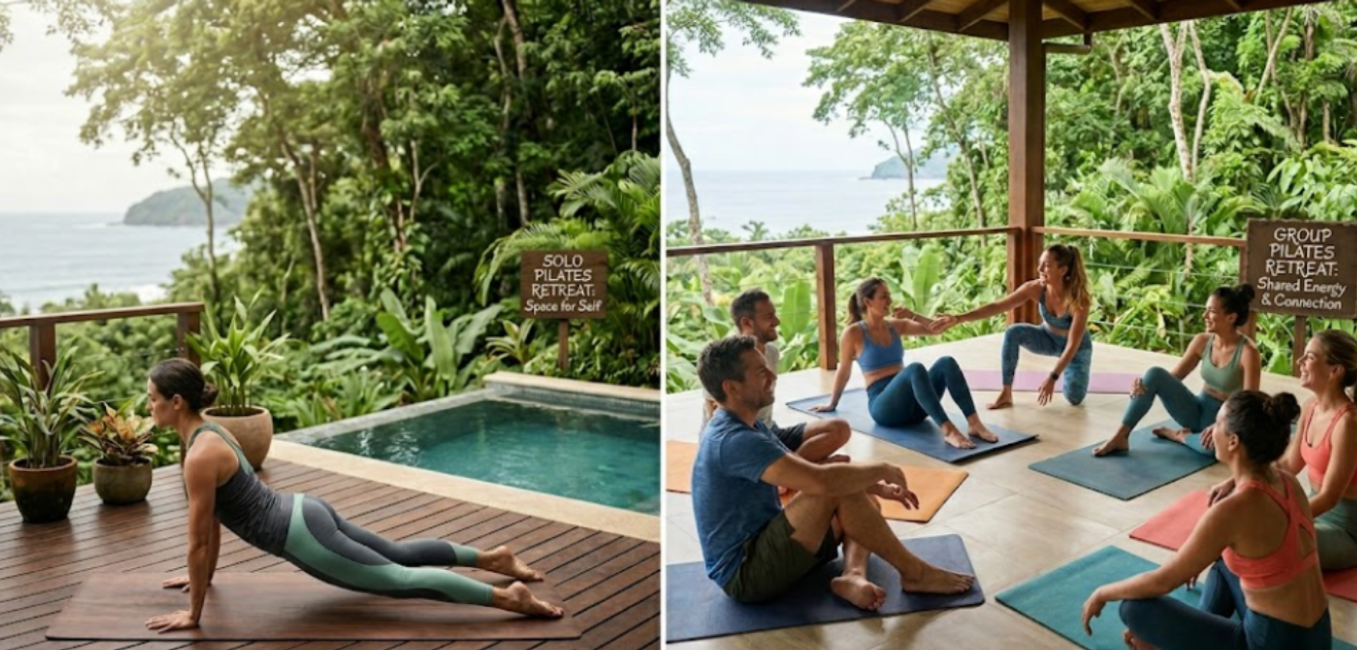
After seeing how different people respond to wellness travel, one thing becomes pretty clear: there’s no single way a Pilates retreat is “supposed” to feel. When it comes to solo vs group Pilates retreats, or even broader solo wellness retreats, the experience changes completely depending on what someone is looking for. Some people arrive and immediately need quiet, space, and a slower rhythm to reconnect with themselves.

According to global wellness research, structured wellness experiences like retreats are often linked to improved stress recovery, mental clarity, and emotional balance when they match a person’s needs and lifestyle. Others do better when the day has structure, when there’s a group around them, and when energy flows from shared movement and conversation. Both solo Pilates retreats and group Pilates retreats work, but they work on completely different emotional levels. 

What Group Pilates Retreats Offer 

Group Pilates retreats feel very different from a regular fitness class or a solo wellness trip. When someone joins a group Pilates retreat, they step into a shared environment where everyone is working on their own wellness goals, but at the same time, moving through the same daily rhythm. 

Over a few days, something subtle happens, and people who started as strangers slowly begin to feel familiar. Not because they are forced to talk, but because they are sharing meals, sessions, and small everyday moments that naturally build comfort and connection. This is why many Pilates retreats in the USA and Costa Rica wellness retreats are designed around group energy in the first place. 

Building Connections with Others

People usually don’t arrive expecting emotional connection, but group settings naturally create it over time. A quiet sense of understanding develops when participants realize everyone is there for personal reasons like stress relief, fitness, or recovery. Without trying too hard, conversations start forming between sessions, and shared experiences slowly turn into meaningful interactions that often last beyond the retreat itself. 

Professional Guidance and Programs

In most small group Pilates retreats or structured Pilates wellness retreats in the USA, the entire experience is guided by trained instructors who follow a clear daily plan designed for safe progression and balance.

  • Certified Pilates instructors lead each session with step-by-step guidance
  • Programs are structured to improve flexibility, strength, and posture gradually
  • Sessions often include breathwork and mobility training for recovery
  • Beginners receive adjustments, making it feel close to a private Pilates retreat for beginners experience
  • Daily routines balance effort and rest, so participants do not feel overwhelmed

Many group retreats also blend Pilates with yoga as part of the daily structure. This combination is often used because Pilates builds core strength and alignment, while yoga supports flexibility, recovery, and nervous system balance. Together, they create a more complete retreat-style learning experience, especially for people who are also looking for gentle weight loss support through consistent movement rather than intense training. 

Learning from Fellow Participants

In group retreats, learning does not only come from instructors. A lot of growth happens just by being surrounded by others on the same journey. People naturally observe, adapt, and get inspired by how others move and progress.

  • Watching others improves awareness of posture and technique
  • Beginners feel less pressure when they see different fitness levels in the same space
  • Motivation increases when participants notice group progress over time
  • Small encouragements between participants build confidence
  • Shared experiences create a natural sense of accountability during the retreat

What Solo Pilates Retreats Offer

A solo wellness retreat feels slower in the best possible way. There is no pressure to match anyone else’s pace, no group schedule to follow, and no background noise of constant interaction. Everything revolves around your own rhythm. Many people who choose solo Pilates retreats, private Pilates retreats, or even wellness retreats in the USA and Costa Rica usually arrive feeling mentally full or physically tired from routine life. What changes over the days is not just flexibility or strength, but the way the mind settles when it is finally left undisturbed.

Time for Self-Discovery (Mind-Body Reset)

In a solo setting, the experience naturally turns inward. There is more space to notice how the body feels, how the breath moves, and how thoughts slowly start to quiet down when nothing is demanding attention from the outside. It becomes less about doing Pilates perfectly and more about understanding what your body actually needs in that moment. For many people, this is where emotional release happens quietly without effort, especially when they are recovering from stress or burnout.

Setting Your Own Schedule

There is a different kind of comfort in not being tied to a fixed group routine. In a solo Pilates retreat, the day doesn’t have to look the same for everyone.

Time What Happens Why It Matters
Morning Gentle Pilates session Wakes up the body without stress
Mid-morning Private instruction or self-practice Focuses on personal progress
Afternoon Rest, spa, or journaling Helps the body and mind recover
Evening Light stretch or meditation Calms the nervous system

Personal Time in Nature

Many solo Pilates retreats, especially those in places like Costa Rica or peaceful wellness locations in the USA, are set in natural surroundings where everything feels quieter and more open. Spending time in that kind of environment changes how the body responds to rest and movement. Even simple moments like walking alone, sitting outside after a session, or just observing nature without distractions start to feel meaningful. Over time, that silence doesn’t feel empty anymore; it starts to feel supportive, almost like the environment itself is helping the mind slow down and reset.

Direct Comparison: Solo vs Group Pilates Retreats

Solo vs Group Pilates Retreats

Below is a structured overview of solitary vs group Pilates retreats, based on typical industry offerings.

Cost and Experience Breakdown 

Aspect Group Pilates Retreats Solo Pilates Retreats
Average Cost $600–$2,800 per person $1,800–$6,500+
Duration 3–7 days 3–14 days
Accommodation Shared or private rooms Private villas or suites
Meals Communal dining Flexible/private dining
Structure Fixed group schedule Fully personalized plan
Support Group instructors & peers One-on-one coaching

Key Insight: Prices vary based on destination. Costa Rica wellness retreats often focus on eco-luxury and nature immersion. The better choice depends less on cost and more on personal wellness goals.

Why You Should Choose a Solo Pilates Retreat

A solo Pilates retreat usually makes sense when everything feels a bit too loud in daily life. Work, routines, notifications, responsibilities, it all adds up. In that kind of state, being around people or following a fixed group schedule can feel like too much. So, a solo retreat gives you the space. You move at your own pace, rest when you need to, and don’t have to adjust yourself for anyone else. Most people end up choosing it when they’re tired, stressed, or just mentally full and want a reset that feels quiet and personal. 

Why You Should Choose a Group Pilates Retreat

A group Pilates retreat feels very different. It works better for people who don’t want to do everything alone and actually feel more motivated when others are around.  There’s a natural flow to the day, and you just follow it without overthinking. You’re learning, moving, and staying active with the group, which makes it easier to stay consistent. For a lot of people, that shared energy is what keeps them going, especially when motivation usually drops on its own.

Takeaway:

  • Choose Solo If: You are burned out, recovering from injury, processing something deeply personal, or you know from experience that silence is where you do your best thinking.
  • Choose Group: When you are a beginner, craving accountability and connection, energized by shared movement, or you have been isolated and need people to pull you back into rhythm.

How to Choose the Right Pilates Retreat for You 

Choosing the right Pilates retreat usually comes down to what someone actually needs at that point in life. Some days it’s about space and quiet, other times it’s about being around people who are also trying to reset and feel better in their bodies. That’s why both solo Pilates retreats and group Pilates retreats can work, just in very different ways. A lot of people looking at Pilates retreats in the USA or Costa Rica wellness retreats end up deciding based on how they feel emotionally, rather than just the location or price.

If there’s something that sits in between both experiences, it’s the Pilates Nosara Signature Retreat in Costa Rica. It brings together both Pilates and yoga, so the body gets movement and strength work, while the mind also gets time to slow down. It doesn’t feel overly strict or too loose; it’s more of a natural balance of both.

  • Pilates and yoga are both part of the daily flow
  • Set in Nosara, Costa Rica, with a calm, natural environment
  • A mix of guided sessions and personal time throughout the day
  • Works for beginners as well as people already into Pilates
  • Focused on real rest and recovery, not just a fitness trip

Bottom line: If you have been stuck between wanting personal depth and real community, Pilates Nosara is one of the very few programs that does not make you choose.

Your Next Step: Join Pilates Nosara Signature Retreat

Solo vs group Pilates retreats come down to whether you need quiet space or shared energy, while the Pilates Nosara Signature Retreat offers a balanced experience that brings both together in a natural way. Explore the Pilates Nosara Signature Retreat to see if it feels right for your reset. And reserve your spot now!

Frequently Asked Questions

Can a Pilates retreat actually help with stress or burnout?

Yes. Stepping away from routine, moving your body gently, and having time to rest can make a noticeable difference in how mentally “heavy” things feel.

Do group retreats feel too intense or crowded?

Most are designed to avoid that. There’s usually a balance between guided sessions, free time, and rest, so it doesn’t feel overwhelming.

What makes the Pilates Nosara Signature Retreat different?

It sits between both styles. You still get structure and guidance, but there’s also enough space in the day to slow down and reset on your own.

How do you decide which retreat is right for you?

It usually comes down to your current energy. If you’re drained and need space, solo tends to fit better. If you want motivation and connection, a group feels more supportive.

Common Mistakes in Pilates: Signs You’re Doing Pilates Wrong (And How to Fix It)

Common mistakes in Pilates are the hidden reason most beginners feel stuck, confused, or disconnected from their practice. Instead of building stability, their body begins to compensate. Instead of control, there’s strain in the body. And still no progress. Then the frustration starts inside you that usually sounds like “Why is Pilates hard?” or “Am I doing this right?”

The issue is rarely effort. Its execution. Even a small breakdowns in breathing, posture, alignment, and muscle activation quietly change the whole outcome of the workout. These common errors are subtle, but they can completely affect results over time. But once you recognize these patterns, everything shifts. Movement becomes intentional, the body starts responding correctly, and Pilates finally delivers control, strength, and balance.

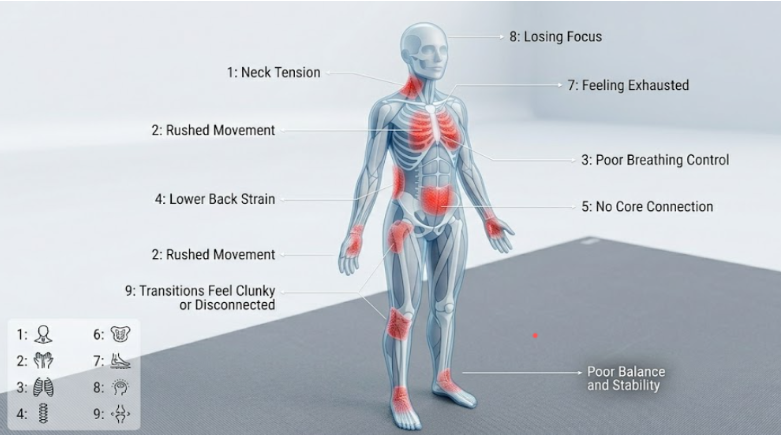
Common Signs You’re Doing Pilates Wrong

The following signs are the most common indicators that something in your technique is off.

1. Neck Tension

If you finish your Pilates workout and immediately feel strain in your neck, shoulders, or upper traps. And the feeling that your body is not working the way it should. This is one of the big mistakes in Pilates because the load is supposed to stay in your core, not shift upward.

This usually happens when your abdominals are not fully engaged, so the upper body tries to “help” stabilize you. On the mat, it shows up in exercises like roll-ups or hundred variations where the chin pushes forward, and the shoulders lift. While on the reformer, it can appear during footwork when resistance is felt in the neck instead of the abs.

You’ll also notice that many of these issues feel different in mat Pilates compared to reformer Pilates. If you’re unsure which one suits you better. It’s worth understanding the difference between mat vs reformer Pilates for beginners before making a decision.

How to Fix?

If you’re feeling your neck or shoulders working more than your core. Let your shoulders drop away from your ears and stop holding tension there. Start moving, gently switch on your core so your body has support from the center instead of the neck taking over.

2. Rushed Movement

Pilates is designed around control, not speed. When you move too quickly, you remove the resistance your muscles need to actually work. 

On the mat, rushing usually looks like using momentum to complete reps instead of controlling each phase of the movement. On the reformer, it shows up when the carriage is pushed out and snapped back without resistance awareness. This breaks muscle activation, reduces stability, and turns Pilates into a fast workout instead of a precision-based practice.

How to Fix?

There’s no need to rush through Pilates. Try slowing each movement down and notice what changes when you actually control the pace instead of just finishing the reps.

3. Poor Breathing Control

When breathing becomes irregular or shallow, your movement becomes tight and less connected. This is one of those mistakes in Pilates that quietly affects everything.

On the mat, you may hold your breath during core work like planks or teasers. On the reformer, breath often disappears during resistance exercises when effort increases. Without proper breathing in Pilates, the body tightens, movements feel heavier, and flow becomes disconnected from control.

How to Fix?

Most people don’t even notice when they stop breathing properly. Just keep it simple, breathe in before you move, and breathe out as you do the effort part. Don’t overthink it, just don’t hold your breath while working.

Common Pilates mistakes and injury areas

4. Lower Back Strain

If your lower back feels tight or sore after Pilates, your alignment is off. This is one of the most important Pilates mistakes beginners make because it directly affects safety and progress.

On mat exercises like leg lowers or hundreds, the pelvis often tilts, causing the spine to overwork. On the reformer, this appears during footwork or leg straps when stability is lost through the center.

How to Fix?

If your lower back starts to feel tight or uncomfortable during Pilates. That’s usually a sign you’re pushing too far or losing support in your center. You don’t need to force the movement. Just bring the range a little smaller and keep your core gently active the whole time. Let your stomach do more of the work so your back can relax and stay protected.

5. No Core Connection

One of the clearest signs that something is off is when you finish a Pilates session and don’t feel your core at all. You’ve done the work, but the abs feel completely “absent.” This is a very common mistake in the Pilates pattern, especially when the deeper stabilizing muscles are not activating properly.

On the mat, this shows up in roll-ups where the upper body leads instead of the center. On the reformer, it appears when strap work feels like it’s driven by the legs rather than the core. Over time, this reduces true core engagement and limits progress, even if you’re training regularly.

How to Fix?

Before each exercise, take a second to bring your attention back to your stomach. Think of gently drawing everything inward so your center is doing the work. If you feel it more in your legs or hips, reset and start again slowly.

6. Poor Balance and Stability

If you keep feeling a little unsteady during Pilates, like you’re constantly adjusting or trying not to fall out of position. That’s because your body hasn’t fully settled into proper control yet. 

On the mat, this shows up when you’re doing single-leg work or slow, controlled holds, and your body keeps wobbling or shifting to stay upright. While on the reformer, it becomes noticeable when you’re standing or kneeling, and your balance keeps changing with even small movements. Most of the time, this happens because the deeper stabilizing muscles aren’t fully switched on yet, so your body is relying on bigger muscles to hold everything together.

How to Fix?

If you keep feeling a bit shaky or unsteady, don’t try to rush through it. That usually makes things worse. Slow down and give your body a second to settle before you move. It also helps to keep your eyes on one steady point. So, your balance feels more grounded and controlled.

7. Feeling Exhausted

It’s normal to feel tired after a Pilates session. But if you’re always walking away completely drained and not really noticing any kind of improvement over time. This means that your technique of movement is off.

Instead of the core leading the movement, your legs, neck, or hips start taking over. On the reformer, this can feel like your legs are on fire while your center feels almost untouched. On the mat, repeating exercises without real control just leaves you tired, not stronger. Over time, this can make Pilates feel harder than it actually should be.

How to Fix?

If you’re finishing Pilates drained but not really seeing any change in strength, something’s off in how you’re doing it. Try slowing down and easing the effort a bit. Remember, when you move with more control, your body starts getting stronger.

8. Losing Focus

At some point during Pilates, you might notice your mind drifting. You’re still moving, but you’re not really paying attention to what your body is doing anymore. 

In longer mat pilates sessions sequences, it’s easy to slip into autopilot and just “get through” the workout. On the reformer, the rhythm of the machine can make you stop thinking about alignment or control. When that happens, the connection between your mind and body fades, and the movements become automatic instead of intentional. And that’s usually when form starts to slip without you realizing it.

How to Fix?

If you catch yourself zoning out during Pilates, don’t worry, it happens quite often. You’re still moving, but your attention is somewhere else. Just bring your focus back gently each time it happens. You can think about your breathing or how your body feels in the movement. Even a small bit of awareness can completely change how effective your workout feels.

9. Transitions Feel Clunky or Disconnected

If moving from one exercise to another feels a bit messy, rushed, or like you’re losing control in between. That’s actually something worth paying attention to. Pilates isn’t just about the exercises themselves, but how smoothly you move between them.

On the mat, this might show up when you switch from bridges to core work or from one position to another, and it feels slightly unsteady. Or in a reformer session, it can happen when changing positions or adjusting springs. Everything feels a bit rushed or unorganized. When transitions don’t feel smooth. This means your overall control and body awareness are still developing.

How to Fix?

Don’t rush from one movement to another. You should take a small pause so your body can reset before the next movement. That small moment makes everything feel more controlled and connected.

A lot of these movement issues don’t just happen with beginners. They come from how Pilates is taught in the early stages. We’ve broken this down in detail in our guide on common mistakes Pilates teachers make and how it affects student progress.

Ready to Fix Your Pilates Practice?

If even a few of these signs felt familiar, don’t brush them off. It just means your body is trying to tell you something about how you’re moving. These common mistakes in Pilates build up slowly, without you even noticing. Most of the time, the change doesn’t come from doing more, but from slowing down and correcting a few small things.

The longer these patterns continue, the harder they become to correct. A few small adjustments today can completely change how your body feels in your next session. Take the next step now. Explore guided Pilates sessions at Pilates Nosara and start building strength in a way that actually feels right for you.

FAQs

Q. Is Pilates hard or easy for beginners?

It can feel a bit hard at the start because everything is new and slow. You’re not just moving, you’re actually learning how to control your body differently. After a few pilates classes, it usually starts to feel much easier for beginners.

Q. Why does Pilates feel so hard at first?

Most people find it hard in the beginning because you can’t rush through it. Every movement needs control, and that takes a little time to get used to. Once your body understands it, things start to feel more natural.

Q. What should I expect in my first Pilates class?

Your first class will feel new and a bit unfamiliar. You’ll go through basic movements in which you learn how to breathe properly and focus on simple body positions.

Q. How do I prepare for a Pilates session?

Just wear something comfortable that lets you move easily. Try not to eat a heavy meal right before class and drink some water. The main thing is to come in relaxed and open to learning.

Q. What is a Pilates workout like?

A Pilates workout helps improve your posture, strength, and balance. It’s more about how you move than how intense it feels.

Q. Can Pilates cause injury if done wrong?

Yes, when you rush or don’t use proper form, you can strain your neck or lower back. That’s why moving slowly and staying in control is important.

Q. Is Pilates good for recovery?

Yes. Pilates is very safe for injury recovery. Many people use Pilates when recovering because it’s gentle and helps rebuild strength.

Is Pilates Good for Injury Recovery? Benefits, Exercises & What to Expect

We often hear “just take complete rest” after an injury. And yes, that does help the tissues heal. But staying in that phase for too long can also leave the body feeling stiffer and weaker.

At that point, it’s only natural to start wondering, when is it actually okay to begin moving again? And can something like Pilates help, or make things worse?

To answer that, we’re bringing in what we’ve seen over the years working with people at different stages of recovery.

In this guide, we’ll share when it’s okay to start gentle movement, when it’s better to give your body more time, and what type of Pilates works best depending on your condition and stage of healing.

Why Pilates Is Effective for Injury Recovery

When you hurt your shoulder, back, knee, or other muscle and joints the pain rarely stays to one place. It often disrupts the entire muscle chain connected to that area. It change how you move, walk, sit, and reach. Suddenly, your body is in a state of “chaos”. Some muscles have completely stopped functioaning, while others are working double-time to make up for them. Over time, this creates imbalance in the body, which can slow down recovery and even lead to new discomfort.

That’s where Pilates can make a real difference. Instead of pushing the body into full-range movement too soon, Pilates focuses on controlled, targeted activation, especially in the muscles that have stopped doing their job. The goal isn’t to “stretch everything,” but to restore balance, stability, and proper movement patterns.

When guided correctly, Pilates starts with the areas that need the most support and gradually builds strength from there. As those muscles begin to function the way they’re supposed to, the body starts to feel more stable, more aligned, and less reactive to movement.

That’s often when people notice a shift, not just less pain, but more confidence in how their body moves again.

What Types of Injuries Can Pilates Help With?

Just as you wouldn’t take the same medication for every illness, you cannot apply the same Pilates routine to every injury. Recovery is personal, and your path to healing must be specific to your body’s needs.

At Pilates Nosara, we specialize in targeting the root cause of discomfort. Below are the most common conditions we help our clients recover from using the precision of the Pilates method:

Back Pain & Spinal Injuries

Back pain is arguably the most common issue we see in the studio. You’ve likely tried everything to manage it, from cooling gels and creams to obsessing over your sleeping position. But while those remedies might offer temporary relief, they rarely address the root cause. Most back and spinal discomfort isn’t just about the spine itself; it’s about the muscles surrounding it.

When your core stabilizers “go to sleep”, often due to desk work, lack of movement, or past injuries, they stop doing their job. This forces the muscles around them to work double-time to compensate. Eventually, those hardworking muscles become exhausted, tight, and painful. This is the “pressure cycle” that keeps your back feeling locked up and sore.

Knee Injuries

When your knee hurts, it’s natural to focus all your attention on that one joint. But as movement experts, we look at the surrounded muscles. Your knee is like a bridge between your hip and your ankle. If your hip muscles are weak or your ankles are stiff, the knee has to absorb all the shock from every step you take.

Pilates doesn’t just “rub the sore spot.” We strengthen the glutes and thighs to create a natural “brace” for the knee. By training your hips to carry their fair share of the load, the pressure on your knee joint drops, allowing the inflammation to settle and the tissues to heal. 

Shoulder Injuries

The shoulder is the most mobile joint in your body, it can move in almost every direction. But that freedom comes at a price: it’s very easy to become unstable. Most shoulder pain happens because the small muscles around your shoulder blade (the “scapula”) have stopped functioning properly.

Instead of just lifting heavy weights, Pilates focuses on re-education. We target those tiny stabilizer muscles that keep your shoulder “holds” in the right place. By improving the connection between your upper back and your arm, we restore smooth, “gliding” movement. 

Post-Surgery Recovery

After surgery, you are in a delicate tug-of-war. If you move too much, you risk irritating the surgical site. If you don’t move enough, you deal with painful stiffness.

Pilates is the perfect safe middle ground. Because it is low-impact, we can rebuild your circulation and mobility without the jarring force of traditional gym workouts.

Sports Injuries

Most sports injuries aren’t “accidents” they are the result of tiny imbalances that have been building up for months. Even after the initial pain of a strain or tear goes away, those “bad habits” in your movement remain.

We use Pilates to “audit” your movement. We find the weak links in your chain maybe a tight hamstring or a lazy core and fix them. By correcting these patterns, we don’t just get you back on the field; we make you a better athlete than you were before the injury.

What Type of Pilates Is Best for Injury Recovery?

Sometimes a choice for Pilates is a straight decision, but the quest for a perfect match is tough. Not anymore! We put our years of experience on the table to help you. Below, we share a guide to the different paths you can take for your needs.

Type of Pilates Best For… Why it Works for Injuries
Clinical Pilates Medical diagnoses (Scoliosis, Herniations). It offers close supervision and exercises for your exact injury.
Reformer Pilates Joint pain and muscle weakness. Springs act as extra muscles to support your weight and remove strain.
Mat Pilates Long-term stability and core strength. It uses your own body weight to build a shield for your spine.

When Can You Start Pilates After an Injury?

The time for Pilates to do depends entirely on the “Acute Phase” of your injury.

  • The 72-Hour Rule: For the first 3 days, rest is usually best to let swelling go down.
  • The “Clearance” Phase: Once your doctor says you can perform “activities of daily living” (like walking or light reaching) without sharp pain, you are usually ready for a modified Pilates session.

Pilates vs. Physical Therapy: What’s the Difference?

Feature Physical Therapy (PT) Pilates for Recovery
Primary Goal Clinical repair and basic function. Full body balance and long-term strength.
Focus Area The specific site of your injury. The entire muscle chain and core.
Tool Kit Manual therapy, ultrasound, and heat. Springs, gravity, and breath control.
Phase of Care Best for acute pain and post-op care. Best for transition to health and fitness.
Outcome Restoration of a single joint or limb. A resilient body with better posture.

FAQs 

Is Pilates better than physiotherapy?

Pilates is ideal for the treatment of injuries that are related to the muscles. However, physiotherapy is for acute pain or fresh trauma. So for long-term strength, maintenance, functional movement, and injury prevention, Pilates is a better option.

Can Pilates make injuries worse?

If you do Pilates under expert supervision, like at Pilates Nosara, there is a minimal risk to your health. A “bad” result only occurs when you try moves without a correct grasp of your injury. If you move with the wrong posture or too much force, you can cause a flare-up.

Is Pilates Safe for Injury Recovery?

Yes, Pilates is safe for injury recovery if you follow the lead of an expert. The risk only appears when you move without a guide or with poor form.

Start Your Recovery Journey with Pilates Nosara

Injuries are a common part of daily life. However, a long wait for health is not necessary when Pilates is here to help. You do not have to stay in pain for months. All you need is the correct path for your body.

If you do not know where to start, reach out to Pilates Nosara. We inspect your injury and study your movement patterns. Then, we create a plan to wake up your core and protect your joints.

Do not let a stiff body or a weak muscle hold you back. Let us help you move with joy and confidence again.


Pilates for Back Pain: Can It Really Improve Your Posture?

In our daily commute, long hours at the desk, or lounging on the sofa, we often settle into what feels like a comfortable posture. But slowly, this habit is nudging our naturally straight spine into a curved shape, almost like a “question mark”. If you ignore it, it can lead to serious back pain, affecting everything from your mood to how you move.

One of the best ways to reset your posture is to do pilates for back pain. It strengthens your back, improves alignment, and can give you a posture you didn’t even know you were missing.

So, what exactly can Pilates do for back pain, and how does it really help fix posture? Let’s find out.

Why Posture Matters: The Link Between Back Pain and Alignment

Right posture acts like the pillars of a building. When one pillar shifts, the others take extra pressure and the whole structure weakens. Our body works the same way. The musculoskeletal system includes bones, muscles, ligaments, and fascia. These parts work together to maintain balance, absorb shock, and allow smooth movement.

When the structure goes off balance, it places abnormal stress on the spine and surrounding tissues. The vertebral bodies, discs, and facet joints in the lumbar and thoracic regions bear the extra load. Over time, this stress accelerates disc degeneration, joint wear, and ligament strain, causing chronic pain and limiting mobility.

How Pilates for Back Pain Supports a Healthy Spine

Pilates focuses on core training. You perform stretching, bending, and controlled squeezing movements that improve muscle function and coordination. Pilates targets the transverse abdominis, multifidus, pelvic floor, and diaphragm, which work together to maintain spinal alignment and absorb forces during movement.

Pilates also restores muscle balance. Poor posture often tightens the anterior muscles, such as the chest and hip flexors, and lengthens and weakens the posterior muscles, like the erector spinae and gluteals. 

Pilates stretches the tight muscles and strengthens the weak ones, improving spinal alignment and promoting a natural, upright posture.

Top Pilates Exercises for Back Pain Relief and Posture Improvement

Exercise Name Muscles Targeted How It Improves Back Posture
Pelvic Curl / Bridge Gluteals, hamstrings, erector spinae, transverse abdominis Strengthens the posterior chain, stabilizes the lumbar spine, and helps lift a slouched lower back for better upright posture
Swimming / Supermans Erector spinae, multifidus, gluteals, shoulders Activates deep spinal stabilizers, improves thoracic and lumbar extension, counteracts rounded upper-back posture
Plank Transverse abdominis, rectus abdominis, obliques, shoulders Builds core stability, supports neutral spine alignment, reduces lumbar strain
Cat-Cow Stretch Erector spinae, multifidus, abdominal muscles Increases spinal flexibility, releases tension in thoracic and lumbar regions, encourages correct spinal curvature
Spine Twist / Seated Rotation Obliques, transverse abdominis, erector spinae Enhances rotational mobility, reduces stiffness in the thoracic spine, improves overall spinal alignment
Chest Opener Stretch Pectorals, anterior deltoids Opens tight chest muscles, counteracts forward shoulder slump, promotes upright upper-body posture
Leg Circles Hip flexors, gluteals, core stabilizers Strengthens deep core and hip stabilizers, reduces anterior pelvic tilt, supports lumbar alignment
Roll-Up Rectus abdominis, obliques, spinal extensors Encourages controlled spinal articulation, improves flexibility, strengthens the core for better upright posture
Side-Lying Leg Lifts Gluteus medius, obliques, hip stabilizers Strengthens hip stability, improves pelvic alignment, and supports better lower-back posture

FAQs

What exercises should I avoid with lower back pain?
Avoid exercises that put excessive pressure on the spine or involve sudden twisting and heavy lifting, such as deep backbends, heavy squats, deadlifts without proper form, or high-impact activities like running on hard surfaces. Stick to controlled movements that support your spine.

What are the big 3 exercises for lower back pain?
The “big three” exercises recommended by many experts are McGill curl-up, bird-dog, and side plank. These moves strengthen the core and spinal stabilizers without putting extra strain on your lower back.

Will lower back pain ever go away?
In most cases, yes. With proper posture, regular exercise, and targeted core and back strengthening, lower back pain can improve significantly. Chronic pain may require professional guidance, but many people see lasting relief.

Does back pain get worse with age?
Back pain can become more common as we age due to natural changes in discs, joints, and muscles. However, staying active, maintaining core strength, and practicing good posture can reduce severity and prevent it from worsening

Expert Guidance for Safe and Effective Back Pain Relief

Pilates for back pain is one of the most effective ways to reduce discomfort and improve posture. However, some types of back pain can be more serious, and in those cases, it’s important to seek expert guidance. 

At Pilates Nosra, we have certified instructors who provide personalized assessments and  exercises to ensure you strengthen your spine safely, relieve tension, and correct posture effectively.

Become A Part Of Our Paradise

Become 1
Become 2
Become 3
Become 4
Become 5
Chantelle Koutsantonis - Pilates Nosara
Path To Paradise