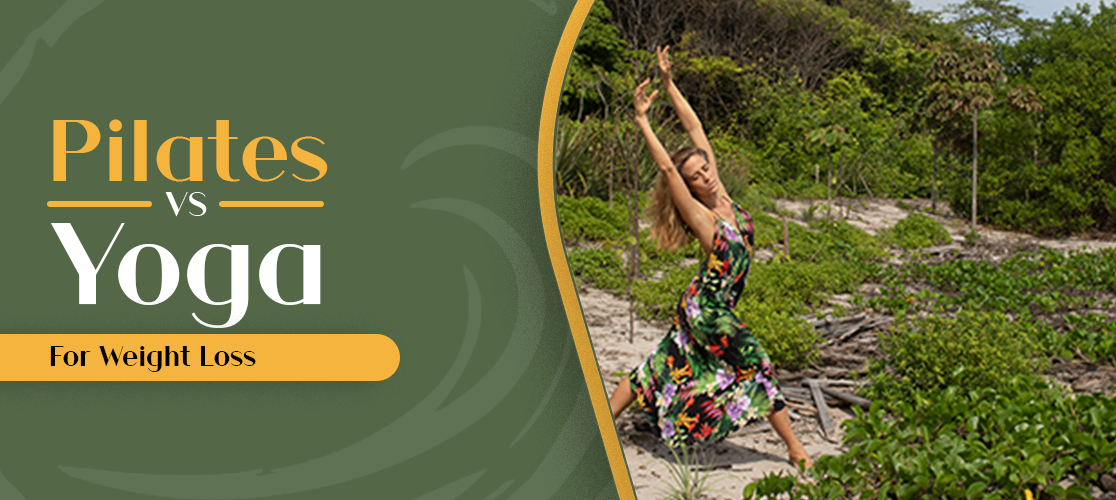
Pilates vs Yoga for Weight Loss: What Actually Works?

Pilates vs yoga is something a lot of people search for when they’re trying to lose weight but don’t want to jump into intense workouts right away. Some prefer a lower-impact approach, while others look for something that feels more balanced. 

That’s where pilates and yoga come in. At first, they look almost the same. Slow movements, stretching, controlled breathing… It’s easy to assume they do the same thing. But once you actually try them, the experience is completely different.

Pilates vs Yoga: Which Helps You Lose Weight?

Pilates 

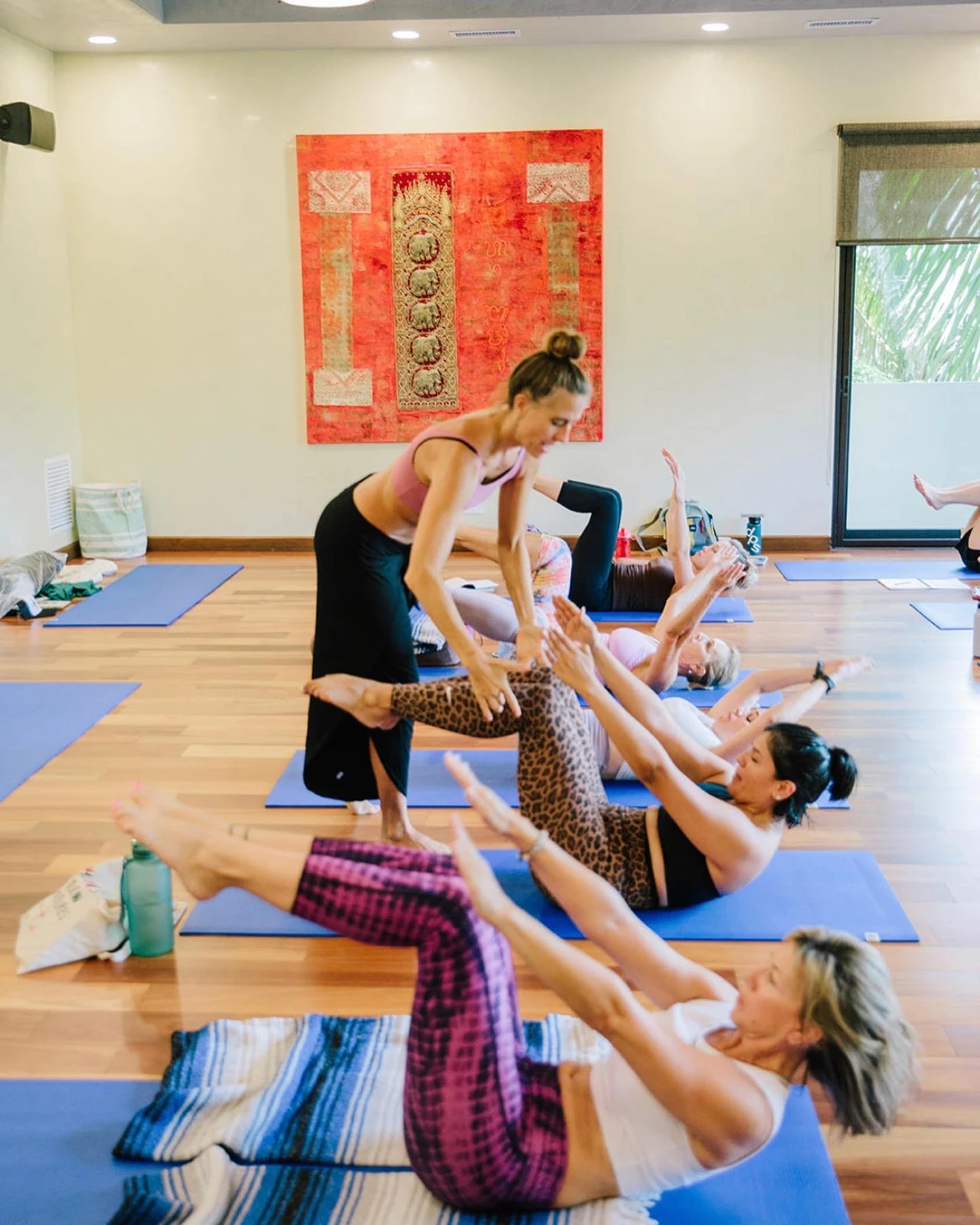
Pilates is one of those workouts that doesn’t look very intense from the outside, but once you do it, you realize how much energy it actually takes. You’re not rushing through movements. Everything is slow, focused, and very intentional. Most of the activities are around the core, but you also feel it in your legs, arms, and even muscles you didn’t know existed.

Most people don’t realize what Pilates actually does. It’s more about shaping and strengthening your body than lifting heavy weights on machines.

With regular practice, you’ll notice:

  • Your body starts to look more defined, especially around your core
  • Posture improves (you stand straighter without even thinking about it)
  • Your strength builds in a very balanced way
  • Every day, movements start feeling easier

It’s actually the kind of workout that slowly changes how your body feels over time.

Yoga

Yoga is literally a bit more flexible. Some sessions are slow and calming, where you’re mostly stretching and focusing on your breath. Other times, especially with styles like Vinyasa or Power Yoga, it can feel like a full workout where you’re moving constantly and burning fat. So if you’ve ever asked, does yoga help you lose weight, the answer is yes, but it depends on how you practice it. What makes yoga different isn’t just the movement. It’s how it affects your mindset.

Over time, yoga can help you:

  • Feel less stressed (which plays a big role in weight gain)
  • Become more aware of your eating habits
  • Stay consistent because it doesn’t feel like punishment
  • Improve flexibility and overall mobility

And honestly, that mental shift is something a lot of people don’t expect, but it ends up making a big difference. According to the National Institutes of Health, yoga helps support weight loss and a healthier lifestyle through stress reduction, better eating habits, and increased overall activity.

Key Differences of Pilates and Yoga

When people compare Pilates vs yoga, they usually focus on what they see. But the actual difference is how it feels when you’re doing it. Pilates feels more structured. You’re focusing on specific muscles, holding positions, and working on control. Yoga feels more like a flow. You move from one position to another, often connecting it with your breathing.

1. Focus

The biggest difference between Pilates and yoga is what they focus on. Pilates is mainly about making your muscles stronger, especially your tummy and core. It helps you get toned and improves your posture. Yoga, on the other hand, is more about flexibility and balance. It helps your body move easily and also calms your mind.

2. Movement Style

Pilates and yoga feel different when you do them. Pilates is slow and controlled. You hold positions and repeat exercises to work specific muscles. Yoga moves more like a flow. You go from one pose to another, often following your breath. Some types, like Vinyasa, can feel like moving meditation, both calming and energizing.

3. Calories Burned

Both can help with weight, but in different ways. Pilates gives a moderate calorie burn, and it can be higher if you do more intense exercises. Yoga’s calorie burn depends on the style. Gentle yoga is relaxing and burns fewer calories. Active styles, like Power Yoga, can give a stronger workout.

4. Mind Focus

Pilates needs you to focus on your body and how it moves, but it doesn’t focus too much on the mind. Yoga is different. It works on your mind and body together. You pay attention to your breathing, stay present, and calm your thoughts while you move.

5. Strength and Flexibility

Pilates builds strength first. Your muscles get stronger, and your posture improves. Flexibility comes with time. Yoga focuses on flexibility first. It stretches your muscles and joints, and over time, you also get stronger.

Yoga vs Pilates: Which One Burns More Calories?

The actual question is “Pilates vs yoga for weight loss, which one actually works?” The truth is, both can help you lose weight. The difference is how they do it. Pilates works more on your body composition. It builds lean muscle, and the more muscle you have, the more calories your body naturally burns throughout the day. So even when you’re not working out, your body is still working for you.

Yoga, especially faster-paced styles, helps you burn calories during the workout itself. But at the same time, it also helps reduce stress, and that can lower emotional eating and cravings. So you’re getting both physical and mental benefits.

Pilates Vs. Yoga: Quick Calorie Comparison

Workout Type Avg. Calories Burned Key Benefits
Pilates 200–350 Builds core strength, tones muscles, burns calories
Yoga 100–300 Improves flexibility, reduces stress, and strengthens the body

Ready to Start Your Pilates Journey?

When it comes to Pilates vs yoga, both are good for your body and mind. But Pilates is a great choice if you want to get stronger and tone your body. It helps you feel more confident in your movements.  At Pilates Nosara, our classes are fun and welcoming for everyone. Whether you’re new or have some experience, our mat and Reformer classes help you strengthen your core and move with control. You’ll leave every session feeling energized and confident.

Our instructors guide you step by step. You’ll always feel supported while you learn and grow. Take the first step today. See what your body can do. Join Pilates Nosara and feel the difference for yourself!

FAQs: Pilates vs Yoga for Weight Loss

1. Can Pilates alone help me lose weight?

Yes! Pilates helps you lose weight, strengthens your core, and boosts calorie burn. Pair it with good nutrition, and it’s a winning routine.

2. How fast will I see results?

With 2–4 classes a week, you’ll feel stronger and more flexible in a few weeks. Visible toning and weight loss take longer, but Pilates speeds it up thanks to muscle-building.

3. Can I do Pilates and Yoga together?

Absolutely! Pilates for strength and fat burn, Yoga for flexibility and stress relief, the perfect combo.

4. Do I need to be flexible to start?

Nope! Both Pilates and Yoga are beginner-friendly and can be adapted for any fitness level.

5. Will Pilates help reduce belly fat?

Yes! Pilates targets your core, builds lean muscle, and helps reduce fat more effectively than Yoga alone.

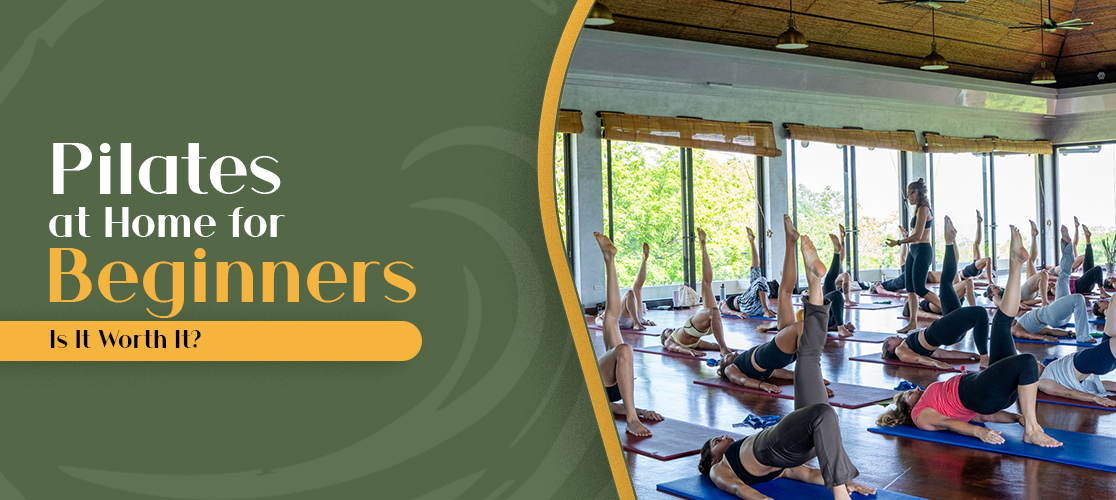
Pilates at Home Workout for Beginners: Is It Worth It?

Pilates is an amazing way to strengthen your body, calm your mind, and feel more connected from head to toe. It focuses on stability and mobility, working your core: the abs, back, and glutes, while improving posture, flexibility, and balance. If you’re just starting, Pilates at home is easy and safe for most people without injuries or chronic back pain. 

Beginners also benefit from in-person mat or reformer classes with a trained teacher, and many instructors actually encourage practicing a little at home between sessions to build strength and confidence.

Why Pilates at Home Actually Works for Beginners

Many beginners ask: “Can I really get results doing home pilates?” The answer is yes, if you approach it smartly. You can improve core strength and posture. Even short, daily sessions help activate muscles that support your spine. It reduces stress and improves mobility. And this is exactly where Pilates feels different from most workouts. It focuses on slow, controlled movement and breathing, which not only strengthens your body but also helps your mind relax. You’re not just exercising, you’re learning how to move better and feel more in control.

Another reason it works so well at home is the flexibility it gives you. You decide when to practice, how long to practice, and how your routine fits into your day. There’s no commute, no pressure, and no strict schedule to follow. It becomes something you can actually stick to, instead of something you keep putting off.

But a Pilates workout at home isn’t meant to replace studio classes completely, but it’s enough to get started, build a habit, and see small improvements that motivate you to continue further.

Step-by-Step: 10-Minute Pilates Workout for Beginners at Home

Here’s a simple routine that takes just ten minutes: no equipment needed, just a mat or a soft floor. 

1. Breathing and Awareness (Minute 1–2)

You have to lie on your back with your knees bent. Place your hands on your ribs and focus on your breath. Inhale through your nose, and exhale through your mouth, gently draw your navel toward your spine. This is the foundation of all Pilates at-home sessions.

2. Pelvic Curl (Minute 2–3)

Now just lift your hips slowly toward the ceiling, one vertebra at a time. Take a pause, then roll back down. It actually strengthens the core and stretches the spine. Even a short Pilates workout like this has noticeable benefits if done consistently.

3. Chest Lift (Minute 3–5)

In this step, place your hands behind your head. Start exhaling to lift your shoulders, keeping the neck relaxed. And inhale as you lower down. This is a kind of simple move that strengthens your abdominal muscles without putting pressure on your neck.

4. Single Leg Stretch (Minute 5–7)

This move takes 5 to 7 minutes, during which you have to bring one knee to your chest. While keeping the other leg extended. During this step, keep your lower back pressed to the mat.

5. Arm Circles (Minute 7–9)

The arm circle move can be done by sitting or standing, extending your arms, and making small forward and backward circles. This gently wakes up the shoulders and arms, showing that home pilates doesn’t have to be complicated to be effective.

6. Cool-Down Stretch (Minute 9–10)

Then, slowly stretch your arms overhead and extend your legs, taking a few deep breaths. Pay attention to your body; you may start to notice a gentle relaxation spreading through your muscles, subtle signs that tension and stress are beginning to melt away.

This short cool-down reinforces the mindfulness and body awareness step, which is the key part of any Pilates workout at home.

Is Pilates at Home Safe for Beginners?

Home Pilates workout can work for beginners, but professionals caution against relying on it entirely because of certain reasons:

  1. Risk of Incorrect Form: Pilates is precise, and subtle mistakes can lead to strain or a big injury.
  2. No Personalized Guidance: A teacher can correct posture, adjust difficulty, and ensure safety at the right moment.
  3. Limited Progression: At-home routines can become repetitive, and you might miss the full benefits of advanced techniques.

The solution is to do home Pilates to build a habit and confidence, but consider joining a professional studio for proper guidance, which can help you a lot. So, think about it.

Tips for Doing a Pilates Workout at Home Safely

These are useful and effective tips for those doing Pilates exercises at home without any professional guidance:

  1. Firstly, focus on the quality, not the quantity, of the workout. Move your body slowly and with control.
  2. Don’t be hard on yourself. Ten minutes is more than enough if you are doing a pilates workout in the right way.
  3. Always modify when needed. Just remember, pain is not a goal; discomfort is okay, but sharp pain is not.
  4. Consistency is the key. Stay consistent with your workout routine; daily mini-sessions work better than sporadic long workouts.

Take Your  Home Pilates Workout Practice Further

Doing Pilates at home is a fantastic way to get started, but it’s normal to hit a point where guidance can make a big difference. Pilates is all about precision. Small mistakes in posture, breathing, or alignment can go unnoticed when you’re practicing alone, and over time, that can slow your progress or even create discomfort.

That’s why many Pilates experts suggest mixing home practice with some professional guidance. In a studio or with a trained pilates instructor, you get live feedback, tips to improve, and support that helps you progress safely. Whether your goal is better posture, stronger core muscles, or simply feeling more comfortable in your body, having that guidance can make your practice more effective.

If you’re looking for that extra support while keeping the comfort of home practice, Pilates Nosara offers expert-led mat pilates sessions designed to help beginners improve safely and confidently. This way, your at-home workouts truly become a step toward real results, without feeling overwhelming or risky.

FAQs 

Q: Can you really do a Pilates workout at home with no experience?

Yes, even beginners can get results with short, mindful Pilates at-home routines.

Q: How often should I do a beginner 10-minute workout?

Daily practice works best to make your Pilates workout at home effective.

Q: Do I need any equipment?

No. These mat-based exercises allow you to practise pilates with no extra equipment.

Q: Will Pilates improve my posture?

Absolutely, regular practice strengthens your core and improves posture over time.

For more information, read our guide Pilates for Back Pain: Can It Really Improve Your Posture?

Q: Are online classes as effective as in-studio sessions?

They can be, especially when taught by certified instructors alongside home practice.

Is Pilates Good for Injury Recovery? Benefits, Exercises & What to Expect

We often hear “just take complete rest” after an injury. And yes, that does help the tissues heal. But staying in that phase for too long can also leave the body feeling stiffer and weaker.

At that point, it’s only natural to start wondering, when is it actually okay to begin moving again? And can something like Pilates help, or make things worse?

To answer that, we’re bringing in what we’ve seen over the years working with people at different stages of recovery.

In this guide, we’ll share when it’s okay to start gentle movement, when it’s better to give your body more time, and what type of Pilates works best depending on your condition and stage of healing.

Why Pilates Is Effective for Injury Recovery

When you hurt your shoulder, back, knee, or other muscle and joints the pain rarely stays to one place. It often disrupts the entire muscle chain connected to that area. It change how you move, walk, sit, and reach. Suddenly, your body is in a state of “chaos”. Some muscles have completely stopped functioaning, while others are working double-time to make up for them. Over time, this creates imbalance in the body, which can slow down recovery and even lead to new discomfort.

That’s where Pilates can make a real difference. Instead of pushing the body into full-range movement too soon, Pilates focuses on controlled, targeted activation, especially in the muscles that have stopped doing their job. The goal isn’t to “stretch everything,” but to restore balance, stability, and proper movement patterns.

When guided correctly, Pilates starts with the areas that need the most support and gradually builds strength from there. As those muscles begin to function the way they’re supposed to, the body starts to feel more stable, more aligned, and less reactive to movement.

That’s often when people notice a shift, not just less pain, but more confidence in how their body moves again.

What Types of Injuries Can Pilates Help With?

Just as you wouldn’t take the same medication for every illness, you cannot apply the same Pilates routine to every injury. Recovery is personal, and your path to healing must be specific to your body’s needs.

At Pilates Nosara, we specialize in targeting the root cause of discomfort. Below are the most common conditions we help our clients recover from using the precision of the Pilates method:

Back Pain & Spinal Injuries

Back pain is arguably the most common issue we see in the studio. You’ve likely tried everything to manage it, from cooling gels and creams to obsessing over your sleeping position. But while those remedies might offer temporary relief, they rarely address the root cause. Most back and spinal discomfort isn’t just about the spine itself; it’s about the muscles surrounding it.

When your core stabilizers “go to sleep”, often due to desk work, lack of movement, or past injuries, they stop doing their job. This forces the muscles around them to work double-time to compensate. Eventually, those hardworking muscles become exhausted, tight, and painful. This is the “pressure cycle” that keeps your back feeling locked up and sore.

Knee Injuries

When your knee hurts, it’s natural to focus all your attention on that one joint. But as movement experts, we look at the surrounded muscles. Your knee is like a bridge between your hip and your ankle. If your hip muscles are weak or your ankles are stiff, the knee has to absorb all the shock from every step you take.

Pilates doesn’t just “rub the sore spot.” We strengthen the glutes and thighs to create a natural “brace” for the knee. By training your hips to carry their fair share of the load, the pressure on your knee joint drops, allowing the inflammation to settle and the tissues to heal. 

Shoulder Injuries

The shoulder is the most mobile joint in your body, it can move in almost every direction. But that freedom comes at a price: it’s very easy to become unstable. Most shoulder pain happens because the small muscles around your shoulder blade (the “scapula”) have stopped functioning properly.

Instead of just lifting heavy weights, Pilates focuses on re-education. We target those tiny stabilizer muscles that keep your shoulder “holds” in the right place. By improving the connection between your upper back and your arm, we restore smooth, “gliding” movement. 

Post-Surgery Recovery

After surgery, you are in a delicate tug-of-war. If you move too much, you risk irritating the surgical site. If you don’t move enough, you deal with painful stiffness.

Pilates is the perfect safe middle ground. Because it is low-impact, we can rebuild your circulation and mobility without the jarring force of traditional gym workouts.

Sports Injuries

Most sports injuries aren’t “accidents” they are the result of tiny imbalances that have been building up for months. Even after the initial pain of a strain or tear goes away, those “bad habits” in your movement remain.

We use Pilates to “audit” your movement. We find the weak links in your chain maybe a tight hamstring or a lazy core and fix them. By correcting these patterns, we don’t just get you back on the field; we make you a better athlete than you were before the injury.

What Type of Pilates Is Best for Injury Recovery?

Sometimes a choice for Pilates is a straight decision, but the quest for a perfect match is tough. Not anymore! We put our years of experience on the table to help you. Below, we share a guide to the different paths you can take for your needs.

Type of Pilates Best For… Why it Works for Injuries
Clinical Pilates Medical diagnoses (Scoliosis, Herniations). It offers close supervision and exercises for your exact injury.
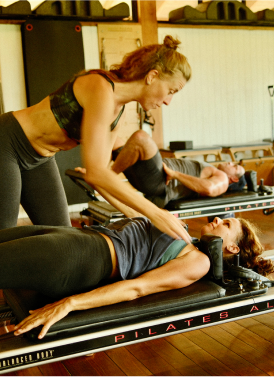
Reformer Pilates Joint pain and muscle weakness. Springs act as extra muscles to support your weight and remove strain.
Mat Pilates Long-term stability and core strength. It uses your own body weight to build a shield for your spine.

When Can You Start Pilates After an Injury?

The time for Pilates to do depends entirely on the “Acute Phase” of your injury.

  • The 72-Hour Rule: For the first 3 days, rest is usually best to let swelling go down.
  • The “Clearance” Phase: Once your doctor says you can perform “activities of daily living” (like walking or light reaching) without sharp pain, you are usually ready for a modified Pilates session.

Pilates vs. Physical Therapy: What’s the Difference?

Feature Physical Therapy (PT) Pilates for Recovery
Primary Goal Clinical repair and basic function. Full body balance and long-term strength.
Focus Area The specific site of your injury. The entire muscle chain and core.
Tool Kit Manual therapy, ultrasound, and heat. Springs, gravity, and breath control.
Phase of Care Best for acute pain and post-op care. Best for transition to health and fitness.
Outcome Restoration of a single joint or limb. A resilient body with better posture.

FAQs 

Is Pilates better than physiotherapy?

Pilates is ideal for the treatment of injuries that are related to the muscles. However, physiotherapy is for acute pain or fresh trauma. So for long-term strength, maintenance, functional movement, and injury prevention, Pilates is a better option.

Can Pilates make injuries worse?

If you do Pilates under expert supervision, like at Pilates Nosara, there is a minimal risk to your health. A “bad” result only occurs when you try moves without a correct grasp of your injury. If you move with the wrong posture or too much force, you can cause a flare-up.

Is Pilates Safe for Injury Recovery?

Yes, Pilates is safe for injury recovery if you follow the lead of an expert. The risk only appears when you move without a guide or with poor form.

Start Your Recovery Journey with Pilates Nosara

Injuries are a common part of daily life. However, a long wait for health is not necessary when Pilates is here to help. You do not have to stay in pain for months. All you need is the correct path for your body.

If you do not know where to start, reach out to Pilates Nosara. We inspect your injury and study your movement patterns. Then, we create a plan to wake up your core and protect your joints.

Do not let a stiff body or a weak muscle hold you back. Let us help you move with joy and confidence again.


Pilates for Back Pain: Can It Really Improve Your Posture?

In our daily commute, long hours at the desk, or lounging on the sofa, we often settle into what feels like a comfortable posture. But slowly, this habit is nudging our naturally straight spine into a curved shape, almost like a “question mark”. If you ignore it, it can lead to serious back pain, affecting everything from your mood to how you move.

One of the best ways to reset your posture is to do pilates for back pain. It strengthens your back, improves alignment, and can give you a posture you didn’t even know you were missing.

So, what exactly can Pilates do for back pain, and how does it really help fix posture? Let’s find out.

Why Posture Matters: The Link Between Back Pain and Alignment

Right posture acts like the pillars of a building. When one pillar shifts, the others take extra pressure and the whole structure weakens. Our body works the same way. The musculoskeletal system includes bones, muscles, ligaments, and fascia. These parts work together to maintain balance, absorb shock, and allow smooth movement.

When the structure goes off balance, it places abnormal stress on the spine and surrounding tissues. The vertebral bodies, discs, and facet joints in the lumbar and thoracic regions bear the extra load. Over time, this stress accelerates disc degeneration, joint wear, and ligament strain, causing chronic pain and limiting mobility.

How Pilates for Back Pain Supports a Healthy Spine

Pilates focuses on core training. You perform stretching, bending, and controlled squeezing movements that improve muscle function and coordination. Pilates targets the transverse abdominis, multifidus, pelvic floor, and diaphragm, which work together to maintain spinal alignment and absorb forces during movement.

Pilates also restores muscle balance. Poor posture often tightens the anterior muscles, such as the chest and hip flexors, and lengthens and weakens the posterior muscles, like the erector spinae and gluteals. 

Pilates stretches the tight muscles and strengthens the weak ones, improving spinal alignment and promoting a natural, upright posture.

Top Pilates Exercises for Back Pain Relief and Posture Improvement

Exercise Name Muscles Targeted How It Improves Back Posture
Pelvic Curl / Bridge Gluteals, hamstrings, erector spinae, transverse abdominis Strengthens the posterior chain, stabilizes the lumbar spine, and helps lift a slouched lower back for better upright posture
Swimming / Supermans Erector spinae, multifidus, gluteals, shoulders Activates deep spinal stabilizers, improves thoracic and lumbar extension, counteracts rounded upper-back posture
Plank Transverse abdominis, rectus abdominis, obliques, shoulders Builds core stability, supports neutral spine alignment, reduces lumbar strain
Cat-Cow Stretch Erector spinae, multifidus, abdominal muscles Increases spinal flexibility, releases tension in thoracic and lumbar regions, encourages correct spinal curvature
Spine Twist / Seated Rotation Obliques, transverse abdominis, erector spinae Enhances rotational mobility, reduces stiffness in the thoracic spine, improves overall spinal alignment
Chest Opener Stretch Pectorals, anterior deltoids Opens tight chest muscles, counteracts forward shoulder slump, promotes upright upper-body posture
Leg Circles Hip flexors, gluteals, core stabilizers Strengthens deep core and hip stabilizers, reduces anterior pelvic tilt, supports lumbar alignment
Roll-Up Rectus abdominis, obliques, spinal extensors Encourages controlled spinal articulation, improves flexibility, strengthens the core for better upright posture
Side-Lying Leg Lifts Gluteus medius, obliques, hip stabilizers Strengthens hip stability, improves pelvic alignment, and supports better lower-back posture

FAQs

What exercises should I avoid with lower back pain?
Avoid exercises that put excessive pressure on the spine or involve sudden twisting and heavy lifting, such as deep backbends, heavy squats, deadlifts without proper form, or high-impact activities like running on hard surfaces. Stick to controlled movements that support your spine.

What are the big 3 exercises for lower back pain?
The “big three” exercises recommended by many experts are McGill curl-up, bird-dog, and side plank. These moves strengthen the core and spinal stabilizers without putting extra strain on your lower back.

Will lower back pain ever go away?
In most cases, yes. With proper posture, regular exercise, and targeted core and back strengthening, lower back pain can improve significantly. Chronic pain may require professional guidance, but many people see lasting relief.

Does back pain get worse with age?
Back pain can become more common as we age due to natural changes in discs, joints, and muscles. However, staying active, maintaining core strength, and practicing good posture can reduce severity and prevent it from worsening

Expert Guidance for Safe and Effective Back Pain Relief

Pilates for back pain is one of the most effective ways to reduce discomfort and improve posture. However, some types of back pain can be more serious, and in those cases, it’s important to seek expert guidance. 

At Pilates Nosra, we have certified instructors who provide personalized assessments and  exercises to ensure you strengthen your spine safely, relieve tension, and correct posture effectively.

Mat vs Reformer Pilates: Which One Is Right for Beginners?

Before the first Pilates class, most of us at one moment think, “Should I stick to mat Pilates, using just my body weight, or try the machine (reformer)?” That question is super common, and honestly, it makes sense. Both (mat vs reformer pilates) will give you similar results: a stronger core, better posture, and more flexibility, but the way you get there is different.

Which one you pick really depends on your goals, your body, and what kind of workout you enjoy. Are you after something gentle to start? Or do you want a bit more challenge, maybe even some rehab or advanced moves? If that sounds like you, don’t worry, this guide’s got you. We’ll break down what is mat pilates and reformer Pilates, and which one might suit your goals and body type best.

What is Mat Pilates?

Mat Pilates is when you perform Pilates on a mat using only your body weight. It is perfect for beginners or people with average fitness levels, anyone who needs low-impact workouts, and those who want better mobility and flexibility.

It looks simple, but this is traditional Pilates, focusing on controlled, precise movements that strengthen your core. What makes mat Pilates special is that you use only your own body weight, which helps you connect more with your muscles and feel how your body moves.

Here are some of the benefits you get from practicing mat Pilates:

Benefits of Mat Pilates

  • Strengthens your core: Abs, lower back, and hips get stronger and more stable.
  • Improves posture: Trains the muscles that keep your spine and shoulders in alignment.
  • Boosts flexibility and balance: Makes everyday movements easier and more controlled.
  • Tones your body safely: Builds lean muscle without heavy weights or stress on your joints.
  • Gentle and low-impact: Safe for almost anyone, including people recovering from minor injuries.
  • Enhances body awareness: Using only your weight teaches control, coordination, and muscle connection.
  • Builds resilience: Helps your body move more efficiently and reduces risk of strain.
  • Increases energy and focus: Strengthens the body while calming the mind.
  • No special equipment needed: All you need is a mat and a little space.

Cons of Mat Pilates

  • Limited resistance: You can only use your body weight, so it may not build heavy strength quickly.
  • Progression can plateau: Without adding props or variations, exercises can get repetitive over time.
  • Harder to isolate some muscles: Certain deeper muscles may not be fully challenged compared to machines.
  • Requires self-discipline: Doing it at home without guidance can lead to poor form or skipped sessions.
  • Less variety: The range of exercises is smaller than what you can do on a reformer.
  • Slower for visible muscle gain: You will tone and strengthen, but big changes take longer compared to weighted or resistance-based workouts.

What is Reformer Pilates

In Reformer Pilates, you perform all exercises using a machine. It is for people who want more challenge and variety in their workouts. It works well for beginners who have some body awareness, people looking to build full-body strength, and those who want controlled rehabilitation or injury recovery.

It is ideal for athletes or active adults who want to improve stability, mobility, and performance. It is also perfect for anyone who likes guided, precise workouts where the machine supports and corrects movement.

Here are the key benefits of Reformer Pilates:

Benefits of Reformer Pilates

  • Adjustable resistance: Springs and pulleys let you make exercises easier or harder, targeting muscles more effectively.
  • Full-body engagement: Works both major and smaller stabilizing muscles that mat Pilates can’t fully reach.
  • More exercise variety: You can perform movements impossible on a mat, including pushing, pulling, and dynamic stretches.
  • Supports rehabilitation: The machine guides controlled motion, making it safer for injury recovery or rehab.
  • Precision and alignment: Helps maintain correct posture and form throughout each exercise.
  • Faster strength gains: Adjustable resistance allows progressive overload, helping you build muscle and tone faster.
  • Dynamic core challenge: Some exercises are more intense than mat work, strengthening the core under controlled resistance.
  • Better for advanced progression: As strength and flexibility improve, you can continue challenging your body without hitting a plateau.
  • Guided support: The machine assists movements, giving confidence to try exercises you may not do safely on the mat.

Quick Comparison: Mat vs Reformer Pilates

Feature Mat Pilates Reformer Pilates
Resistance Body weight Adjustable springs & pulleys
Equipment Mat, small props Reformer machine
Exercise Variety Limited Wide range, including advanced moves
Accessibility Anywhere, home or class Studio or home machine needed
Cost Low High (equipment + classes)
Learning Curve Easy to start May need guidance to use correctly
Intensity Beginner-friendly Beginner to advanced; adjustable
Portability Very portable Not portable

How to Choose the Right Pilates for You

Most people search for mat pilates vs reformer pilates because they think both are a completely different world. However, both are designed to give almost the same results. You can build body strength, improve posture, and move better with either one. The real difference that separates them is the tools used in each practice.

In Mat Pilates, you exercise on a mat and use your own body weight for strength training. The movements are simple and natural. Many of the exercises reflect daily body movements like bending, stretching, squeezing the core, and controlling posture.

pick between Mat pilates vs reformer pilates

Now when you compare reformer pilates vs mat pilates, the difference is the equipment. In reformer pilates you use tools such as the footbar, straps or handles, springs, and other attachments. These exercises are more customized. Instead of working many muscles at the same time, some movements focus on one muscle group with controlled resistance.

For someone who wants something simple as a beginner with less muscle strength, Mat Pilates is a good option. It warms up your body and gives your muscles the first level of conditioning.

Whose body is more athletic or already active, Reformer Pilates can be the better choice because it adds resistance, control, and more advanced strength training.

FAQs

Is mat Pilates harder than reformer?
Mat Pilates can feel harder because your body does all the work without machine support. You rely on body weight, balance, and core control to complete every movement.

Which form of Pilates is most effective?
Both Mat Pilates and Reformer Pilates are effective. Mat Pilates improves core strength, posture, and flexibility, while Reformer Pilates adds resistance through springs to build strength and muscle control faster.

Why is mat Pilates harder than reformer Pilates?
Mat Pilates feels harder because there is no machine assistance. Your muscles stabilize the body against gravity, so the core stays engaged during most movements, demanding more control and balance.

Train Your Core the Right Way With Our Pilates Classes

As a beginner, finding the right Pilates can be a bit confusing. It is better, instead of guessing, to ask the experts. At Pilates Nosara, we offer both classes. Our experts understand your goals and body movement, and on the basis of that they suggest joining Pilates Nosara Mat class or the Pilates Nosara Reformer class.

In our classes we make sure you not only get the right exercises but also work on your weak muscles, so you can reduce pain, improve posture, and avoid other body issues. Join Pilates Nosara today and schedule a consultation.

Join Pilates Nosara today and schedule your consultation. Start building a stronger core, better posture, and a healthier body with the right Pilates program for you.

How Often to Do Pilates to See Real Results?

Pilates improves flexibility, reduces weight, and improves your posture… but how often to do Pilates to achieve all this? Let’s find out! You probably see people all over social media announcing how important Pilates is and listing the benefits, but when you ask them, “How often should I do Pilates?” they never give you a satisfying answer.

The reason you aren’t getting a straight answer is that Pilates is different for different needs and bodies. For some people, 3 days a week is perfect, but for others, it’s a must to do Pilates 5 days a week to get any results.

If you’re tired of the “it depends” answer and want to know exactly how often to do Pilates to see results, this guide is for you. We’ve broken down the ideal frequency based on your specific goals.

The Quick Answer: How Often Should You Do Pilates

Your Goal Recommended Frequency Estimated Timeline
General Tone & Flex 2–3 times per week 4–6 weeks
Weight Loss 4–5 times per week 8–12 weeks
Advanced Strength 4–6 times per week 3 months+
Maintenance 1–2 times per week Ongoing

How Often Should I Do Pilates to See Results?

Pilates is more of a focused activity toward control, alignment, and precision rather than just intensity and repetition. So, its repetition is also different from regular physical exercise. Below, we answered the question: how many times a week should I do Pilates?

Pilates for Beginners

When you’re just starting, your body is literally learning a new language. It’s all about muscle memory. If you go too hard and do 5 days a week right away, you’ll probably just get sore and quit. Stick to 2 or 3 days a week. This gives your brain and your muscles enough time to actually “get” the movements without feeling burnt out. You want to build a habit, not a chore.

Pilates for Weight Loss

If your goal is to see the scale move, you have to up the frequency. Because Pilates is more about precision than traditional cardio, you need to do it more often to keep your heart rate up and your metabolism moving. Aim for 4 to 5 days a week. You’ll also want to mix in some “Power Pilates” or reformer classes that move a bit faster. Consistency is the only way you’ll see those results here.

Pilates for Strength Training

A lot of people think you need heavy weights to get strong, but Pilates uses your own body weight in a way that’s actually pretty intense. To really see muscle definition and core strength, 3 to 4 days a week is the sweet spot. This gives your muscles that “under tension” time they need to grow, but still gives you a day off in between to recover so you don’t overtrain.

Pilates for Flexibility

Flexibility is all about the “long game.” You can’t just stretch once and expect to touch your toes forever. If you want to fix that stiffness from sitting at a desk all day, 2 to 3 days a week works well, but honestly, even doing 10 or 15 minutes every single day is better. It’s about keeping the body moving so it doesn’t have a chance to “lock up” again.

Can You Lose Weight with Pilates? (The Realistic Truth)

Yes, you can lose weight with Pilates. That’s the happy news, isn’t it? But here is the realistic truth: Pilates alone starts burning calories, but it isn’t always enough to create the massive deficit needed to see the scale drop instantly.

Actually, many of our clients join Pilates Nosara, and the first thing they ask is, “How often should I do Pilates to lose weight?” Innocent they. We love the enthusiasm, but our experts look deeper. We look at your basal metabolic rate, your core strength, and your daily routine.

The secret is that Pilates builds lean muscle mass through eccentric “lengthening” movements. Unlike regular gym workouts that just bulk the muscles, Pilates changes your body composition.

Even when you are sleeping, that new muscle is burning more calories than fat ever could. So, at Pilates Nosara, we tell you: yes, the weight will come off in the given days, but only because we’re teaching your body how to be a more efficient “burning machine” from the inside out.

What Happens When You Do Pilates Every Day?

Pilates isn’t your typical weightlifting or just stretching on a mat. It targets those tiny, stabilizing muscles that hold your spine together. When you do Pilates, you are putting a specific kind of pressure on your core muscles that most gym workouts totally miss.

If you decide to do it every day, your body starts to shift in ways you can actually feel in your daily life. Here is the “expert” breakdown of what happens:

  • Spinal Decompression: Instead of gravity crushing your joints all day, daily Pilates creates “space” between your vertebrae. You’ll actually feel taller because you’re training your body to stop slouching.
  • Neural Path Development: Your brain and muscles start communicating faster. Movements that felt awkward on Day 1, like finding your “transverse abdominis” (the deep core), become an automatic reflex.
  • Improved “Internal Bracing”: You’ll notice that even when you’re just sitting at a desk or picking up groceries, your core is naturally “on.” This protects your lower back from those random aches and pains.
  • Active Recovery: Because Pilates focuses on controlled, eccentric movements (lengthening the muscle), doing it daily doesn’t tear your fibers as heavy lifting does. It actually helps flush out toxins and keeps your blood flowing.
  • The “Girdle Effect”: Daily practice cinches the waistline from the inside out. You aren’t just losing fat; you’re tightening the internal muscles that act like a natural corset for your midsection.

Get the Right Practice for Your Body at Pilates Nosara

Pilates is one of the best ways to tone your body, but trying to do it all alone without proper guidance won’t lead you to the success that an expert can give you in just a few sessions. If you are planning Pilates for weight loss, body shaping, or fixing your posture, you need a plan that actually works for your specific frame.

At Pilates Nosara, our experts don’t just give you a workout; we study how your body moves. We understand how your muscles respond to tension. This allows us to suggest the best Pilates movements that improve your body and create that long, lean look without letting your muscles tear or over-train. We focus on “functional longevity” making sure you stay strong and injury-free while you reach your goals.

FAQs

What is the 10/20/30 rule in Pilates?

This is the famous quote from Joseph Pilates himself. He said: “In 10 sessions you’ll feel the difference, in 20 sessions you’ll see the difference, and in 30 sessions you’ll have a whole new body.”

How long does it take to see results from Pilates?

In 3 to 4 classes, you will start getting results. But for the mirror to show those long, lean lines, give it about 4 to 6 weeks. We always tell our clients at Pilates Nosara: don’t just look at the scale; look at how your clothes fit and how much taller you’re standing.

Does Pilates help lower cortisol?

Yes, Pilates can help lower cortisol levels. In Pilates, you focus on slow, controlled breathing and mindful movement. This activates the Parasympathetic nervous system, the part of the nervous system responsible for relaxation.

When this system becomes active, the body shifts away from the stress response and moves into a calmer state. As a result, the signals that trigger the release of the stress hormone cortisol are reduced, which can help lower cortisol levels over time.

Does Pilates actually get you toned?

Yes, Pilates can help you achieve a toned body, but it’s a different kind of “toned.” You’re not likely to look like a bodybuilder. Because of eccentric muscle contractions, where the muscle strengthens while it is lengthening. You develop muscles that appear longer, leaner, and firmer rather than bulky.

Does Pilates need rest days?

It depends on the intensity. If you’re doing advanced work that leaves your muscles shaking, you need a day off for those fibers to recover. But if you’re doing “Mat Pilates” or restorative flow, you can do that every single day.

Learning Pilates the Right Way: Why Instructor Expertise Matters More Than Equipment

Reformer machines, studio aesthetics, and trendy equipment often steal the spotlight in Pilates training. For aspiring instructors, this creates a misleading belief: better equipment equals better teaching. In reality, many instructors complete programs feeling underprepared, unsure of cueing, corrections, or how to safely guide diverse bodies.

This gap becomes frustrating when instructors realize that expensive tools don’t automatically translate into confidence, credibility, or career growth. Without proper guidance, even the most advanced equipment becomes ineffective, and students feel it immediately.

The truth is simple but often overlooked: expert instruction builds exceptional instructors, not equipment. If you’re serious about building a sustainable Pilates career, mastering fundamentals through quality education matters far more than what’s in the studio. At Pilates Nosara, we focus on developing instructors who understand movement deeply, teach with confidence, and adapt intelligently, long before relying on machines.

The Core of Pilates Has Always Been the Instructor

Joseph Pilates designed his method around control, precision, breath, and intention, not expensive apparatus. While equipment enhances training, the instructor remains the most critical variable in student outcomes. A skilled instructor can:

  • Adapt exercises for injuries and limitations
  • Correct movement patterns in real time
  • Build trust and safety in every session
  • Create measurable progress without relying on machines

Without instructor expertise, even the most advanced reformer becomes a liability rather than an asset. This is why serious professionals prioritize education over aesthetics.

Why Instructor Expertise Outperforms Equipment Every Time

1. Cueing Is What Creates Results

Effective cueing transforms basic movements into powerful, purposeful exercises. Poor cueing leads to compensation, stagnation, and even injury. Quality instructor training teaches you how to:

  • Communicate clearly and confidently
  • Adjust language for different learning styles
  • Deliver tactile and verbal corrections safely

This skill cannot be replaced by equipment.

2. Real Clients Don’t Move Like Textbooks

In real-world teaching, you’ll work with:

  • Postural imbalances
  • Chronic pain
  • Postpartum bodies
  • Aging joints
  • Beginners with no body awareness

Only instructors with strong foundational education can adapt mat work effectively. This is especially important for those offering mat pilates near me services, where classes often include mixed experience levels.

3. Confidence Comes From Knowledge, Not Tools

Students sense uncertainty immediately. When instructors rely too heavily on equipment, it often masks gaps in understanding. True confidence comes from knowing:

  • Why an exercise works
  • When to regress or progress
  • How to modify without losing intention

This level of clarity builds authority and repeat clients.

The Role of Mat Pilates in Building Elite Instructors

Mat Pilates is the foundation of the entire method. If you can teach mat effectively, you can teach anywhere. Strong mat instruction develops:

  • Precision without external assistance
  • Deeper understanding of biomechanics
  • Better observation and correction skills

This is why reputable programs emphasize mat training before layering complexity. If you’re searching for mat pilates near me classes or certifications, prioritize programs that teach why movements work, not just how to perform them.

Pilates Instructor Certification: What Actually Matters

Not all certifications are equal. A strong Pilates instructor certification should focus on education depth, not speed or equipment access. Look for programs that include:

  • Anatomy and movement mechanics
  • Teaching methodology, not just choreography
  • Cueing, correction, and class design
  • Injury awareness and contraindications
  • Real instructor feedback and mentorship

At Pilates Nosara, our certification programs are designed to produce instructors who can teach confidently in any environment, studio, private, group, or remote. Ready to build real expertise? Explore Pilates Nosara’s Teacher Training programs and start teaching with confidence.

Equipment Is a Tool, Not a Teaching Identity

There’s nothing wrong with reformers, towers, or props. The problem arises when instructors believe tools define their value. In reality:

  • Studios hire instructors, not machines
  • Clients follow teachers, not equipment
  • Skill travels, equipment doesn’t

An instructor trained properly can walk into any studio, anywhere in the world, and deliver exceptional sessions. That adaptability is what creates long-term career stability.

How Pilates Nosara Trains Instructors Differently

Pilates Nosara is built around education-first instruction, not trends or shortcuts. Our approach emphasizes:

  • Deep mat mastery
  • Intelligent progressions
  • Teaching confidence from day one
  • Real-world application, not theory overload

We prepare instructors to teach safely, think critically, and build sustainable careers, not just pass an exam. Apply for Pilates Nosara’s teacher training and learn Pilates the right way, from the ground up.

Career Growth Comes From Mastery, Not Machinery

Instructors who succeed long-term share common traits:

  • Strong fundamentals
  • Clear communication
  • Adaptability across clients
  • Confidence without dependence on tools

These qualities come from education, mentorship, and practice, not equipment access. A respected Pilates instructor certification opens doors globally, especially when paired with strong mat teaching skills that allow you to serve diverse populations.

Final Thoughts: Choose Education Over Aesthetics

Learning Pilates the right way means investing in knowledge, not just appearances. Equipment enhances instruction, but expertise defines it. If your goal is to:

  • Teach mat Pilates confidently
  • Build a respected career
  • Stand out as an instructor
  • Feel prepared, not performative

Then, teacher training must come first. At Pilates Nosara, we train instructors who understand movement deeply, teach with intention, and lead with confidence. Start your Pilates teacher training journey with Pilates Nosara and build skills that last longer than any piece of equipment.

Is Balanced Body Pilates the Gold Standard for Pilates Instructor Training?

Choosing the right path for pilates instructor training can feel overwhelming. With so many certifications, styles, and schools available, aspiring instructors often struggle to separate marketing claims from real, career-building education. The fear is understandable. Investing time and money into a program that doesn’t prepare you for real teaching or isn’t respected in the industry can slow your progress before you even begin.

This uncertainty leads many future instructors to ask a critical question: Is Balanced Body Pilates truly the gold standard, or just another popular name? Without clear guidance, it’s easy to delay enrollment or choose a program that doesn’t align with long-term goals.

In this guide, we break down what makes a Pilates training program credible, where Balanced Body stands in the industry, and how Pilates Nosara helps you turn quality training into real teaching confidence and career opportunities.

What Does “Gold Standard” Really Mean in Pilates Instructor Training?

In the Pilates world, a “gold standard” program isn’t defined by branding alone. It’s measured by:

  • Depth of education (not shortcuts)
  • Strong anatomical foundation
  • Teaching methodology, not just choreography
  • Industry recognition
  • Preparation for real clients, not just exams

Balanced Body Pilates is widely respected because it checks many of these boxes, but understanding why matters more than blindly following the name.

What Is Balanced Body Pilates?

Balanced Body Pilates is one of the most globally recognized Pilates education systems. Known for its evidence-based approach, it blends classical Pilates principles with modern biomechanics and rehabilitation science. Key characteristics include:

  • Comprehensive curriculum (mat, reformer, apparatus)
  • Strong focus on anatomy and movement mechanics
  • Adaptability for different bodies and conditions
  • Acceptance across studios, gyms, and rehab settings

Because of this, Balanced Body programs are often preferred by studios looking to hire instructors who understand both movement quality and client safety.

Why Balanced Body Pilates Is Considered Industry-Leading

1. Emphasis on Teaching, Not Just Performing

Many programs focus on how well you move. Balanced Body focuses on how well you teach others to move. This includes:

  • Cueing strategies
  • Client modifications
  • Injury-aware instruction
  • Real-world class management

This teaching-first mindset is what separates hobbyist certifications from professional pilates instructor training.

2. Anatomy-Driven Education

Balanced Body programs go deep into anatomy, not just surface-level muscle names. You learn:

  • How joints actually move
  • Why certain exercises help or harm
  • How to adapt sessions for pain, injuries, or limitations

This knowledge is critical for building trust with clients and retaining them.

3. Industry Recognition & Mobility

Because Balanced Body Pilates is recognized internationally, instructors often find it easier to:

  • Get hired across studios
  • Teach in multiple countries
  • Transition into rehab, fitness, or wellness roles

This flexibility matters if you want long-term growth, not just a short-term certificate.

Where Pilates Nosara Fits In

While Balanced Body provides the framework, how and where you train make a major difference. At Pilates Nosara, we focus on delivering Balanced Body–aligned pilates instructor training in a way that is:

  • Immersive
  • Mentorship-driven
  • Real-world focused
  • Supportive for new instructors

We don’t rush students through modules. Instead, we emphasize understanding, practice, and confidence.

What Makes Pilates Nosara Different?

  • Small group learning for personalized feedback
  • Hands-on teaching practice from the early stages
  • Real client observation and supervised teaching
  • Guidance on transitioning from student to instructor

Thinking about instructor training that actually prepares you to teach? Explore Pilates instructor training at Pilates Nosara today.

Is Balanced Body Pilates Right for You?

Balanced Body may be the gold standard, but it’s not about prestige alone. It’s right for you if:

  • You want to teach safely and confidently
  • You care about long-term career credibility
  • You plan to work with diverse bodies and needs
  • You want education that evolves with the industry

If you’re simply looking for the fastest certificate, this may not be the best fit. But if your goal is longevity, respect, and skill, it’s a strong choice.

How Long Does Balanced Body Pilates Instructor Training Take?

Most pilates instructor training paths using the Balanced Body system involve:

  • Modular education
  • Observation hours
  • Practice teaching hours
  • Self-study and assessments

This structure ensures instructors aren’t just certified, but competent. At Pilates Nosara, we help students pace their training realistically while still moving forward with momentum. Not sure how to plan your training timeline? Talk to Pilates Nosara about a pathway that fits your schedule and goals.

Career Outcomes After Balanced Body Training

Graduates commonly go on to:

  • Teach in boutique Pilates studios
  • Work in wellness and rehab settings
  • Offer private and group sessions
  • Continue advanced education or specializations

Because Balanced Body Pilates emphasizes adaptability, instructors are not boxed into one teaching style or population.

Final Thoughts: Is Balanced Body Pilates the Gold Standard?

For many instructors, yes, but only when paired with thoughtful teaching, real practice, and proper mentorship. Balanced Body provides the foundation. Pilates Nosara helps you build a career on it.

If you’re serious about pilates instructor training, want industry respect, and care about teaching well, not just finishing fast, this path is worth considering. Ready to train with purpose? Discover pilates instructor training at Pilates Nosara and take your first confident step toward becoming a respected instructor.

Does Pilates Help You Lose Weight? 

Losing weight can feel overwhelming. Endless cardio, heavy lifting, and restrictive diets, many people struggle to find a routine that’s sustainable and enjoyable. The frustration of trying program after program with minimal results can make anyone give up before seeing progress.

If you’re looking for a gentler, effective, and body-conscious approach to weight loss, you’re not alone. Many fitness seekers wonder: Does Pilates help you lose weight? And if so, where can I find a reliable mat pilates near me to start?

Mat Pilates offers a unique combination of strength, flexibility, and core engagement without the strain of heavy weights or high-impact exercises. At Pilates Nosara, our classes are designed to help you sculpt your body, boost metabolism, and improve overall wellness, all while enjoying a safe, guided environment.

Understanding Mat Pilates

Mat Pilates is a form of exercise performed on a mat using your body weight as resistance. Unlike traditional high-intensity workouts, it focuses on controlled movements, core strength, and mind-body connection. Key benefits of Mat Pilates include:

  • Enhanced stability
  • Improved posture and flexibility
  • Increased muscle tone
  • Reduced risk of injury

It’s an ideal option for people seeking low-impact, high-result workouts that complement weight loss efforts.

Does Pilates Help You Lose Weight?

The answer is yes, but with a nuanced approach. Pilates alone may not burn as many calories as running or HIIT, but it helps with weight loss in several ways:

  • Builds Lean Muscle: Muscle tissue burns more calories at rest. Mat Pilates strengthens the muscles, especially in the core, arms, and legs, which boosts your metabolism and helps your body burn fat more efficiently.
  • Enhances Core Strength: A stronger core improves overall movement efficiency. Better posture and balance lead to more effective daily activity, contributing to overall calorie expenditure.
  • Improves Mind-Body Awareness: Pilates emphasizes control, breathing, and body awareness. This mindfulness reduces stress and emotional eating, which are common obstacles in weight loss.
  • Complements Other Workouts: Mat Pilates can be paired with light cardio, walking, or resistance training to create a balanced, sustainable weight loss routine.

Ready to see results? Sign up for a Mat Pilates session at Pilates Nosara and experience how gentle, focused movement can accelerate your weight loss journey.

Why Choosing the Right Class Matters

Finding the Right Mat Pilates Near Me

Quality instruction is essential. The right studio ensures:

  • Proper form and alignment
  • Safe progression for all fitness levels
  • Personal attention to prevent injury
  • Motivation and accountability

At Pilates Nosara, we prioritize small class sizes, experienced instructors, and a supportive environment that makes weight loss achievable and enjoyable.

Real Results Without Heavy Lifting

If you’re hesitant about traditional gym workouts, Mat Pilates offers a low-impact alternative that strengthens and tones your body while still supporting fat loss. Many students see noticeable improvements in posture, muscle tone, and energy levels within weeks of consistent practice.

Holistic Approach

Our sessions combine:

  • Strengthening exercises
  • Flexibility work
  • Breathing techniques
  • Core stabilization

This approach supports long-term weight management and overall wellness. Book your mat Pilates class at Pilates Nosara today and start your transformation without heavy weights or high-impact workouts.

How to Incorporate Mat Pilates Into Your Routine

  • Schedule Consistency: Aim for 2–3 sessions per week. Regular practice is key to seeing fat loss and muscle toning results.
  • Combine with Balanced Nutrition: While Pilates supports weight loss, pairing it with a nutritious diet amplifies results. Focus on whole foods, adequate protein, and hydration.
  • Track Progress: Take measurements, note energy levels, and observe changes in posture and strength to stay motivated.
  • Start Small, Progress Gradually: Begin with beginner-level classes if you’re new, then advance to more challenging sessions as your strength and stamina improve.
  • Seek Professional Guidance: At Pilates Nosara, instructors guide you through proper form, breathing, and modifications to maximize benefits safely.

Looking for a mat pilates near me? Join Pilates Nosara and enjoy expert-led classes designed to help you lose weight, tone muscles, and feel great.

Frequently Asked Questions (FAQs)

  • How quickly can I see weight loss results with Pilates?

Results vary based on consistency, diet, and activity level. Most students notice improved muscle tone and posture within a few weeks.

  • Is Mat Pilates suitable for beginners? 

Absolutely. Classes at Pilates Nosara cater to all fitness levels, from beginners to advanced practitioners.

  • Can Pilates replace cardio for weight loss?

Pilates complements cardio. While it builds lean muscle and improves metabolism, combining it with light cardio yields optimal weight loss results.

Final Thoughts

For those asking, does Pilates help you lose weight? The answer is a resounding yes, especially when paired with proper nutrition and consistency. Finding a quality mat pilates near me ensures you practice safely, build lean muscle, and accelerate fat loss.

At Pilates Nosara, our expert instructors and supportive environment make weight loss approachable, sustainable, and enjoyable. Don’t wait to start your fitness journey. Book your Mat Pilates class at Pilates Nosara today and take the first step toward a stronger, leaner, healthier you.

How to Become a Pilates Instructor: Steps, Certification & Salary Explained

If you’ve ever walked out of a Pilates class feeling stronger, calmer, and inspired, you’ve probably wondered what it would be like to guide others toward that same transformation. The problem? Most aspiring instructors don’t know how to become Pilates instructor, what training it takes, how long certification lasts, or even how much Pilates instructors make. That uncertainty stops many passionate movers from turning their love of Pilates into a fulfilling career.

The good news? You can start your journey with a program that’s not only globally recognized but also rooted in real mentorship and mindful movement. At Pilates Nosara, our Balanced Body Pilates Teacher Training takes you from student to confident, certified instructor, ready to teach anywhere in the world.

What Is a Pilates Instructor?

Before diving into the “how,” let’s clear up what a Pilates instructor actually does. A Pilates instructor is a trained professional who guides clients through exercises designed to improve strength, flexibility, balance, and body awareness.

But it’s more than teaching movements; it’s about empowering others to move better and feel better. The best instructors understand anatomy, biomechanics, proper cueing, and how to adapt every session for the individual in front of them.

At Pilates Nosara, you don’t just memorize exercises; you learn how to think and teach like an instructor. Our program follows Balanced Body’s internationally recognized curriculum, ensuring you develop true mastery while training under an experienced Balanced Body educator.

How to Become a Certified Pilates Instructor

Here’s the step-by-step breakdown of how to become a certified pilates instructor, especially if you’re looking for a credible and internationally recognized training.

Step 1: Choose the Right Training Program

The foundation of your teaching career starts with a high-quality training program. Pilates Nosara offers Balanced Body’s full comprehensive Pilates Teacher Training, covering:

  • Mat
  • Reformer
  • Cadillac
  • Chair
  • Barrels

This complete pathway prepares you to teach safely, confidently, and professionally in any setting worldwide. Whether you’re starting from scratch or advancing your skills, our curriculum blends classical Pilates principles with modern functional movement and teaching strategies.

Step 2: Understand the Requirements

You don’t need a fitness background to begin, just commitment, curiosity, and a passion for movement. Our Balanced Body training covers:

  • Applied anatomy & biomechanics
  • Mat, Reformer, Cadillac, Chair & Barrel repertoire
  • Cueing, class sequencing & client programming
  • Ethics, communication, and safety principles
  • Hands-on teaching practice with real feedback

Because Balanced Body is internationally recognized, your certification opens doors globally, whether you dream of teaching in studios, retreats, wellness centers, or your own practice.

Step 3: Get Certified and Start Teaching

Once you complete the coursework, teaching hours, and assessments, you’ll officially become a certified Pilates instructor. With Balanced Body certification, you’ll be prepared to teach in-person, online, in boutique studios, or in major fitness facilities around the world.

At Pilates Nosara, training extends beyond the final exam. We continue mentoring graduates as they navigate teaching opportunities, business development, and lifelong practice.

Pilates Instructor Salary: What Can You Expect to Earn?

One of the most common questions aspiring teachers ask is: How much do pilates instructors make? The answer depends on experience, location, and teaching format. In the U.S., a Pilates instructor’s average salary is between $50,000 and $80,000 per year, with top instructors earning over $100,000 annually through private sessions, workshops, or online platforms.

With a Balanced Body comprehensive certification, instructors tend to earn more because studios recognize the training as reputable and globally respected. At Pilates Nosara, you’ll also receive guidance on building a sustainable career, whether that means studio employment, freelancing, or starting your own business.

Why Choose Pilates Nosara for Your Teacher Training

There are countless training programs out there, but none like Pilates Nosara. Here’s why aspiring instructors from all over the world choose us:

  • Balanced Body Comprehensive Training: We offer Mat, Reformer, Cadillac, Chair & Barrels, following Balanced Body’s full comprehensive curriculum under experienced and certified Balanced Body educators.
  • International Recognition: Balanced Body is globally respected, meaning your certification allows you to teach confidently anywhere in the world.
  • Mentorship That Lasts: Our training includes hands-on practice, real-time feedback, and we also offer mentorship after you complete the program.
  • Immersive Training Environment: Surrounded by the lush green jungles of Nosara, Costa Rica, Pilates Nosara provides a unique, supportive space where students can learn, practice, and grow in a mindful, nature-centered atmosphere.

Final Thoughts

Becoming a Pilates instructor is more than a career move; it’s a calling to help others live stronger, more connected lives. And the first step starts with quality training and genuine mentorship.

At Pilates Nosara, we’ve built a program that empowers you to teach confidently, earn sustainably, and keep evolving as both a teacher and a student. So if you’re serious about making Pilates your career, now’s the time to start. Ready to transform your passion into a profession? Apply for your Balanced Body Pilates Teacher Training today and take your first step toward becoming a certified Pilates instructor.

Become A Part Of Our Paradise

Become 1
Become 2
Become 3
Become 4
Become 5
Chantelle Koutsantonis - Pilates Nosara
Path To Paradise