Is Pilates Good for Injury Recovery? Benefits, Exercises & What to Expect

We often hear “just take complete rest” after an injury. And yes, that does help the tissues heal. But staying in that phase for too long can also leave the body feeling stiffer and weaker.

At that point, it’s only natural to start wondering, when is it actually okay to begin moving again? And can something like Pilates help, or make things worse?

To answer that, we’re bringing in what we’ve seen over the years working with people at different stages of recovery.

In this guide, we’ll share when it’s okay to start gentle movement, when it’s better to give your body more time, and what type of Pilates works best depending on your condition and stage of healing.

Why Pilates Is Effective for Injury Recovery

When you hurt your shoulder, back, knee, or other muscle and joints the pain rarely stays to one place. It often disrupts the entire muscle chain connected to that area. It change how you move, walk, sit, and reach. Suddenly, your body is in a state of “chaos”. Some muscles have completely stopped functioaning, while others are working double-time to make up for them. Over time, this creates imbalance in the body, which can slow down recovery and even lead to new discomfort.

That’s where Pilates can make a real difference. Instead of pushing the body into full-range movement too soon, Pilates focuses on controlled, targeted activation, especially in the muscles that have stopped doing their job. The goal isn’t to “stretch everything,” but to restore balance, stability, and proper movement patterns.

When guided correctly, Pilates starts with the areas that need the most support and gradually builds strength from there. As those muscles begin to function the way they’re supposed to, the body starts to feel more stable, more aligned, and less reactive to movement.

That’s often when people notice a shift, not just less pain, but more confidence in how their body moves again.

What Types of Injuries Can Pilates Help With?

Just as you wouldn’t take the same medication for every illness, you cannot apply the same Pilates routine to every injury. Recovery is personal, and your path to healing must be specific to your body’s needs.

At Pilates Nosara, we specialize in targeting the root cause of discomfort. Below are the most common conditions we help our clients recover from using the precision of the Pilates method:

Back Pain & Spinal Injuries

Back pain is arguably the most common issue we see in the studio. You’ve likely tried everything to manage it, from cooling gels and creams to obsessing over your sleeping position. But while those remedies might offer temporary relief, they rarely address the root cause. Most back and spinal discomfort isn’t just about the spine itself; it’s about the muscles surrounding it.

When your core stabilizers “go to sleep”, often due to desk work, lack of movement, or past injuries, they stop doing their job. This forces the muscles around them to work double-time to compensate. Eventually, those hardworking muscles become exhausted, tight, and painful. This is the “pressure cycle” that keeps your back feeling locked up and sore.

Knee Injuries

When your knee hurts, it’s natural to focus all your attention on that one joint. But as movement experts, we look at the surrounded muscles. Your knee is like a bridge between your hip and your ankle. If your hip muscles are weak or your ankles are stiff, the knee has to absorb all the shock from every step you take.

Pilates doesn’t just “rub the sore spot.” We strengthen the glutes and thighs to create a natural “brace” for the knee. By training your hips to carry their fair share of the load, the pressure on your knee joint drops, allowing the inflammation to settle and the tissues to heal. 

Shoulder Injuries

The shoulder is the most mobile joint in your body, it can move in almost every direction. But that freedom comes at a price: it’s very easy to become unstable. Most shoulder pain happens because the small muscles around your shoulder blade (the “scapula”) have stopped functioning properly.

Instead of just lifting heavy weights, Pilates focuses on re-education. We target those tiny stabilizer muscles that keep your shoulder “holds” in the right place. By improving the connection between your upper back and your arm, we restore smooth, “gliding” movement. 

Post-Surgery Recovery

After surgery, you are in a delicate tug-of-war. If you move too much, you risk irritating the surgical site. If you don’t move enough, you deal with painful stiffness.

Pilates is the perfect safe middle ground. Because it is low-impact, we can rebuild your circulation and mobility without the jarring force of traditional gym workouts.

Sports Injuries

Most sports injuries aren’t “accidents” they are the result of tiny imbalances that have been building up for months. Even after the initial pain of a strain or tear goes away, those “bad habits” in your movement remain.

We use Pilates to “audit” your movement. We find the weak links in your chain maybe a tight hamstring or a lazy core and fix them. By correcting these patterns, we don’t just get you back on the field; we make you a better athlete than you were before the injury.

What Type of Pilates Is Best for Injury Recovery?

Sometimes a choice for Pilates is a straight decision, but the quest for a perfect match is tough. Not anymore! We put our years of experience on the table to help you. Below, we share a guide to the different paths you can take for your needs.

Type of Pilates Best For… Why it Works for Injuries
Clinical Pilates Medical diagnoses (Scoliosis, Herniations). It offers close supervision and exercises for your exact injury.
Reformer Pilates Joint pain and muscle weakness. Springs act as extra muscles to support your weight and remove strain.
Mat Pilates Long-term stability and core strength. It uses your own body weight to build a shield for your spine.

When Can You Start Pilates After an Injury?

The time for Pilates to do depends entirely on the “Acute Phase” of your injury.

  • The 72-Hour Rule: For the first 3 days, rest is usually best to let swelling go down.
  • The “Clearance” Phase: Once your doctor says you can perform “activities of daily living” (like walking or light reaching) without sharp pain, you are usually ready for a modified Pilates session.

Pilates vs. Physical Therapy: What’s the Difference?

Feature Physical Therapy (PT) Pilates for Recovery
Primary Goal Clinical repair and basic function. Full body balance and long-term strength.
Focus Area The specific site of your injury. The entire muscle chain and core.
Tool Kit Manual therapy, ultrasound, and heat. Springs, gravity, and breath control.
Phase of Care Best for acute pain and post-op care. Best for transition to health and fitness.
Outcome Restoration of a single joint or limb. A resilient body with better posture.

FAQs 

Is Pilates better than physiotherapy?

Pilates is ideal for the treatment of injuries that are related to the muscles. However, physiotherapy is for acute pain or fresh trauma. So for long-term strength, maintenance, functional movement, and injury prevention, Pilates is a better option.

Can Pilates make injuries worse?

If you do Pilates under expert supervision, like at Pilates Nosara, there is a minimal risk to your health. A “bad” result only occurs when you try moves without a correct grasp of your injury. If you move with the wrong posture or too much force, you can cause a flare-up.

Is Pilates Safe for Injury Recovery?

Yes, Pilates is safe for injury recovery if you follow the lead of an expert. The risk only appears when you move without a guide or with poor form.

Start Your Recovery Journey with Pilates Nosara

Injuries are a common part of daily life. However, a long wait for health is not necessary when Pilates is here to help. You do not have to stay in pain for months. All you need is the correct path for your body.

If you do not know where to start, reach out to Pilates Nosara. We inspect your injury and study your movement patterns. Then, we create a plan to wake up your core and protect your joints.

Do not let a stiff body or a weak muscle hold you back. Let us help you move with joy and confidence again.
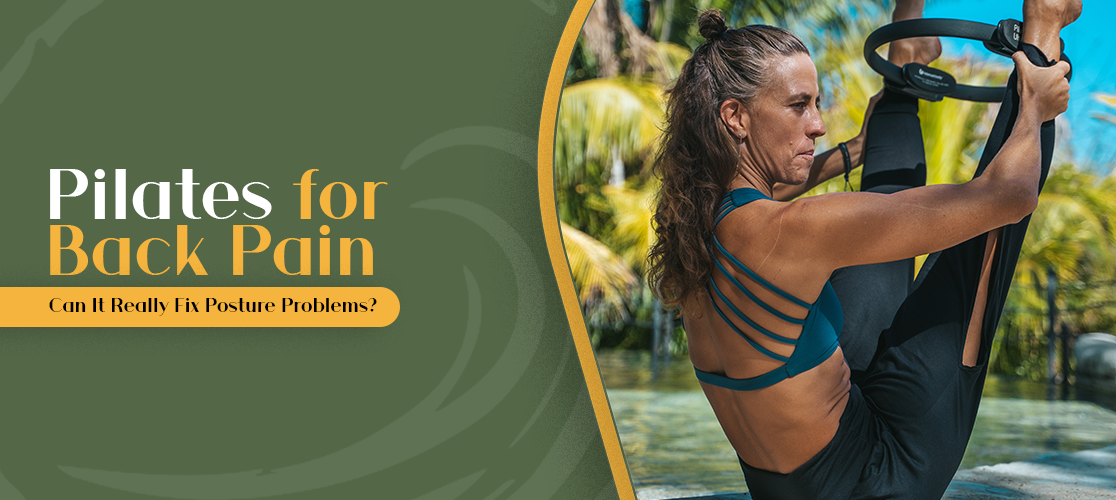
 

Pilates for Back Pain: Can It Really Improve Your Posture?

In our daily commute, long hours at the desk, or lounging on the sofa, we often settle into what feels like a comfortable posture. But slowly, this habit is nudging our naturally straight spine into a curved shape, almost like a “question mark”. If you ignore it, it can lead to serious back pain, affecting everything from your mood to how you move.

One of the best ways to reset your posture is to do pilates for back pain. It strengthens your back, improves alignment, and can give you a posture you didn’t even know you were missing.

So, what exactly can Pilates do for back pain, and how does it really help fix posture? Let’s find out.

Why Posture Matters: The Link Between Back Pain and Alignment

Right posture acts like the pillars of a building. When one pillar shifts, the others take extra pressure and the whole structure weakens. Our body works the same way. The musculoskeletal system includes bones, muscles, ligaments, and fascia. These parts work together to maintain balance, absorb shock, and allow smooth movement.

When the structure goes off balance, it places abnormal stress on the spine and surrounding tissues. The vertebral bodies, discs, and facet joints in the lumbar and thoracic regions bear the extra load. Over time, this stress accelerates disc degeneration, joint wear, and ligament strain, causing chronic pain and limiting mobility.

How Pilates for Back Pain Supports a Healthy Spine

Pilates focuses on core training. You perform stretching, bending, and controlled squeezing movements that improve muscle function and coordination. Pilates targets the transverse abdominis, multifidus, pelvic floor, and diaphragm, which work together to maintain spinal alignment and absorb forces during movement.

Pilates also restores muscle balance. Poor posture often tightens the anterior muscles, such as the chest and hip flexors, and lengthens and weakens the posterior muscles, like the erector spinae and gluteals. 

Pilates stretches the tight muscles and strengthens the weak ones, improving spinal alignment and promoting a natural, upright posture.

Top Pilates Exercises for Back Pain Relief and Posture Improvement

Exercise Name Muscles Targeted How It Improves Back Posture
Pelvic Curl / Bridge Gluteals, hamstrings, erector spinae, transverse abdominis Strengthens the posterior chain, stabilizes the lumbar spine, and helps lift a slouched lower back for better upright posture
Swimming / Supermans Erector spinae, multifidus, gluteals, shoulders Activates deep spinal stabilizers, improves thoracic and lumbar extension, counteracts rounded upper-back posture
Plank Transverse abdominis, rectus abdominis, obliques, shoulders Builds core stability, supports neutral spine alignment, reduces lumbar strain
Cat-Cow Stretch Erector spinae, multifidus, abdominal muscles Increases spinal flexibility, releases tension in thoracic and lumbar regions, encourages correct spinal curvature
Spine Twist / Seated Rotation Obliques, transverse abdominis, erector spinae Enhances rotational mobility, reduces stiffness in the thoracic spine, improves overall spinal alignment
Chest Opener Stretch Pectorals, anterior deltoids Opens tight chest muscles, counteracts forward shoulder slump, promotes upright upper-body posture
Leg Circles Hip flexors, gluteals, core stabilizers Strengthens deep core and hip stabilizers, reduces anterior pelvic tilt, supports lumbar alignment
Roll-Up Rectus abdominis, obliques, spinal extensors Encourages controlled spinal articulation, improves flexibility, strengthens the core for better upright posture
Side-Lying Leg Lifts Gluteus medius, obliques, hip stabilizers Strengthens hip stability, improves pelvic alignment, and supports better lower-back posture

FAQs

What exercises should I avoid with lower back pain?
Avoid exercises that put excessive pressure on the spine or involve sudden twisting and heavy lifting, such as deep backbends, heavy squats, deadlifts without proper form, or high-impact activities like running on hard surfaces. Stick to controlled movements that support your spine.

What are the big 3 exercises for lower back pain?
The “big three” exercises recommended by many experts are McGill curl-up, bird-dog, and side plank. These moves strengthen the core and spinal stabilizers without putting extra strain on your lower back.

Will lower back pain ever go away?
In most cases, yes. With proper posture, regular exercise, and targeted core and back strengthening, lower back pain can improve significantly. Chronic pain may require professional guidance, but many people see lasting relief.

Does back pain get worse with age?
Back pain can become more common as we age due to natural changes in discs, joints, and muscles. However, staying active, maintaining core strength, and practicing good posture can reduce severity and prevent it from worsening

Expert Guidance for Safe and Effective Back Pain Relief

Pilates for back pain is one of the most effective ways to reduce discomfort and improve posture. However, some types of back pain can be more serious, and in those cases, it’s important to seek expert guidance. 

At Pilates Nosra, we have certified instructors who provide personalized assessments and  exercises to ensure you strengthen your spine safely, relieve tension, and correct posture effectively.

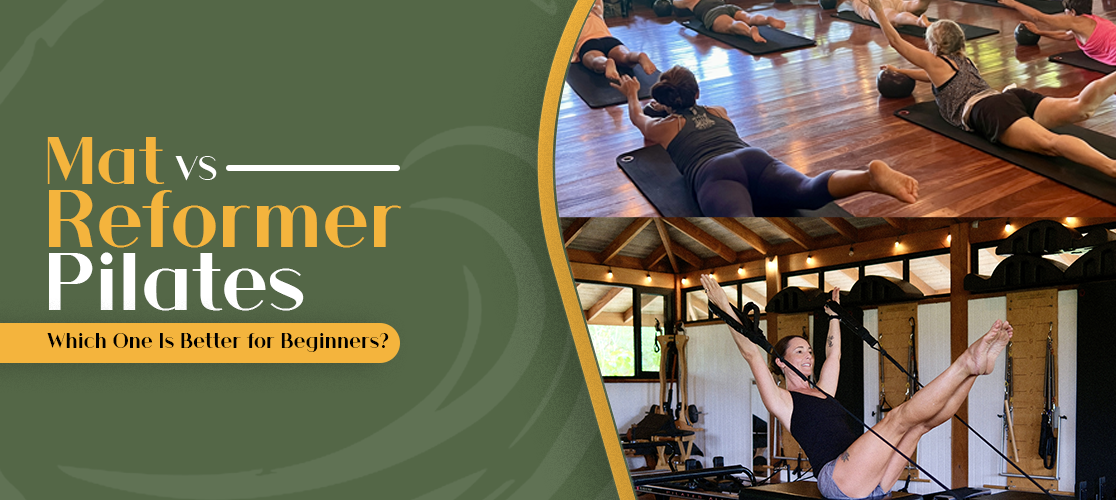
Mat vs Reformer Pilates: Which One Is Right for Beginners?

Before the first Pilates class, most of us at one moment think, “Should I stick to mat Pilates, using just my body weight, or try the machine (reformer)?” That question is super common, and honestly, it makes sense. Both (mat vs reformer pilates) will give you similar results: a stronger core, better posture, and more flexibility, but the way you get there is different.

Which one you pick really depends on your goals, your body, and what kind of workout you enjoy. Are you after something gentle to start? Or do you want a bit more challenge, maybe even some rehab or advanced moves? If that sounds like you, don’t worry, this guide’s got you. We’ll break down what is mat pilates and reformer Pilates, and which one might suit your goals and body type best.

What is Mat Pilates?

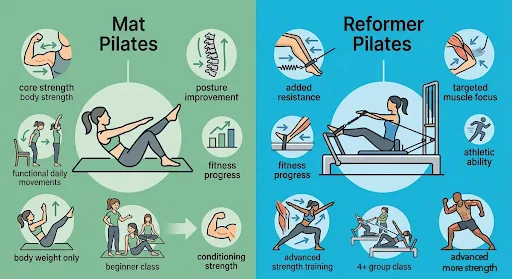
Mat Pilates is when you perform Pilates on a mat using only your body weight. It is perfect for beginners or people with average fitness levels, anyone who needs low-impact workouts, and those who want better mobility and flexibility.

It looks simple, but this is traditional Pilates, focusing on controlled, precise movements that strengthen your core. What makes mat Pilates special is that you use only your own body weight, which helps you connect more with your muscles and feel how your body moves.

Here are some of the benefits you get from practicing mat Pilates:

Benefits of Mat Pilates

  • Strengthens your core: Abs, lower back, and hips get stronger and more stable.
  • Improves posture: Trains the muscles that keep your spine and shoulders in alignment.
  • Boosts flexibility and balance: Makes everyday movements easier and more controlled.
  • Tones your body safely: Builds lean muscle without heavy weights or stress on your joints.
  • Gentle and low-impact: Safe for almost anyone, including people recovering from minor injuries.
  • Enhances body awareness: Using only your weight teaches control, coordination, and muscle connection.
  • Builds resilience: Helps your body move more efficiently and reduces risk of strain.
  • Increases energy and focus: Strengthens the body while calming the mind.
  • No special equipment needed: All you need is a mat and a little space.

Cons of Mat Pilates

  • Limited resistance: You can only use your body weight, so it may not build heavy strength quickly.
  • Progression can plateau: Without adding props or variations, exercises can get repetitive over time.
  • Harder to isolate some muscles: Certain deeper muscles may not be fully challenged compared to machines.
  • Requires self-discipline: Doing it at home without guidance can lead to poor form or skipped sessions.
  • Less variety: The range of exercises is smaller than what you can do on a reformer.
  • Slower for visible muscle gain: You will tone and strengthen, but big changes take longer compared to weighted or resistance-based workouts.

What is Reformer Pilates

In Reformer Pilates, you perform all exercises using a machine. It is for people who want more challenge and variety in their workouts. It works well for beginners who have some body awareness, people looking to build full-body strength, and those who want controlled rehabilitation or injury recovery.

It is ideal for athletes or active adults who want to improve stability, mobility, and performance. It is also perfect for anyone who likes guided, precise workouts where the machine supports and corrects movement.

Here are the key benefits of Reformer Pilates:

Benefits of Reformer Pilates

  • Adjustable resistance: Springs and pulleys let you make exercises easier or harder, targeting muscles more effectively.
  • Full-body engagement: Works both major and smaller stabilizing muscles that mat Pilates can’t fully reach.
  • More exercise variety: You can perform movements impossible on a mat, including pushing, pulling, and dynamic stretches.
  • Supports rehabilitation: The machine guides controlled motion, making it safer for injury recovery or rehab.
  • Precision and alignment: Helps maintain correct posture and form throughout each exercise.
  • Faster strength gains: Adjustable resistance allows progressive overload, helping you build muscle and tone faster.
  • Dynamic core challenge: Some exercises are more intense than mat work, strengthening the core under controlled resistance.
  • Better for advanced progression: As strength and flexibility improve, you can continue challenging your body without hitting a plateau.
  • Guided support: The machine assists movements, giving confidence to try exercises you may not do safely on the mat.

Quick Comparison: Mat vs Reformer Pilates

Feature Mat Pilates Reformer Pilates
Resistance Body weight Adjustable springs & pulleys
Equipment Mat, small props Reformer machine
Exercise Variety Limited Wide range, including advanced moves
Accessibility Anywhere, home or class Studio or home machine needed
Cost Low High (equipment + classes)
Learning Curve Easy to start May need guidance to use correctly
Intensity Beginner-friendly Beginner to advanced; adjustable
Portability Very portable Not portable

How to Choose the Right Pilates for You

Most people search for mat pilates vs reformer pilates because they think both are a completely different world. However, both are designed to give almost the same results. You can build body strength, improve posture, and move better with either one. The real difference that separates them is the tools used in each practice.

In Mat Pilates, you exercise on a mat and use your own body weight for strength training. The movements are simple and natural. Many of the exercises reflect daily body movements like bending, stretching, squeezing the core, and controlling posture.

pick between Mat pilates vs reformer pilates

Now when you compare reformer pilates vs mat pilates, the difference is the equipment. In reformer pilates you use tools such as the footbar, straps or handles, springs, and other attachments. These exercises are more customized. Instead of working many muscles at the same time, some movements focus on one muscle group with controlled resistance.

For someone who wants something simple as a beginner with less muscle strength, Mat Pilates is a good option. It warms up your body and gives your muscles the first level of conditioning.

Whose body is more athletic or already active, Reformer Pilates can be the better choice because it adds resistance, control, and more advanced strength training.

FAQs

Is mat Pilates harder than reformer?
Mat Pilates can feel harder because your body does all the work without machine support. You rely on body weight, balance, and core control to complete every movement.

Which form of Pilates is most effective?
Both Mat Pilates and Reformer Pilates are effective. Mat Pilates improves core strength, posture, and flexibility, while Reformer Pilates adds resistance through springs to build strength and muscle control faster.

Why is mat Pilates harder than reformer Pilates?
Mat Pilates feels harder because there is no machine assistance. Your muscles stabilize the body against gravity, so the core stays engaged during most movements, demanding more control and balance.

Train Your Core the Right Way With Our Pilates Classes

As a beginner, finding the right Pilates can be a bit confusing. It is better, instead of guessing, to ask the experts. At Pilates Nosara, we offer both classes. Our experts understand your goals and body movement, and on the basis of that they suggest joining Pilates Nosara Mat class or the Pilates Nosara Reformer class.

In our classes we make sure you not only get the right exercises but also work on your weak muscles, so you can reduce pain, improve posture, and avoid other body issues. Join Pilates Nosara today and schedule a consultation.

Join Pilates Nosara today and schedule your consultation. Start building a stronger core, better posture, and a healthier body with the right Pilates program for you.

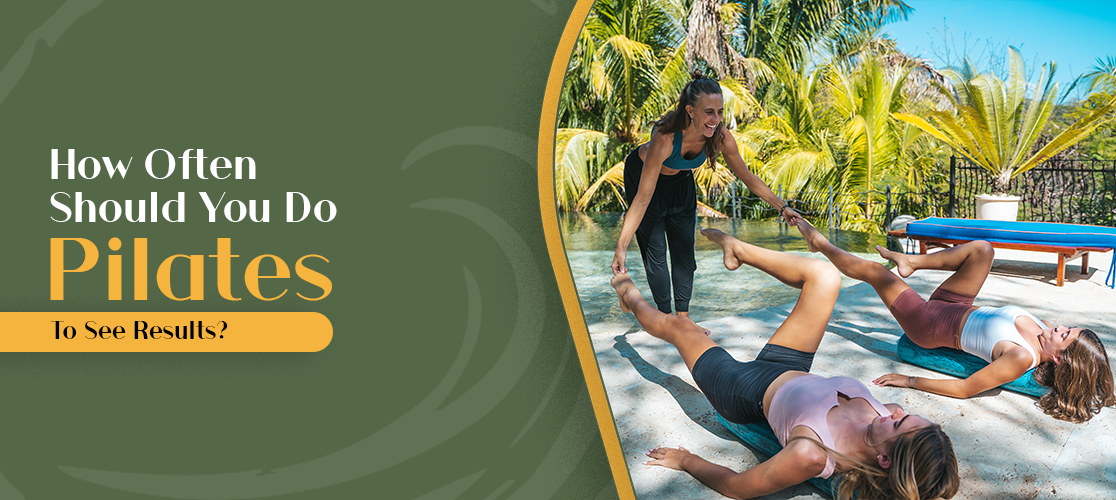
How Often to Do Pilates to See Real Results?

Pilates improves flexibility, reduces weight, and improves your posture… but how often to do Pilates to achieve all this? Let’s find out! You probably see people all over social media announcing how important Pilates is and listing the benefits, but when you ask them, “How often should I do Pilates?” they never give you a satisfying answer.

The reason you aren’t getting a straight answer is that Pilates is different for different needs and bodies. For some people, 3 days a week is perfect, but for others, it’s a must to do Pilates 5 days a week to get any results.

If you’re tired of the “it depends” answer and want to know exactly how often to do Pilates to see results, this guide is for you. We’ve broken down the ideal frequency based on your specific goals.

The Quick Answer: How Often Should You Do Pilates

Your Goal Recommended Frequency Estimated Timeline
General Tone & Flex 2–3 times per week 4–6 weeks
Weight Loss 4–5 times per week 8–12 weeks
Advanced Strength 4–6 times per week 3 months+
Maintenance 1–2 times per week Ongoing

How Often Should I Do Pilates to See Results?

Pilates is more of a focused activity toward control, alignment, and precision rather than just intensity and repetition. So, its repetition is also different from regular physical exercise. Below, we answered the question: how many times a week should I do Pilates?

Pilates for Beginners

When you’re just starting, your body is literally learning a new language. It’s all about muscle memory. If you go too hard and do 5 days a week right away, you’ll probably just get sore and quit. Stick to 2 or 3 days a week. This gives your brain and your muscles enough time to actually “get” the movements without feeling burnt out. You want to build a habit, not a chore.

Pilates for Weight Loss

If your goal is to see the scale move, you have to up the frequency. Because Pilates is more about precision than traditional cardio, you need to do it more often to keep your heart rate up and your metabolism moving. Aim for 4 to 5 days a week. You’ll also want to mix in some “Power Pilates” or reformer classes that move a bit faster. Consistency is the only way you’ll see those results here.

Pilates for Strength Training

A lot of people think you need heavy weights to get strong, but Pilates uses your own body weight in a way that’s actually pretty intense. To really see muscle definition and core strength, 3 to 4 days a week is the sweet spot. This gives your muscles that “under tension” time they need to grow, but still gives you a day off in between to recover so you don’t overtrain.

Pilates for Flexibility

Flexibility is all about the “long game.” You can’t just stretch once and expect to touch your toes forever. If you want to fix that stiffness from sitting at a desk all day, 2 to 3 days a week works well, but honestly, even doing 10 or 15 minutes every single day is better. It’s about keeping the body moving so it doesn’t have a chance to “lock up” again.

Can You Lose Weight with Pilates? (The Realistic Truth)

Yes, you can lose weight with Pilates. That’s the happy news, isn’t it? But here is the realistic truth: Pilates alone starts burning calories, but it isn’t always enough to create the massive deficit needed to see the scale drop instantly.

Actually, many of our clients join Pilates Nosara, and the first thing they ask is, “How often should I do Pilates to lose weight?” Innocent they. We love the enthusiasm, but our experts look deeper. We look at your basal metabolic rate, your core strength, and your daily routine.

The secret is that Pilates builds lean muscle mass through eccentric “lengthening” movements. Unlike regular gym workouts that just bulk the muscles, Pilates changes your body composition.

Even when you are sleeping, that new muscle is burning more calories than fat ever could. So, at Pilates Nosara, we tell you: yes, the weight will come off in the given days, but only because we’re teaching your body how to be a more efficient “burning machine” from the inside out.

What Happens When You Do Pilates Every Day?

Pilates isn’t your typical weightlifting or just stretching on a mat. It targets those tiny, stabilizing muscles that hold your spine together. When you do Pilates, you are putting a specific kind of pressure on your core muscles that most gym workouts totally miss.

If you decide to do it every day, your body starts to shift in ways you can actually feel in your daily life. Here is the “expert” breakdown of what happens:

  • Spinal Decompression: Instead of gravity crushing your joints all day, daily Pilates creates “space” between your vertebrae. You’ll actually feel taller because you’re training your body to stop slouching.
  • Neural Path Development: Your brain and muscles start communicating faster. Movements that felt awkward on Day 1, like finding your “transverse abdominis” (the deep core), become an automatic reflex.
  • Improved “Internal Bracing”: You’ll notice that even when you’re just sitting at a desk or picking up groceries, your core is naturally “on.” This protects your lower back from those random aches and pains.
  • Active Recovery: Because Pilates focuses on controlled, eccentric movements (lengthening the muscle), doing it daily doesn’t tear your fibers as heavy lifting does. It actually helps flush out toxins and keeps your blood flowing.
  • The “Girdle Effect”: Daily practice cinches the waistline from the inside out. You aren’t just losing fat; you’re tightening the internal muscles that act like a natural corset for your midsection.

Get the Right Practice for Your Body at Pilates Nosara

Pilates is one of the best ways to tone your body, but trying to do it all alone without proper guidance won’t lead you to the success that an expert can give you in just a few sessions. If you are planning Pilates for weight loss, body shaping, or fixing your posture, you need a plan that actually works for your specific frame.

At Pilates Nosara, our experts don’t just give you a workout; we study how your body moves. We understand how your muscles respond to tension. This allows us to suggest the best Pilates movements that improve your body and create that long, lean look without letting your muscles tear or over-train. We focus on “functional longevity” making sure you stay strong and injury-free while you reach your goals.

FAQs

What is the 10/20/30 rule in Pilates?

This is the famous quote from Joseph Pilates himself. He said: “In 10 sessions you’ll feel the difference, in 20 sessions you’ll see the difference, and in 30 sessions you’ll have a whole new body.”

How long does it take to see results from Pilates?

In 3 to 4 classes, you will start getting results. But for the mirror to show those long, lean lines, give it about 4 to 6 weeks. We always tell our clients at Pilates Nosara: don’t just look at the scale; look at how your clothes fit and how much taller you’re standing.

Does Pilates help lower cortisol?

Yes, Pilates can help lower cortisol levels. In Pilates, you focus on slow, controlled breathing and mindful movement. This activates the Parasympathetic nervous system, the part of the nervous system responsible for relaxation.

When this system becomes active, the body shifts away from the stress response and moves into a calmer state. As a result, the signals that trigger the release of the stress hormone cortisol are reduced, which can help lower cortisol levels over time.

Does Pilates actually get you toned?

Yes, Pilates can help you achieve a toned body, but it’s a different kind of “toned.” You’re not likely to look like a bodybuilder. Because of eccentric muscle contractions, where the muscle strengthens while it is lengthening. You develop muscles that appear longer, leaner, and firmer rather than bulky.

Does Pilates need rest days?

It depends on the intensity. If you’re doing advanced work that leaves your muscles shaking, you need a day off for those fibers to recover. But if you’re doing “Mat Pilates” or restorative flow, you can do that every single day.

Become A Part Of Our Paradise

Become 1
Become 2
Become 3
Become 4
Become 5
Chantelle Koutsantonis - Pilates Nosara
Path To Paradise