What’s Included in a Pilates Certification Program Before You Enroll
A great Pilates certification program does much more than teach you how to cue a Hundred or perfect your Teaser. It shapes the way you understand movement, connect with clients, and grow into a confident instructor.
However, not all Pilates teacher training programs are created equal. Some focus mainly on exercises, while others include anatomy, mentorship, hands-on teaching experience, and ongoing support that can influence your career long after graduation.
If you’re thinking about enrolling in a Pilates certification program, knowing what is actually included can help you choose a training that matches your goals. In this guide, we’ll walk through the key components to look for and the questions worth asking before you commit.
What Is a Pilates Certification Program
A Pilates certification program is the structured, professionally recognized training that qualifies you to teach Pilates to real clients in real studio environments. It combines movement theory, anatomy education, hands-on equipment training, and supervised teaching practice into a single, comprehensive curriculum.
When you attend Pilates classes as a student, you experience the method from the inside. A certification program flips that entirely. You learn to observe movement, correct form, build sequences, and communicate with a room full of people who all need something slightly different from the same exercise.
Certification matters because studios hold it as the baseline standard for hiring. Most professional studios across Costa Rica, the US, and Europe will not place an uncertified instructor in front of a paying client.
Who Should Consider Pilates Teacher Training
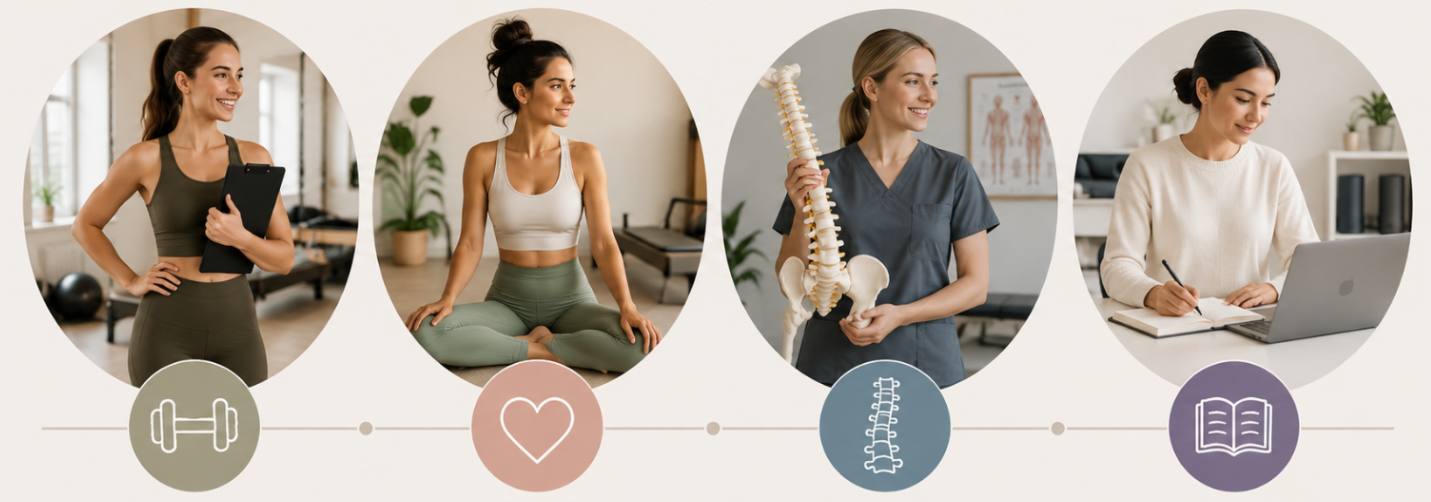
Pilates teacher training draws a wide range of people, and almost all of them are right for it. Before starting pilates classes as a teacher candidate, though, here are things to remember: your current relationship with movement matters less than your willingness to study deeply, practice consistently, and stay curious about the human body.
Fitness Professionals Looking to Expand Their Skills
Personal trainers and yoga teachers use pilates at home and in studios to fill the gaps other certifications leave behind. Adding pilates teaching training gives movement professionals a deeper toolkit for core mechanics, breath work, and spinal health that clients genuinely notice.
Pilates Enthusiasts Ready for a Career Change
Reddit threads and Pilates communities are full of people who started as obsessive students and became some of the most passionate instructors in the room. Personal transformation is a powerful teaching foundation. Your lived experience with the method is already an asset.
Wellness and Healthcare Professionals
Physiotherapists, nurses, and occupational therapists increasingly add Pilates for back pain protocols into their clinical practice. Pilates teacher training gives healthcare practitioners a movement-based approach to rehabilitation that extends their reach beyond a clinical setting.
Complete Beginners With No Teaching Experience
No prior teaching background required. Solid pilates certification programs are specifically designed to develop first-time instructors from the ground up. Observation hours, practice sessions, and structured feedback loops build real teaching skills for people who have never led a class in their lives.
What Is Typically Included in a Pilates Certification Program
The curriculum inside a certification program determines your pilates instructor’s earning potential, your confidence on the floor, and your ability to retain clients long-term. Programs that skip key components leave graduates underprepared for the real demands of teaching.
Pilates Principles and Movement Foundations
Breath, alignment, control, precision, flow, and mind-body connection form the six pillars of every serious pilates training program. These are not abstract concepts. Instructors learn to observe, cue, and correct each principle in real client bodies.
Strong foundations here shape every teaching decision you make for the rest of your career.
Functional Anatomy and Biomechanics
Muscles, joints, movement patterns, and injury prevention are covered in this module, and this is where good instructors separate from great ones. Knowing a hamstring stretch feels different from knowing why a client’s pelvis tilts during that stretch and how to fix it without stopping the flow of class.
Mat Pilates Certification Training
Mat classes cover the full beginner to advanced mat repertoire, including exercise modifications for different bodies and class sequencing principles. Mat Pilates certification builds the movement literacy that supports everything else in a comprehensive program. It is the foundation every other modality builds on.
Reformer Training
Reformer classes introduce equipment setup, spring settings, exercise progressions, and safety protocols in detail. This is the highest-demand skill in the current Pilates job market. Boutique reformer studios are opening across every major city, and they need trained instructors who understand the machine deeply, not just the exercises on it.
Training on Additional Pilates Equipment
Cadillac, Wunda Chair, Barrels, and Towers expand what you can offer clients significantly. Not every pilates certification program includes this equipment. Many mat-only or reformer-only certifications stop well short of comprehensive training. If full equipment access matters to you, verify it is in the curriculum before enrolling.
Cueing and Communication Skills
Verbal cueing, visual cueing, hands-on corrections, and building instructor presence are the skills most programs mention, and the fewest actually develop properly.
Learning to teach Pilates means learning to communicate with precision. The difference between “tighten your abs” and “scoop your navel toward your lower back” is the difference between a client who gets it and one who stays confused for months.
Class Planning and Sequencing
Designing beginner classes, intermediate progressions, private sessions, and group formats are all separate skills. A well-sequenced class feels effortless for the client and reflects hours of thought by the instructor. This section teaches you to build sessions with intention rather than just stringing exercises together.
Teaching Practice Hours
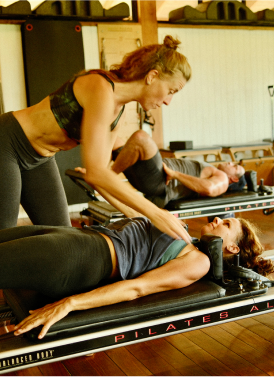
Observation hours, practice teaching, and self-practice form the supervised experience component of certification, and this is the section that most prospective students underestimate the most.
Studio hours, clock them seriously. Watch every instructor you can. Teach as many practice sessions as your program allows. The reps you put in here determine your confidence on graduation day.
Ready to train with instructors who take your development seriously from day one? Pilates Nosara’s teacher training programs are built around real teaching hours, real mentorship, and real career preparation.
Pilates Instructor Requirements You Should Know Before Enrolling
Most programs list their requirements simply, but the real picture is a little more layered than a short FAQ covers. Here is a clear breakdown of what programs actually expect and what they often forget to mention.
| Requirement | What You Actually Need to Know |
|---|---|
| Prior Pilates Experience | Most programs recommend 6 to 12 months of consistent practice before enrolling. Some require it formally. Programs that accept complete beginners will often add a foundation module at the start. Common mistakes that Pilates students make before training include enrolling without first building a solid personal practice. |
| Fitness Certifications | Not required by most pilates certification programs. A CPR certification is the most commonly requested baseline qualification. Some programs add it to the curriculum if you arrive without it. |
| Physical Requirements | Pilates teacher training is physically demanding. You practice every exercise you learn. Instructors need a body capable of demonstrating movements safely. Programs adapt for students working through injuries but this needs disclosure upfront. |
| Time Commitment | Mat-only programs run from 60 to 200 hours. Comprehensive programs that cover all equipment often require 450 to 600 hours over 6 to 18 months. Budget time for observation, practice teaching, and self-study on top of in-class hours. |
| Continuing Education | Most certification bodies require ongoing continuing education credits to maintain credentials. Plan for annual or biennial renewal courses, workshops, or advanced training modules throughout your career. |
What Many Pilates Certification Programs Overlook
Most pilates instructor courses cover the exercises. The best programs also cover what happens after the exercises end. Here are the things that separate a functional certification from genuine career preparation.
- Building Confidence: The technical knowledge is teachable. The ability to stand in front of a room and lead with authority is something programs rarely develop intentionally. Confidence comes from supervised repetition and honest feedback, not from reading a manual.
- Finding Your Teaching Voice: Every excellent instructor develops a style that is recognizably theirs. Generic programs produce generic instructors. Training that encourages individual expression alongside technical mastery produces teachers who actually come back to see specifically.
- Working With Real Clients: Practice teaching with fellow trainees is useful. Teaching members of the public during your training is transformative. Real clients have real compensations, real goals, real limitations, and real questions that no textbook scenario prepares you for.
- Client Retention: Studios and independent instructors alike measure success through retention. Learning how to build relationships, track client progress, and adapt sessions over time is a business skill that most pilates teacher training programs never touch.
- Class Creativity: After teaching the same sequence for three months, the ability to keep sessions fresh matters enormously. Creative programming keeps clients engaged and keeps instructors professionally stimulated.
- Business Skills: Pricing, scheduling, contracts, and studio etiquette are the unsexy foundation of a sustainable teaching career. Most programs skip this entirely.
- Marketing Yourself: Social media, community building, referrals, and professional positioning determine whether your schedule fills or sits empty. Not one standard Pilates certification program covers this in any meaningful depth.
- Online Resource Hub: Certification is just the beginning. Pilates Compass helps instructors continue learning with educational resources, teaching support, exercise ideas, and professional development tools long after their training is complete.
Conclusion
Not all pilates certification programs are equal, and understanding that before you enroll saves you from one of the most expensive and time-consuming mistakes in the wellness industry. The curriculum, teaching hours, access to equipment, mentorship quality, and the career support built into a program determine not just whether you graduate with a credential, but whether you actually thrive as an instructor.
Pilates Nosara builds instructors who are technically grounded, creatively alive, and professionally prepared for the real demands of teaching. And Pilates Compass supports that growth every step of the way, beyond certification.
FAQs
Can you become a Pilates instructor with no experience?
Yes. Many Pilates teacher training programs accept beginners and provide the education, practice teaching, and mentorship needed to develop teaching skills from the ground up. However, having some personal Pilates experience before enrolling can make the learning process easier.
How long does it take to complete a Pilates certification program?
The timeline depends on the program. Mat Pilates certification can take a few months, while comprehensive Pilates certification programs that include equipment training often require 6 to 18 months to complete.
Is mat Pilates certification enough to start teaching?
Yes, a mat Pilates certification can qualify you to teach mat classes. However, instructors who want to work in studios that offer Reformer and other equipment-based classes may benefit from a comprehensive certification program.
What should I look for in a Pilates certification program?
Look for a program that includes anatomy education, hands-on teaching practice, equipment training, experienced educators, mentorship opportunities, and ongoing professional support after certification.
Is it worth it to become a Pilates instructor?
For many people, yes. Pilates instruction offers the opportunity to help others improve their movement and well-being while building a flexible and rewarding career. The value often depends on the quality of your training and your commitment to continued learning.
Related Resources
A Thousand Different Bodies In A Lifetime
A thousand different bodies in a lifetime. A teacher in training once said that she has learned so much through her thousand different…

Pilates Training Benefits for Climbing
Conquer Your Limits with Pilates: Jenni’s Journey to Climbing Mount
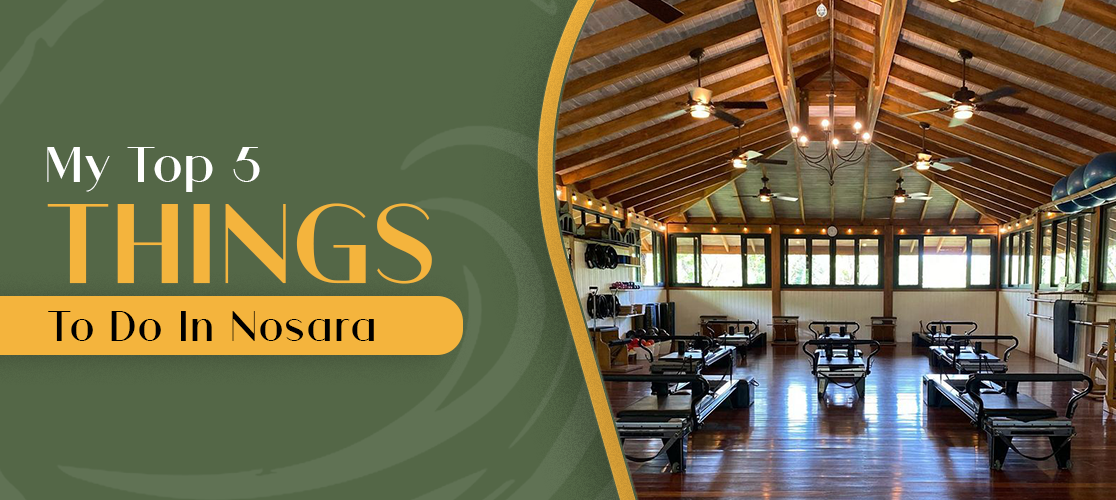
My Top 5 Things To Do In Nosara
Are you wondering how to plan the perfect trip to Nosara? Scroll down to see my list