Why Every Pilates Teacher Needs Mentorship and Community to Keep Growing?
Somewhere around year two of teaching, most instructors hit a wall they never saw coming. The nervousness is gone, the cues feel automatic, and classes run smoothly enough. Pilates teacher mentorship is often the missing piece that turns competent teaching into real mastery at exactly this stage. Without it, teachers tend to plateau quietly, repeating the same sequences long after their clients could benefit from something more.
Competence Is Not the Same as Growth
Running a clean class is a skill. Continuing to grow as a teacher after you can already run a clean class is a different skill entirely. Most training programs are built to get you to competence, not to keep you evolving for the next twenty years.
This is where a lot of instructors get stuck. They mistake comfort for mastery, and comfort is exactly what stops new questions from surfacing.
Why a Mentor Changes the Trajectory
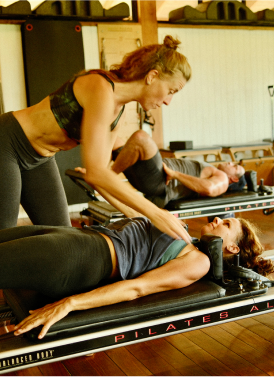
A mentor sees things you cannot see about your own teaching. You cannot watch yourself cue from the back of the room, and you cannot feel how your energy lands on a nervous first-time client the way an outside observer can.
At Pilates Nosara, mentorship built around Page Sieffert’s approach focuses on exactly this kind of outside perspective. It pairs technical refinement, things like cueing and sequencing, with the harder qualities that separate a good teacher from a well-rounded one.
A strong mentor typically helps you with:
- Noticing habits and patterns you have stopped seeing in yourself
- Adjusting your teaching voice as your experience grows
- Handling moments in class that training never fully prepares you for
- Staying curious instead of settling into autopilot
None of these are one-time fixes. They are ongoing conversations that shift as your teaching does.
The Role Community Plays in Staying Sharp
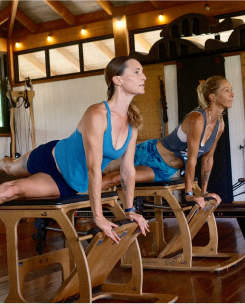
Mentorship rarely happens in a vacuum. It works best surrounded by other teachers who are asking similar questions and hitting similar walls at different points in their own careers.
This is why community matters for a teacher’s growth, long after the certificate is earned. Teachers who stay connected to a peer group keep encountering new ideas, corrections, and perspectives they would never generate entirely on their own.
A supportive teaching community typically gives you:
- A place to ask questions you might feel embarrassed to ask alone
- Exposure to teaching styles and cues outside your own habits
- Encouragement to keep learning instead of settling for good enough
- A sense of belonging that reduces the isolation many instructors feel
Teachers who skip this step often do not fail outright. They simply stop growing, and their classes quietly stop evolving with them.
Becoming a Well-Rounded Teacher, Not Just a Certified One
A well-rounded teacher pulls from more than one certification and more than one voice. They read the room, adapt on the fly, and stay open to methods outside what their original pilates teacher training covered.
This kind of range does not come from a single course. It comes from years of exposure to different mentors, different workshops, and different conversations with peers who see movement differently than you do.
Teachers who commit to this kind of ongoing growth tend to last far longer in the field, largely because their work never goes stale. Curiosity becomes part of how they teach, not just something they had during their initial training.
What Ongoing Learning Actually Looks Like
Continuing education does not have to mean another full certification every year. It often looks smaller and more consistent than that.
Some of the most effective ongoing learning includes:
- Regular check-ins with a mentor, even briefly
- Attending workshops outside your usual specialty
- Staying active in an alumni or teaching community
- Revisiting fundamentals periodically instead of only chasing advanced material
Small, steady habits like these compound over years. They are far more sustainable than trying to relearn everything in one intense burst every few years.
Building This Into Your Teaching Career From the Start
The teachers who avoid burnout and stagnation usually built mentorship and community into their routine early, rather than waiting until they felt stuck. Waiting until frustration hits makes the process feel reactive instead of intentional.
If you are early in your teaching career, this is the moment to find a mentor and a community, not after your first plateau arrives. Growth compounds fastest when you start building support systems before you actually need them.
Frequently Asked Questions
Why do experienced Pilates teachers still need a mentor?
Experience does not eliminate blind spots. A mentor continues to catch habits and patterns that are difficult to notice from inside your own teaching.
Is the community only helpful for new instructors?
No. Teachers at every stage benefit from staying connected, since fresh perspectives and new ideas help prevent teaching from becoming repetitive over time.
How often should a teacher check in with a mentor?
There is no fixed rule, but consistent check-ins, even brief ones, tend to help more than occasional long sessions spaced far apart.
What does it mean to be a well-rounded Pilates teacher?
It means drawing from multiple sources of learning, staying adaptable, and continuing to refine your teaching long after your original certification.
Can online mentorship provide the same benefits as in-person support?
It can support consistent growth well, though many teachers still find real value in combining it with in-person workshops or retreats when possible.
Related Resources
A Thousand Different Bodies In A Lifetime
A thousand different bodies in a lifetime. A teacher in training once said that she has learned so much through her thousand different…

Pilates Training Benefits for Climbing
Conquer Your Limits with Pilates: Jenni’s Journey to Climbing Mount

My Top 5 Things To Do In Nosara
Are you wondering how to plan the perfect trip to Nosara? Scroll down to see my list