In our daily commute, long hours at the desk, or lounging on the sofa, we often settle into what feels like a comfortable posture. But slowly, this habit is nudging our naturally straight spine into a curved shape, almost like a “question mark”. If you ignore it, it can lead to serious back pain, affecting everything from your mood to how you move.
One of the best ways to reset your posture is to do pilates for back pain. It strengthens your back, improves alignment, and can give you a posture you didn’t even know you were missing.
So, what exactly can Pilates do for back pain, and how does it really help fix posture? Let’s find out.
Why Posture Matters: The Link Between Back Pain and Alignment
Right posture acts like the pillars of a building. When one pillar shifts, the others take extra pressure and the whole structure weakens. Our body works the same way. The musculoskeletal system includes bones, muscles, ligaments, and fascia. These parts work together to maintain balance, absorb shock, and allow smooth movement.
When the structure goes off balance, it places abnormal stress on the spine and surrounding tissues. The vertebral bodies, discs, and facet joints in the lumbar and thoracic regions bear the extra load. Over time, this stress accelerates disc degeneration, joint wear, and ligament strain, causing chronic pain and limiting mobility.
How Pilates for Back Pain Supports a Healthy Spine
Pilates focuses on core training. You perform stretching, bending, and controlled squeezing movements that improve muscle function and coordination. Pilates targets the transverse abdominis, multifidus, pelvic floor, and diaphragm, which work together to maintain spinal alignment and absorb forces during movement.
Pilates also restores muscle balance. Poor posture often tightens the anterior muscles, such as the chest and hip flexors, and lengthens and weakens the posterior muscles, like the erector spinae and gluteals.
Pilates stretches the tight muscles and strengthens the weak ones, improving spinal alignment and promoting a natural, upright posture.
Top Pilates Exercises for Back Pain Relief and Posture Improvement
| Exercise Name | Muscles Targeted | How It Improves Back Posture |
| Pelvic Curl / Bridge | Gluteals, hamstrings, erector spinae, transverse abdominis | Strengthens the posterior chain, stabilizes the lumbar spine, and helps lift a slouched lower back for better upright posture |
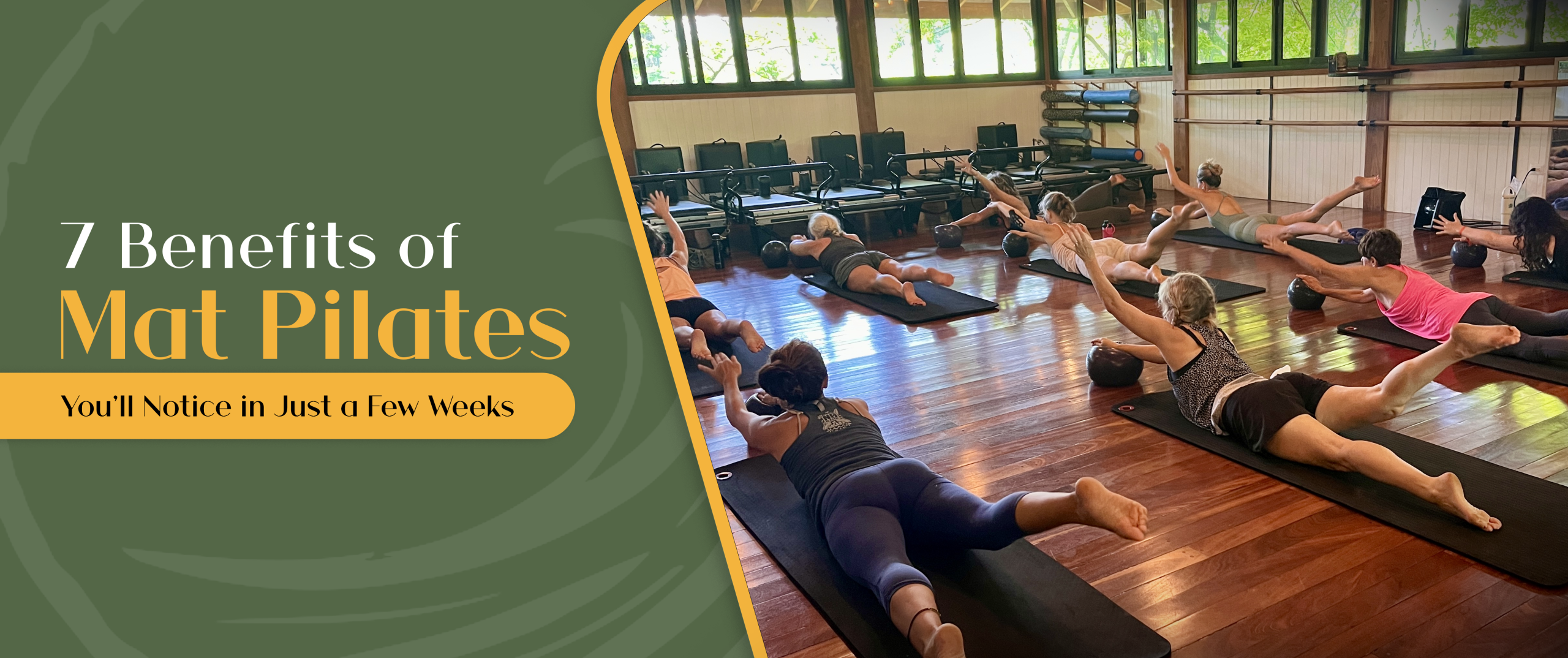
| Swimming / Supermans | Erector spinae, multifidus, gluteals, shoulders | Activates deep spinal stabilizers, improves thoracic and lumbar extension, counteracts rounded upper-back posture |
| Plank | Transverse abdominis, rectus abdominis, obliques, shoulders | Builds core stability, supports neutral spine alignment, reduces lumbar strain |
| Cat-Cow Stretch | Erector spinae, multifidus, abdominal muscles | Increases spinal flexibility, releases tension in thoracic and lumbar regions, encourages correct spinal curvature |
| Spine Twist / Seated Rotation | Obliques, transverse abdominis, erector spinae | Enhances rotational mobility, reduces stiffness in the thoracic spine, improves overall spinal alignment |
| Chest Opener Stretch | Pectorals, anterior deltoids | Opens tight chest muscles, counteracts forward shoulder slump, promotes upright upper-body posture |
| Leg Circles | Hip flexors, gluteals, core stabilizers | Strengthens deep core and hip stabilizers, reduces anterior pelvic tilt, supports lumbar alignment |
| Roll-Up | Rectus abdominis, obliques, spinal extensors | Encourages controlled spinal articulation, improves flexibility, strengthens the core for better upright posture |
| Side-Lying Leg Lifts | Gluteus medius, obliques, hip stabilizers | Strengthens hip stability, improves pelvic alignment, and supports better lower-back posture |
FAQs
What exercises should I avoid with lower back pain?
Avoid exercises that put excessive pressure on the spine or involve sudden twisting and heavy lifting, such as deep backbends, heavy squats, deadlifts without proper form, or high-impact activities like running on hard surfaces. Stick to controlled movements that support your spine.
What are the big 3 exercises for lower back pain?
The “big three” exercises recommended by many experts are McGill curl-up, bird-dog, and side plank. These moves strengthen the core and spinal stabilizers without putting extra strain on your lower back.
Will lower back pain ever go away?
In most cases, yes. With proper posture, regular exercise, and targeted core and back strengthening, lower back pain can improve significantly. Chronic pain may require professional guidance, but many people see lasting relief.
Does back pain get worse with age?
Back pain can become more common as we age due to natural changes in discs, joints, and muscles. However, staying active, maintaining core strength, and practicing good posture can reduce severity and prevent it from worsening
Expert Guidance for Safe and Effective Back Pain Relief
Pilates for back pain is one of the most effective ways to reduce discomfort and improve posture. However, some types of back pain can be more serious, and in those cases, it’s important to seek expert guidance.
At Pilates Nosra, we have certified instructors who provide personalized assessments and exercises to ensure you strengthen your spine safely, relieve tension, and correct posture effectively.