Teacher training schedules for November 2026! Coming Soon

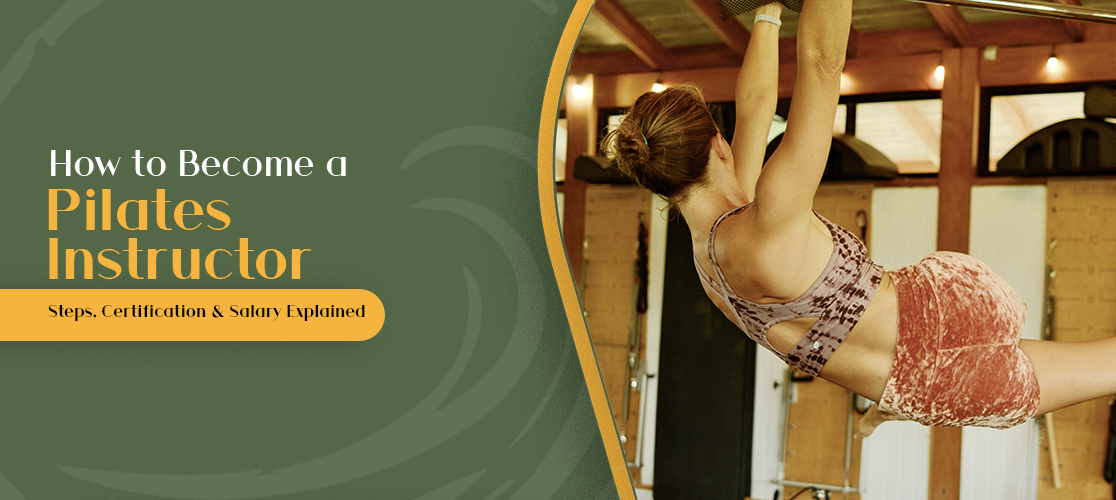
How to Become a Pilates Instructor: Steps, Certification & Salary Explained

If you’ve ever walked out of a Pilates class feeling stronger, calmer, and inspired, you’ve probably wondered what it would be like to guide others toward that same transformation. The problem? Most aspiring instructors don’t know how to become Pilates instructor, what training it takes, how long certification lasts, or even how much Pilates instructors make. That uncertainty stops many passionate movers from turning their love of Pilates into a fulfilling career.

The good news? You can start your journey with a program that’s not only globally recognized but also rooted in real mentorship and mindful movement. At Pilates Nosara, our Balanced Body Pilates Teacher Training takes you from student to confident, certified instructor, ready to teach anywhere in the world.

What Is a Pilates Instructor?

Before diving into the “how,” let’s clear up what a Pilates instructor actually does. A Pilates instructor is a trained professional who guides clients through exercises designed to improve strength, flexibility, balance, and body awareness.

But it’s more than teaching movements; it’s about empowering others to move better and feel better. The best instructors understand anatomy, biomechanics, proper cueing, and how to adapt every session for the individual in front of them.

At Pilates Nosara, you don’t just memorize exercises; you learn how to think and teach like an instructor. Our program follows Balanced Body’s internationally recognized curriculum, ensuring you develop true mastery while training under an experienced Balanced Body educator.

How to Become a Certified Pilates Instructor

Here’s the step-by-step breakdown of how to become a certified pilates instructor, especially if you’re looking for a credible and internationally recognized training.

Step 1: Choose the Right Training Program

The foundation of your teaching career starts with a high-quality training program. Pilates Nosara offers Balanced Body’s full comprehensive Pilates Teacher Training, covering:

  • Mat
  • Reformer
  • Cadillac
  • Chair
  • Barrels

This complete pathway prepares you to teach safely, confidently, and professionally in any setting worldwide. Whether you’re starting from scratch or advancing your skills, our curriculum blends classical Pilates principles with modern functional movement and teaching strategies.

Step 2: Understand the Requirements

You don’t need a fitness background to begin, just commitment, curiosity, and a passion for movement. Our Balanced Body training covers:

  • Applied anatomy & biomechanics
  • Mat, Reformer, Cadillac, Chair & Barrel repertoire
  • Cueing, class sequencing & client programming
  • Ethics, communication, and safety principles
  • Hands-on teaching practice with real feedback

Because Balanced Body is internationally recognized, your certification opens doors globally, whether you dream of teaching in studios, retreats, wellness centers, or your own practice.

Step 3: Get Certified and Start Teaching

Once you complete the coursework, teaching hours, and assessments, you’ll officially become a certified Pilates instructor. With Balanced Body certification, you’ll be prepared to teach in-person, online, in boutique studios, or in major fitness facilities around the world.

At Pilates Nosara, training extends beyond the final exam. We continue mentoring graduates as they navigate teaching opportunities, business development, and lifelong practice.

Pilates Instructor Salary: What Can You Expect to Earn?

One of the most common questions aspiring teachers ask is: How much do pilates instructors make? The answer depends on experience, location, and teaching format. In the U.S., a Pilates instructor’s average salary is between $50,000 and $80,000 per year, with top instructors earning over $100,000 annually through private sessions, workshops, or online platforms.

With a Balanced Body comprehensive certification, instructors tend to earn more because studios recognize the training as reputable and globally respected. At Pilates Nosara, you’ll also receive guidance on building a sustainable career, whether that means studio employment, freelancing, or starting your own business.

Why Choose Pilates Nosara for Your Teacher Training

There are countless training programs out there, but none like Pilates Nosara. Here’s why aspiring instructors from all over the world choose us:

  • Balanced Body Comprehensive Training: We offer Mat, Reformer, Cadillac, Chair & Barrels, following Balanced Body’s full comprehensive curriculum under experienced and certified Balanced Body educators.
  • International Recognition: Balanced Body is globally respected, meaning your certification allows you to teach confidently anywhere in the world.
  • Mentorship That Lasts: Our training includes hands-on practice, real-time feedback, and we also offer mentorship after you complete the program.
  • Immersive Training Environment: Surrounded by the lush green jungles of Nosara, Costa Rica, Pilates Nosara provides a unique, supportive space where students can learn, practice, and grow in a mindful, nature-centered atmosphere.

Final Thoughts

Becoming a Pilates instructor is more than a career move; it’s a calling to help others live stronger, more connected lives. And the first step starts with quality training and genuine mentorship.

At Pilates Nosara, we’ve built a program that empowers you to teach confidently, earn sustainably, and keep evolving as both a teacher and a student. So if you’re serious about making Pilates your career, now’s the time to start. Ready to transform your passion into a profession? Apply for your Balanced Body Pilates Teacher Training today and take your first step toward becoming a certified Pilates instructor.
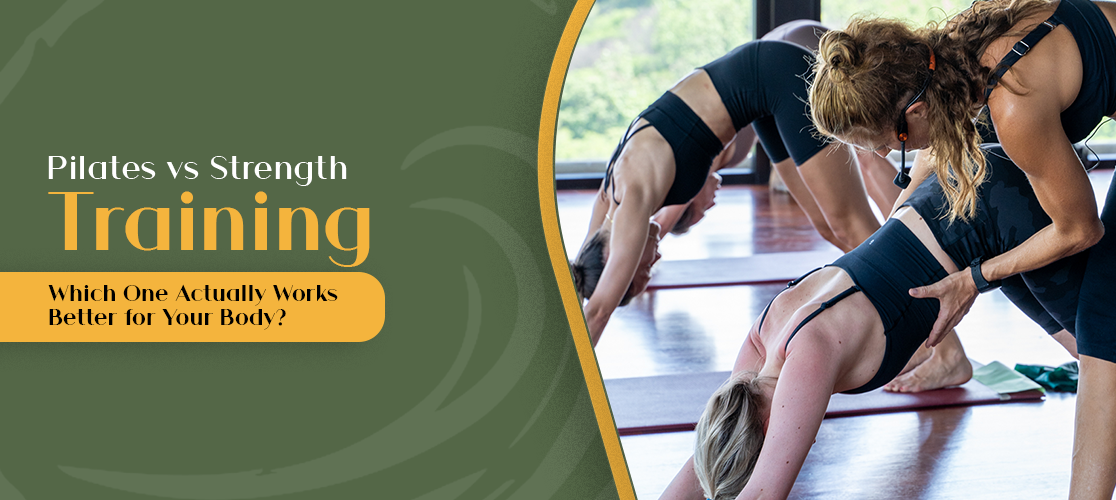
Pilates vs Strength Training: Which One Actually Works Better for Your Body?

Choosing the right workout shouldn’t feel overwhelming, but for many people, it is. You hear that strength training builds muscle, then someone tells you Pilates is better for flexibility, and suddenly, you’re stuck in decision paralysis. The confusion leads to starting nothing at all, even though you genuinely want to feel stronger, leaner, and more in control of your body. 

That frustration grows when every source gives you conflicting advice: “Lift heavier,” “Do low impact,” “Protect your joints,” “Go high intensity.” It’s overwhelming, especially if you’re returning to fitness after an injury, dealing with chronic tension, or simply want a routine that feels good, not punishing.

Here’s the truth: every body is unique, and most importantly, no single workout fits every goal. Instead of thinking in terms of either Pilates exercises or strength training, the real key is understanding what each one offers and how they can support your long-term strength, posture, mobility, and overall well-being.

This guide breaks everything down in a clear, practical way. And if you’re searching for Pilates near me, you’ll also see why Pilates Nosara is one of the best places to integrate Pilates into a balanced, sustainable fitness routine.

What Is Strength Training? (And What Most People Overlook)

Strength training uses resistance, dumbbells, barbells, machines, or your own bodyweight to build muscle mass. It’s incredibly effective for:

  • Increasing overall strength
  • Boosting metabolism
  • Improving bone density
  • Enhancing athletic performance

But what many people overlook is that strength training isn’t just about lifting heavier weights. When done with proper form and coaching, it teaches discipline, movement efficiency, and functional power. What you need to know:

  • It requires good technique to avoid injury
  • Beginners may compensate with the wrong muscles
  • Progression needs to be gradual
  • Breath, alignment, and stability matter as much as load

Strength training is powerful, but like any modality, it’s as safe and effective as the guidance and awareness behind it.

What Makes Pilates Different? The Hidden Strength You Didn’t Know You Needed

Pilates is often misunderstood as “gentle,” when in reality it builds deep, intelligent strength through:

  • Core activation
  • Controlled movement
  • Breathwork
  • Postural alignment
  • Stability and joint-friendly resistance

Unlike traditional weight training, Pilates emphasizes how you move, ensuring that your body stays aligned, balanced, and functionally strong. Pilates offers:

  • Better body awareness
  • Strong stabilizers (the muscles that protect joints)
  • Improved mobility and posture
  • Low-impact resistance using springs
  • Modifiable movement for pain, pregnancy, injury recovery, or stiffness

But here’s the most important part: Pilates isn’t a replacement for strength training; it enhances it. And strength training, done properly, can make you stronger for Pilates.

Pilates vs Strength Training: A Head-to-Head Breakdown

Here’s a fair, side-by-side look at what both forms of exercise offer:

Strength Training Pilates
Builds larger muscle mass and power Builds long, lean functional strength
Helps increase bone density Improves alignment and core stability
Can be higher impact depending on load and method Low-impact and joint-friendly
Focused on external load and measurable progression Focused on form, breath, and precision
Great for athletes, performance, and overall muscle development Great for posture, mobility, longevity, and everyday movement
Best for building maximal strength Best for building stability and balanced strength

The takeaway: You don’t have to choose one; most bodies benefit from both. Together, they create a strong, mobile, resilient body that ages well.

So Which One Should You Choose?

It depends on your goals, and your needs may change over time. Choose strength training if you want to:

  • Increase muscle size and power
  • Improve athletic performance
  • Enhance bone density
  • Build measurable external load strength

Choose Pilates if you want to:

  • Improve mobility and alignment
  • Strengthen deep stabilizers
  • Reduce pain or stiffness
  • Build core strength and posture
  • Recover from injuries or prevent future ones

But the best approach? A weekly routine that blends both. Strength training offers external load, whereas Pilates offers internal support. Together, they create the strongest version of you.

Why Pilates Nosara Is the Best Place to Begin Your Pilates Journey

Pilates Nosara isn’t just a studio; it’s an internationally recognized center for mindful movement, where technique and alignment come first. Whether you want to combine Pilates with strength training or begin with a gentle, intelligent movement practice, you’ll find:

  1. Expert instructors who understand your body
  2. Personalized cues and modifications
  3. Reformer, mat, tower, and chair classes
  4. A supportive environment (no intimidation, no pressure)
  5. Options for in-studio sessions or retreats
  6. Programs suitable for beginners and advanced clients

If you’ve been searching for pilates near me, this is your space to build strength that supports, not strains, your body.

Build a Routine That Works With Your Body

Instead of choosing between Pilates and strength training, choose a routine that supports your strength, mobility, posture, and long-term health. Pilates is safe. Strength training is powerful. Together, they’re transformative.

At Pilates Nosara, our experienced instructors guide you through Pilates exercises that complement any fitness routine, including weight training, helping you feel stronger, lighter, taller, and more grounded.

Start Your Pilates Journey Today

If you’re ready to feel strong, supported, and confident in your movement:

  • Book your class at Pilates Nosara
  • Try a reformer session with expert guidance
  • Experience a method that works with your body

Stop guessing and start moving with intention. Your body will thank you today, and for years to come.

Become A Part Of Our Paradise

Become 1
Become 2
Become 3
Become 4
Become 5
Chantelle Koutsantonis - Pilates Nosara
Path To Paradise